
Mamata Banerjee's Bengal 'national anthem' row: History behind Tagore's iconic song
Take a look at the significance and the painful history behind the iconic song that had evoked a sense of nationalism and unity against the British plan to divi
- India News
- 2 min read

;'%3e%3cpath%20d='m8,15.99c4.41,0,7.99-3.58,7.99-7.99S12.41,0,8,0,0,3.59,0,8s3.58,7.99,7.99,7.99Z'%20style='stroke:%23fff;%20stroke-miterlimit:10;%20stroke-width:.02px;'/%3e%3cpath%20d='m3.08,3.37l3.82,5.11-3.84,4.15h.87l3.37-3.64,2.72,3.64h2.94l-4.04-5.39,3.58-3.87h-.86l-3.1,3.35-2.5-3.35h-2.94Zm1.27.64h1.35l5.97,7.99h-1.35l-5.97-7.99Z'%20style='fill:%23fff;'/%3e%3c/g%3e%3c/svg%3e)


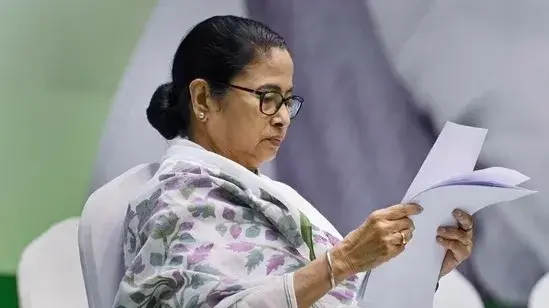
Barely four months after passing a resolution in the West Bengal Assembly, Chief Minister Mamata Banerjee on Monday, in a faux pas, said that Rabindranath Tagore’s “Banglar mati, Banglar jol” is the 'national anthem' of the state, urging people of the state to stand up whenever the song is being played. Soon after her statement went viral, the Bengal BJP unit hit out at Banerjee, questioning her intention behind it. "How can she say that she wants to change the national anthem of the country? We condemn it," said Shishir Bajoria.
As a fresh controversy erupted over “Banglar mati, Banglar jol” in Bengal, take a look at the significance and the painful history behind the iconic song that had evoked a sense of nationalism and unity against the British plan to divide Bengal back in 1905.
Historical background
The song was Tagore's creative response to the fire stoked in the Bengal province by Lord Curzon's divisive plan to divide Bengal, aimed at breaking the growing nationalist fervour in the erstwhile province.
Instead of dividing Bengal, Lord Curzon's plan actually backfired, bringing Bengalis across all communities closer than ever. Curzon's move also marked the start of the Swadeshi movement -- beginning of an important chapter in India's long history for freedom struggle.
In the background of these developments, Tagore promoted tying rakhis across communities which further strengthened the Hindu-Muslim unity. Capturing the whole sentiment, Tagore had penned this song, which was a prayer to God seeking for the union of Bengali aspirations, dialects, mind, soul and communities. Eventually, Bengal was re-united in 1911.