
H-1B Visa Shock: Trump Administration Moves To Scrap 60-Day Grace Period After Job Loss
The Trump administration has proposed ending the 60-day H-1B grace period, requiring certain foreign workers to leave the US after their jobs end.
- World News
- 4 min read

;'%3e%3cpath%20d='m8,15.99c4.41,0,7.99-3.58,7.99-7.99S12.41,0,8,0,0,3.59,0,8s3.58,7.99,7.99,7.99Z'%20style='stroke:%23fff;%20stroke-miterlimit:10;%20stroke-width:.02px;'/%3e%3cpath%20d='m3.08,3.37l3.82,5.11-3.84,4.15h.87l3.37-3.64,2.72,3.64h2.94l-4.04-5.39,3.58-3.87h-.86l-3.1,3.35-2.5-3.35h-2.94Zm1.27.64h1.35l5.97,7.99h-1.35l-5.97-7.99Z'%20style='fill:%23fff;'/%3e%3c/g%3e%3c/svg%3e)


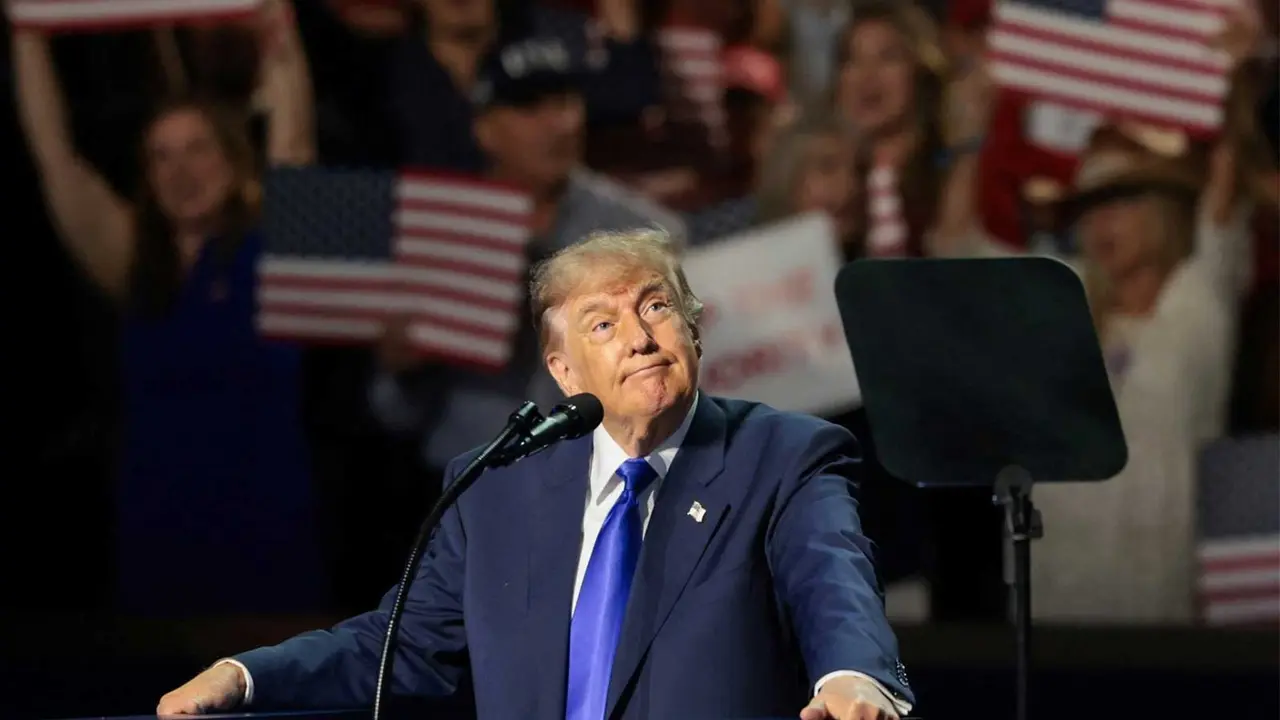
United States: Indian professionals working in the US on H-1B visas could soon have far less time to find a new job if they are laid off, under a proposed rule by the Donald Trump administration that seeks to end the existing 60-day grace period for certain foreign workers.
If enforced, H-1B holders and workers on a variety of other temporary employment visas would be required to leave the United States once their job expired, rather than using the present grace period to find a new sponsor or make plans to return home.
The proposed change may increase pressure on foreign workers employed by major technology, consulting, and outsourcing firms, many of whom rely on trained individuals from India and China.
The move is part of the Trump administration's broader effort to curb legal migration since the US President took office in January 2025.
Advertisement
What Is Trump Administration Proposing?
The proposed rule seeks to establish a more direct link between a foreign worker's legal status in the US and the employment for which they were admitted.
“This proposal restores a direct relationship between an alien’s non-immigrant status and the specific employment or activity that formed the basis of his or her admission or grant of status in the United States and reduces administrative burden,” the DHS said in a statement on Thursday.
Advertisement
The proposal has been published in the Federal Register and will remain open for public comments for two months. It will have to go through this process before the administration can implement the change.
DHS has acknowledged that the proposal could cause some disruption for businesses that currently employ foreign workers. However, the department has argued that some of these positions could instead be filled by qualified American workers.
"DHS presumes that they will either offer the same jobs to equally qualified U.S. workers or go through the I-129 petition process depending on their workforce requirement," the notice said.
In certain circumstances, a foreign worker who leaves the US could potentially return if their employer files a fresh petition on their behalf.
What Happens To The 60-Day Grace Period?
The 60-day grace period was established in 2017 to offer certain international workers some time after their job ended. During this time, employees can hunt for another business willing to sponsor them, investigate their immigration possibilities, or plan to leave the United States.
The proposed rule would eliminate that cushion, meaning impacted workers would have a considerably less time to leave the country after their job ends.
The change may have practical ramifications for workers and their families in addition to seeking another career. The current grace period allows them to make plans like selling a home, transferring goods, or withdrawing children from school before leaving the country.
H-1B visas are especially important to the US technology sector. Congress launched the program in 1990, allowing American companies to hire skilled foreign professionals for positions where they may struggle to locate qualified US workers.
Which Visa Holders Could Be Affected?
The proposed change would not be limited to H-1B workers. Several other temporary work visa categories could also come under the new rules.
These include:
- E-1 visas for international traders
- E-2 visas for commercial vehicle operators
- L-1 visas for executives and managers working for international companies
- O-1 visas for people with “extraordinary ability” in areas including science, sports or the arts
- TN visas for professional workers
- H-1B1 visas for skilled workers from Singapore and Chile
- E-3 visas for specialty workers from Australia
As a result, the idea could have an impact on workers in a variety of industries, while companies that frequently sponsor foreign personnel may need to reconsider their hiring and sponsoring policies.
Consulting organizations such as Deloitte, PwC, and Ernst & Young, as well as outsourcing corporations like Tata Consultancy Services, Infosys, HCLTech, and LTIMindtree, are among the major H-1B sponsors.
The latest plan is part of a larger sequence of actions adopted by the Trump administration to curb legal migration since his return to office in January 2025. His administration has increased visa fees for skilled workers and recently halted immigrant visa appointments at US embassies across the world while a new training program is implemented.
Separately, the US Department of Labor has barred Cognizant, an India-founded and US-listed technology business, from applying for new green card sponsorship. The agency has made clear that "threats to American workers" would not be tolerated.
For the time being, the 60-day grace period continues to apply. The DHS proposal is still subject to public consultation and must be completed before the present guidelines are altered.