
Does Trump’s Gaza Peace Plan have more for Trump than Gaza?
Donald Trump unveils a sweeping Gaza peace plan promising security for Israel, international oversight, and economic rebuilding for Palestinians — a bold bid to break the cycle of war.
- World News
- 5 min read

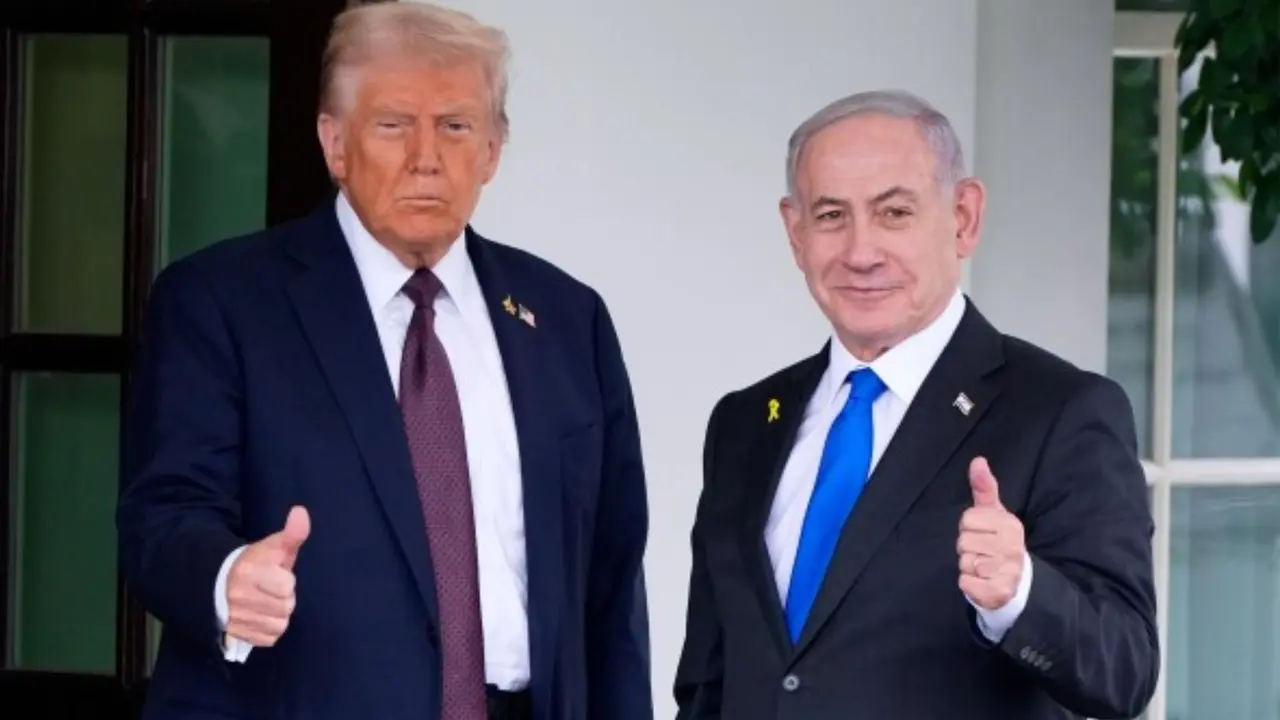
New Delhi: President Donald J. Trump’s comprehensive Gaza peace plan stands as the boldest proposition since January 2025 to reshape the trajectory of the Israel–Palestine conflict, reflecting both his penchant for spectacle and the evolving realities on the ground since the massive escalation last night. The blueprint sketches a technocratic, internationally monitored transition for Gaza, suggesting the kind of high-stakes intervention that only a US-led initiative could muster in the midst of regional volatility and the breakdown of prior ceasefire efforts.
What Peace Would Look Like: Trump’s Vision
Trump’s plan envisions a Gaza stripped of terror infrastructure, watched over by an International Stabilization Force ISF led by vetted Palestinian police and supervised by Jordanian and Egyptian advisers. The phased withdrawal of Israeli forces, once the hostages are returned and prisoner exchanges completed, signals immediate de-escalation but embeds accountability via independent monitors and the Board of Peace, a body Trump himself would chair. The Board’s authority stretches from day-to-day oversight to marshaling global investments, aiming to deliver tangible benefits to Gaza, with the promise of roads opened and infrastructure repaired at scale seen only in postwar European or Gulf “miracle city” builds.
All military operations pause the moment the plan is accepted, hostage exchanges happen on a tightly enforced timeline, and economic development, through a special zone with tariff advantages, is fast-tracked to ensure Gaza’s long-term viability. Aid distribution would be handled exclusively by neutral international agencies, under a no interference rule that would, to some degree, bypass both Israeli and Palestinian bureaucracies for the next phase.
For Israel: Security Above All
The plan’s real prize for Israel is airtight security guarantees and the eradication of Hamas’s role in Gaza’s governance, directly or indirectly. All militant structures will be demolished, tunnels destroyed, weapon production halted, and survivors reintegrated or granted amnesty only if they embrace peaceful coexistence. The ISF, trained by regional partner states and bolstered by US backing, is meant to plug the gap once the IDF withdraws, signaling hard guarantees against any future cross border threats or infiltration.
Advertisement
Crucially, Israel is neither forced to annex Gaza nor to maintain a permanent occupation, its only remaining presence being a provisional perimeter until full stability is achieved. Key for Tel Aviv is that the phased IDF withdrawal remains strictly conditional: no demilitarization, no rollback of occupation. Every step is pegged to the destruction of terror capabilities and verified by the US and other signatories.
The Two State Solution: Pathway, Not Promise
While Trump's document hints at eventual Palestinian self determination and statehood, it avoids the direct language of classic two state frameworks. Instead, Trump proposes redefining the “political horizon” pending successful PA reform, and only after Gaza demonstrates it can govern without violence or factional control. In effect, the two state option is present only as an aspiration, contingent upon technocratic transformation, regional buy-in, and international investments in governance, all to be certified by the Board of Peace and its allies.
Advertisement
The historical context here is telling: After decades of failed summitry, shifting US policy, and multiple rounds of violence, Trump positions himself as the singular international broker powerful enough to cut through entrenched distrust, to impose a regime change model familiar from postwar Iraq but layered, unusually, with economic carrots and monitored security.
Trump’s Personal Stakes and Aspirations
It is impossible to miss the Trump signature, leading the Board of Peace, inviting Tony Blair, and promising the kind of “modern miracle cities” that speak to his long-standing fixation on legacy projects. Trump’s approach draws on his record with the Abraham Accords and his desire, since regaining the presidency, to bookend his statesmanship with, and perhaps redeem, his earlier, controversial 2020 Middle East plan.
For Trump, restoring order is inseparable from demonstrating global leadership and economic acumen. He pitches Gaza’s turn toward redevelopment as an investment opportunity as much as a humanitarian cause, betting that the world’s appetite for stability will override memories of occupation, war, and betrayal. The plan’s insistence on an apolitical transitional council and the outright exclusion of Hamas from any role in governance reflects Trump’s judgment, drawn from years of negotiating in the region, that factional politics and external interference are the chief obstacles to reform.
Context After Last Night: Breaking the Cycle
Since last night, violence resumed and diplomatic momentum collapsed. The Trump plan’s declaration of a simultaneous ceasefire and hostage return is designed to offer both Israelis and Palestinians a face saving exit from an intractable war, yet it is also a test. If either faction resists, Trump signals that aid and redevelopment will proceed in “terror free areas,” effectively creating a model Gaza within Gaza, incentivizing local buy-in and punishing rejectionist leaders by marginalizing them from the reconstruction windfall.
The Sharp Trade Off
Trump’s peace plan is audacious, sweeping, and deeply transactional, a bid to end one of modern history’s bloodiest stalemates with a deal rooted in his brand of “winner’s peace.” It offers Israelis maximum security, Palestinians an unprecedented shot at rebuilding, and the world a template for regional stabilization. Yet beneath the promises, it is clear that peace in Trump’s terms means betting that strongmen, big investments, and foreign oversight can trump generations of grievance. If forced to choose between endless war or a brokered, monitored peace with international oversight, the region may soon test what “Trumpian peace” truly delivers, and who, when the dust settles, finally calls Gaza home.