
EU Carmakers Face Tough India Market Even After Trade Deal
European carmakers, squeezed by US tariffs and price wars in China, will get a welcome boost from an EU-India trade deal that sharply drops tariffs on car imports, but face a tough market dominated by homegrown firms and compact Japanese 'kei' cars.
- Automobile News
- 3 min read

;'%3e%3cpath%20d='m8,15.99c4.41,0,7.99-3.58,7.99-7.99S12.41,0,8,0,0,3.59,0,8s3.58,7.99,7.99,7.99Z'%20style='stroke:%23fff;%20stroke-miterlimit:10;%20stroke-width:.02px;'/%3e%3cpath%20d='m3.08,3.37l3.82,5.11-3.84,4.15h.87l3.37-3.64,2.72,3.64h2.94l-4.04-5.39,3.58-3.87h-.86l-3.1,3.35-2.5-3.35h-2.94Zm1.27.64h1.35l5.97,7.99h-1.35l-5.97-7.99Z'%20style='fill:%23fff;'/%3e%3c/g%3e%3c/svg%3e)


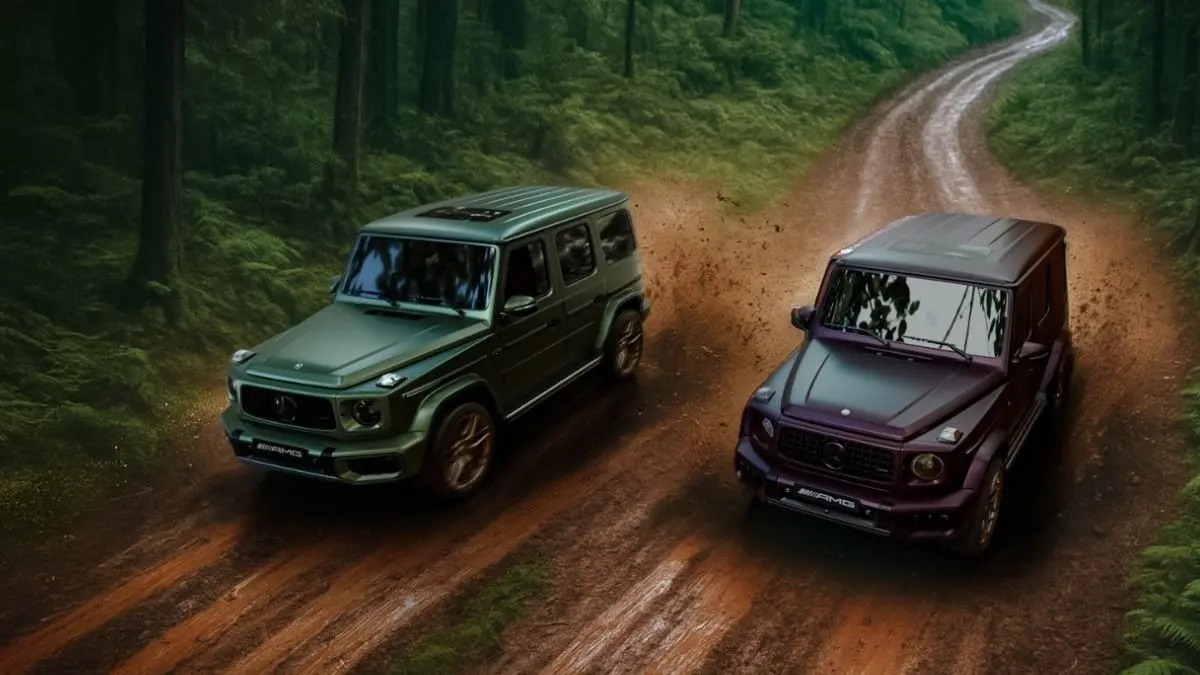
European carmakers, squeezed by US tariffs and price wars in China, will get a welcome boost from an EU-India trade deal that sharply drops tariffs on car imports, but face a tough market dominated by homegrown firms and compact Japanese 'kei' cars.
India and the European Union signed a trade deal on Tuesday, including slashing tariffs on imports of EU-made cars to 10 per cent from as high as 110 per cent, the biggest opening yet of India's vast market for Volkswagen and Renault.
The move, however, only edges the door open, analysts said, with local car brands and Asian rivals Suzuki Motor and Hyundai dominating the market, with hot-selling models like the Maruti Suzuki Wagon R kei car - a class of pint-sized, affordable vehicles smaller than a Mini Cooper.
"It's a start. When we talk about exports from Europe, it's only about premium cars. For the volume sector it is difficult," said Stefan Bratzel of German auto research group CAM, who said Suzuki and Hyundai had better understood the market.
Advertisement
"In India it's about cheap, reliable, stable cars. The Volkswagen Group cars have been too expensive. Suzuki has benefited from the kei cars which are highly popular in Japan."
EU CARMAKERS HAVE LESS THAN 3% SHARE OF THE MARKET
With a modest production footprint and annual sales still in the tens of thousands of cars, European brands have huge room to expand after losing market share in the last decade.
Advertisement
European carmakers hold under a 3 per cent share of India's car market, Indian automobile industry data shows. The South Asian country's market is dominated by Suzuki Motor and homegrown brands Mahindra and Tata, which together hold two-thirds.
India has the world's third-largest car industry after the US and China, but its 4.4 million-vehicles-a-year domestic auto market has been one of the most protected, with current levies of 70 per cent and 110 per cent on imported cars.
The VDA automotive association stressed the importance of the agreement for Germany's export-focused economy, with the CEOs of Volkswagen, Mercedes and BMW all welcoming the deal.
"This will bring about urgently needed improved market access in an increasingly protectionist global environment, even if not all barriers are removed," VDA President Hildegard Mueller said in a statement.
"We will now carefully examine the details of the trade agreement," Volkswagen CEO Oliver Blume said.
Renault brand CEO Fabrice Cambolive said India would move up on the carmaker's priority list.
"It will reinforce our willingness to invest on both continents because we are kind of an Indian and European company," Cambolive told Reuters in the southern Indian city of Chennai.
INDIA CAR MARKET HAS BIG POTENTIAL FOR GROWTH
High US import tariffs and a cut-throat market in China have pushed many automakers to consider new growth markets such as India, where the market is expected to grow by over a third to 6 million vehicles a year by 2030.
Sources told Reuters earlier this week that Prime Minister Narendra Modi's government agreed to cut tariffs on a limited number of cars from the 27-nation bloc with an import price of more than 15,000 euros ($17,740).
ING Research analyst Rico Luman was bullish, saying that an EU-India trade deal "could turn into a significant opportunity for European car makers" in the medium run.
"The Indian car market is still in the early stages of maturing, which means there is substantial growth potential," Luman said.