
2nd Time In History! NSE, BSE To Open On Sunday For Union Budget 2026
Indian stock markets, including BSE and NSE, will be open on Sunday for the second time in India's history for the Union Budget presentation, while commodity trading on MCX and NCDEX will also continue.
- Republic Business
- 3 min read

;'%3e%3cpath%20d='m8,15.99c4.41,0,7.99-3.58,7.99-7.99S12.41,0,8,0,0,3.59,0,8s3.58,7.99,7.99,7.99Z'%20style='stroke:%23fff;%20stroke-miterlimit:10;%20stroke-width:.02px;'/%3e%3cpath%20d='m3.08,3.37l3.82,5.11-3.84,4.15h.87l3.37-3.64,2.72,3.64h2.94l-4.04-5.39,3.58-3.87h-.86l-3.1,3.35-2.5-3.35h-2.94Zm1.27.64h1.35l5.97,7.99h-1.35l-5.97-7.99Z'%20style='fill:%23fff;'/%3e%3c/g%3e%3c/svg%3e)


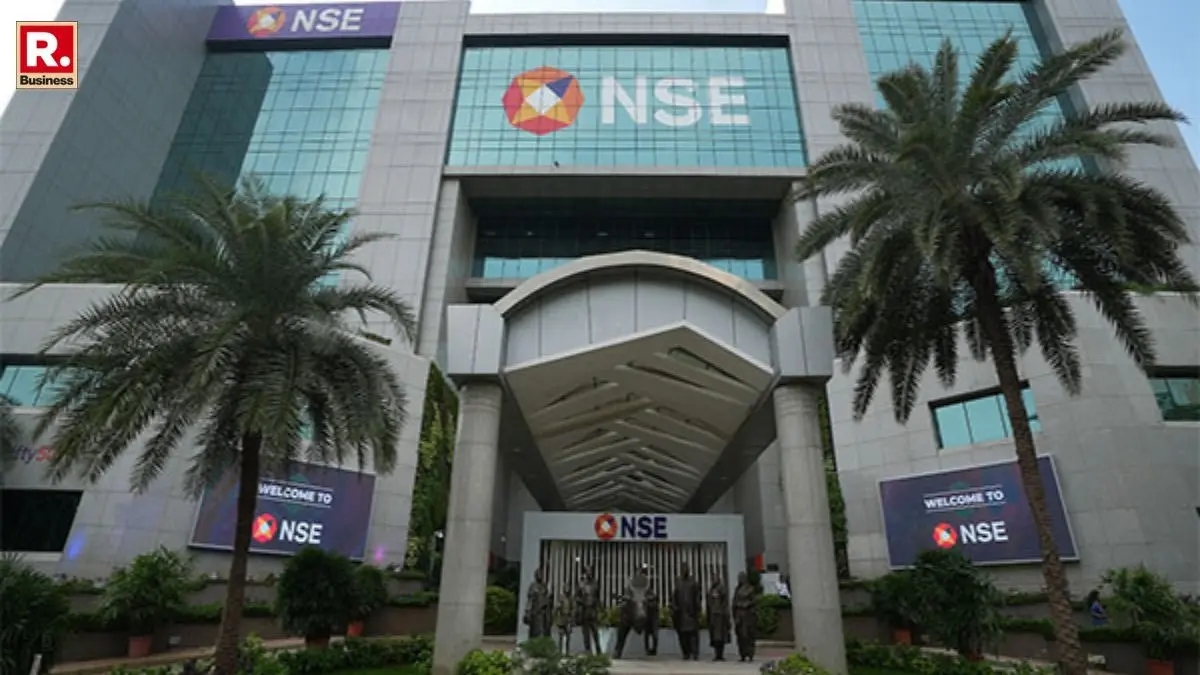
New Delhi: Indian stock markets will remain open for trading on Sunday, February 1, as the government will be presenting the Union Budget 2026 in Parliament. Both the Bombay Stock Exchange (BSE) and the National Stock Exchange (NSE) will conduct a live trading session and will operate according to standard market timings. Along with the NSE and BSE, commodity trading will also continue on February 1, 2026, with both MCX and NCDEX remaining operational.
Indian stock markets are generally closed for trading on Saturdays and Sundays.
This will be only the second time in the history of Independent India that stock markets will be open for trading on a Sunday. The previous instance dates back more than two decades. February 28, 1999, was a Sunday, but markets remained open due to the presentation of the Union Budget during the Atal Bihari Vajpayee-led government.
Since February 1 is a settlement holiday, shares purchased on January 30 will not be available for sale on Budget Day. Similarly, stocks bought during the special Sunday trading session on February 1 will only be settled later and cannot be sold on the following trading day.
Advertisement
Nirmala Sitharaman is set to present her ninth consecutive Union Budget on February 1, 2026, marking a historic milestone as one of the longest uninterrupted tenures by an Indian finance minister. The Union Budget speech will start at 11 am.
Why Is The Union Budget Presented On February 1?
India's Union Budget is tabled on February 1 each year to ensure timely parliamentary approval and smooth implementation at the start of the fiscal year on April 1. However, this was not always the case.
Advertisement
During the British Raj, the Budget was presented on the last working day of February. However, this led to late approval of the schemes and the policies announced in the Budget before the start of the financial year on April 1. Different departments of the government and businesses had very little time to make plans or adjust to the new policies announced in the Budget.
A major development came in 2017 when the Government of India decided to let go of the British-era practice and adopt a new date for the smooth implementation of the fiscal year. Then Finance Minister Arun Jaitley, in a historic move, tabled the Budget on the first day of February instead of the last working day of February.
Why Was Budget Time Changed To 11 am From 5 pm?
The Union Budget was earlier presented at 5 pm for the convenience of the British Raj. However, in 1999, India decided to change the timing of the presentation of the Budget to 11 am. Former Finance Minister Yashwant Sinha, who first presented the Budget at 11 am, said that adapting to British time was not required. He added that changing the time to 11 am would allow more time for debate in the Parliament following the presentation of the Budget. Since then, the Union Budget has been tabled in the Parliament at 11 am.