
56th GST Council Meet: Cheaper Health Insurance, Faster Refunds & Simpler Taxes On Cards
The 56th meeting of the Goods and Services Tax (GST) Council, chaired by Finance Minister Nirmala Sitharaman, is currently underway in the national capital on September 3 and 4.
- Republic Business
- 2 min read

;'%3e%3cpath%20d='m8,15.99c4.41,0,7.99-3.58,7.99-7.99S12.41,0,8,0,0,3.59,0,8s3.58,7.99,7.99,7.99Z'%20style='stroke:%23fff;%20stroke-miterlimit:10;%20stroke-width:.02px;'/%3e%3cpath%20d='m3.08,3.37l3.82,5.11-3.84,4.15h.87l3.37-3.64,2.72,3.64h2.94l-4.04-5.39,3.58-3.87h-.86l-3.1,3.35-2.5-3.35h-2.94Zm1.27.64h1.35l5.97,7.99h-1.35l-5.97-7.99Z'%20style='fill:%23fff;'/%3e%3c/g%3e%3c/svg%3e)


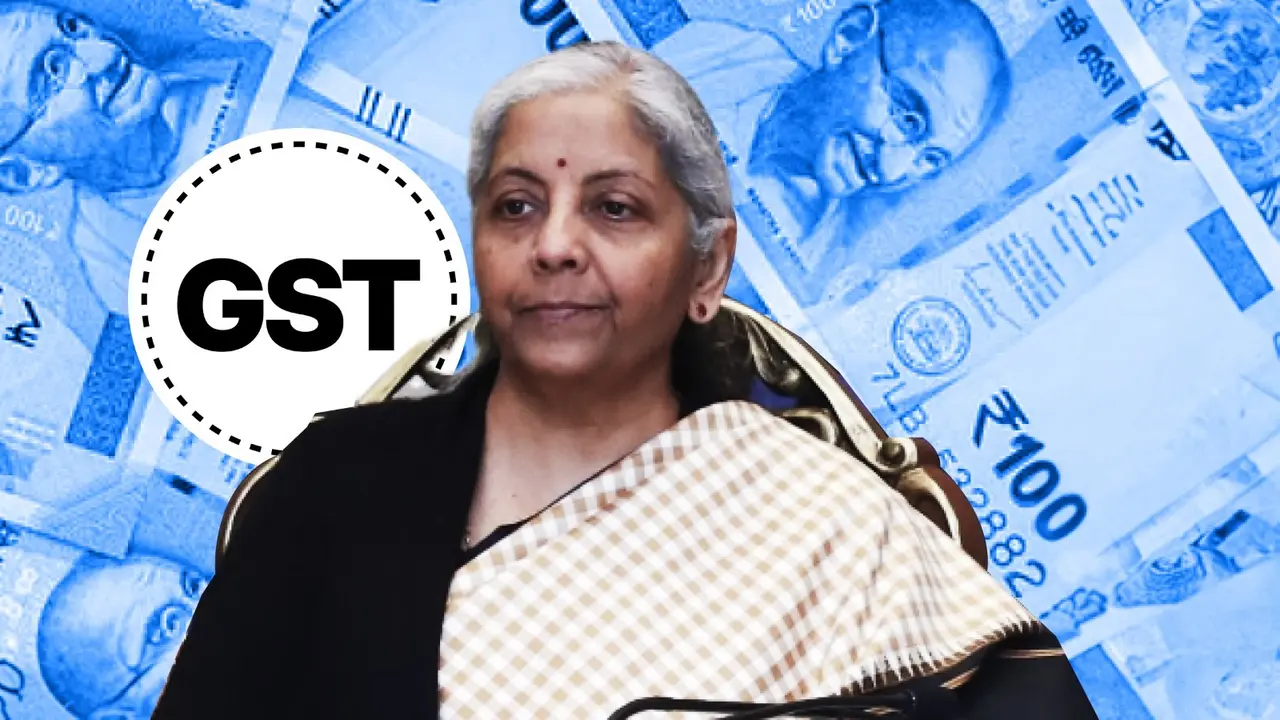
New Delhi: The 56th meeting of the Goods and Services Tax (GST) Council, chaired by Finance Minister Nirmala Sitharaman, is currently underway in the national capital on September 3 and 4.
The two-day session is being seen as one of the most significant since GST was introduced in 2017, with the focus on rationalising tax slabs and making compliance easier for businesses.
GST Slab Simplification
Government sources have indicated that the Council is actively considering removing the 12 per cent and 28 per cent tax brackets.
Under the proposal, most goods from the 12 per cent slab are likely to be moved into the 5 per cent category, while a majority of goods in the 28 per cent bracket could shift to the 18 per cent slab.
Advertisement
Only “sin goods” such as tobacco and luxury items would continue to attract a higher 40 per cent levy. This step, if approved, would simplify the GST structure and reduce the overall tax burden on consumers.
Advertisement
GST Regime To Become More Business-Friendly
According to Republic Media Network sources, the Council has also approved several measures aimed at making the GST regime more business-friendly.
Health insurance is likely to get cheaper with a reduction in GST rates, while start-ups could benefit from a faster registration process that may be completed within three days.
Refund timelines are also expected to improve, with export refunds likely to be processed within seven days through an automated system.
These steps would make compliance smoother, particularly for small businesses and MSMEs.
PM Modi Promised Big Gift
The timing of the meeting has drawn attention after Prime Minister Narendra Modi, in his Independence Day speech, hinted at a major GST reform and said people could expect a “big gift” during Diwali.
The Council is also expected to discuss a short-term compensation mechanism for states that may lose revenue due to rate cuts. However, the compensation cess structure, introduced in 2017 for a period of five years, is unlikely to be extended.
The final decisions are expected after deliberations conclude on September 4. If these proposals are cleared, the new reforms could bring big relief for the middle class, small traders and MSMEs, and mark a major step in simplifying India’s indirect tax system.