
$600M Daily Blow: Mideast War Triggers Global Tourism Crisis and 5,000+ Flight Cuts
The escalating conflict in West Asia has plunged the global tourism and aviation sectors into a severe crisis, with the World Travel & Tourism Council (WTTC) estimating daily losses of $600 million in visitor spending. Over 5,000 flights have been cancelled across major Gulf hubs like Dubai and Doha, while Indian carriers IndiGo and Air India Express have collectively disrupted over 125 routes.
- Republic Business
- 5 min read

;'%3e%3cpath%20d='m8,15.99c4.41,0,7.99-3.58,7.99-7.99S12.41,0,8,0,0,3.59,0,8s3.58,7.99,7.99,7.99Z'%20style='stroke:%23fff;%20stroke-miterlimit:10;%20stroke-width:.02px;'/%3e%3cpath%20d='m3.08,3.37l3.82,5.11-3.84,4.15h.87l3.37-3.64,2.72,3.64h2.94l-4.04-5.39,3.58-3.87h-.86l-3.1,3.35-2.5-3.35h-2.94Zm1.27.64h1.35l5.97,7.99h-1.35l-5.97-7.99Z'%20style='fill:%23fff;'/%3e%3c/g%3e%3c/svg%3e)


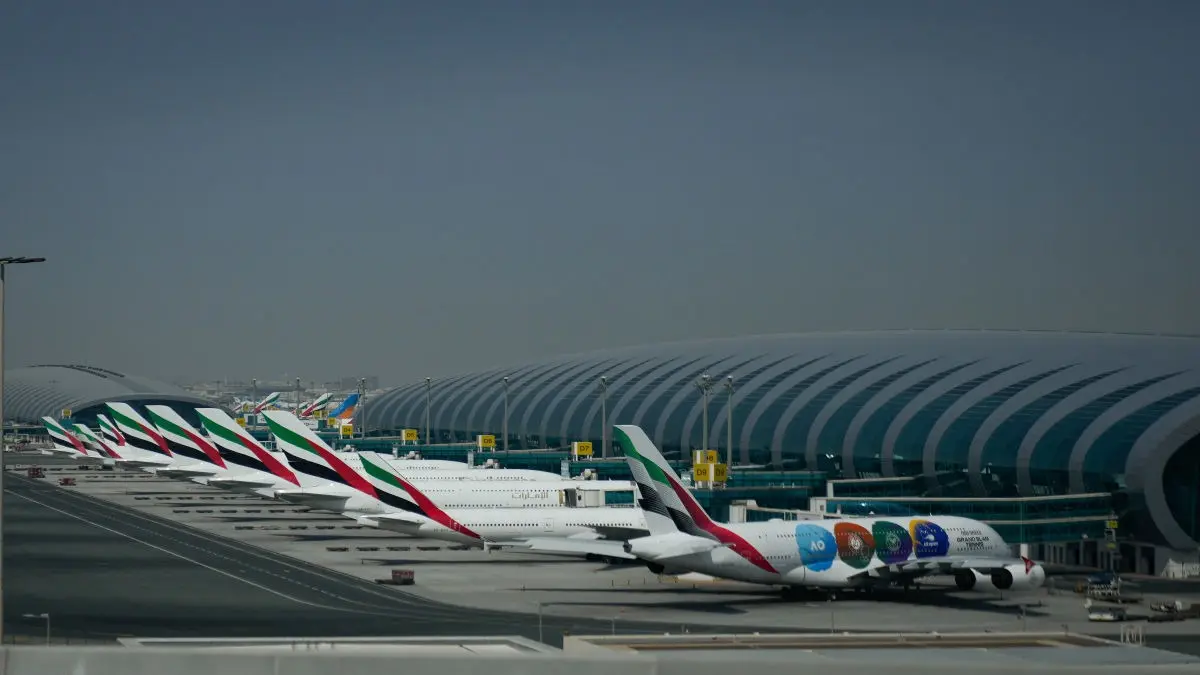
Geopolitical tensions in West Asia are beginning to ripple through the global tourism ecosystem, disrupting aviation networks, raising travel costs, and forcing thousands of travelers to delay or alter holiday plans across the Gulf region. Airspace closures and rerouted flight paths have triggered one of the biggest aviation disruptions since the pandemic, impacting travel hubs such as Dubai International Airport, Hamad International Airport, and Abu Dhabi International Airport.
The fallout is now spreading into tourism operators, travel agencies, and hospitality businesses that rely heavily on summer travel flows. Industry groups say the disruptions are reshaping travel patterns; however, not causing a complete collapse yet.
The conflict has triggered a sharp shock to aviation connectivity across the Middle East.
According to industry estimates:
Advertisement
• Over 5,000 flights have been cancelled across Gulf aviation networks in the first few weeks of hostilities.
• Indian carriers, including IndiGo and Air India Express, have curtailed operations in the region.
Advertisement
• IndiGo alone has suspended or disrupted more than 72 flights, while Air India Express has affected 55+ flights on West Asia routes.
The disruption has forced airlines to reroute flights away from restricted airspace corridors, particularly routes passing through Iran. As a result, flights between Asia and Europe are now taking three to five hours longer than usual, and are travelling via the Caucasus or south through Egypt to bypass restricted zones. The aviation shock is the primary driver of tourism disruption rather than security concerns at destinations.
Gulf Tourism Faces Massive Economic Losses
The regional tourism economy is already seeing significant financial losses. According to estimates from the World Travel & Tourism Council, the conflict is costing the Gulf tourism sector around $600 million per day in lost visitor spending.
Forecasts have also been revised. Research firm Oxford Economics said tourism arrivals in the region could decline between 11% and 27% year-on-year in 2026 if instability continues. Before the escalation, the Gulf tourism market was expected to grow 13% in 2026, driven by strong international travel demand and luxury tourism.
Instead, uncertainty is pushing many travelers to delay or rethink travel plans.
Travel bookings have already taken a major hit. Within the first week of the conflict, nearly 80,000 bookings were cancelled in Dubai alone, according to tourism industry estimates.
Luxury hospitality properties have also begun feeling the pressure. Hotels near prominent tourist zones, including Fairmont The Palm and areas around the iconic Burj Al Arab, have reportedly experienced damage from debris, triggering last-minute room availability and discounts. For many hotels, the situation is particularly concerning because the disruptions coincide with the start of the Gulf’s summer tourism cycle.
Travellers Delaying Trips
Despite the turmoil, travel agencies say demand has not collapsed entirely. According to Hari Ganapathy, co-founder of travel platform Pickyourtrail, the crisis has created caution among travellers but not a complete withdrawal: “Geopolitical tensions in West Asia have certainly created a sense of caution among travellers, particularly around airspace disruptions rather than the destinations themselves.”
Cities such as Dubai and Doha continue to be viewed as safe destinations on the ground, he noted, but uncertainty around aviation connectivity is influencing travel decisions. At present, travel agencies estimate the ratio of cancellations to rescheduled bookings at roughly 50–65%, suggesting many travellers are choosing to defer trips rather than cancel them outright.
Travel companies are helping customers reroute flights, modify itineraries and choose alternative destinations where connectivity remains stable. To assist travelers navigating the disruptions, Pickyourtrail has launched a travel advisory platform providing real-time updates and travel guidance.
Inbound Tourism to India Faces Selective Disruption
The ripple effects of aviation disruption are also being felt in India’s inbound tourism sector. The Indian Association of Tour Operators said to Republic Media Network that the summer 2026 inbound tourism season has seen selective disruptions.
According to the association:
• Tour cancellations and postponements from Europe and the Middle East range between 20% and 25%.
• The primary driver is aviation uncertainty, not safety concerns about India.
India continues to be perceived internationally as a safe and culturally rich travel destination, the association said. However, some tour flows are temporarily shifting toward Southeast Asia and Central Asia, which are easier to access amid the current aviation constraints. However, advance bookings for the winter travel season remain strong.
Tour operators say the biggest challenge right now is the surge in long-haul airfares. Flights from Europe to India have become significantly more expensive due to rerouted routes and increased operational costs for airlines.
According to IATO:
• Higher airfares are making India packages less price-competitive in the short term.
• Operators are responding by redesigning itineraries and promoting longer stays to justify higher travel costs.
Tour companies are also focusing more on premium travellers and experiential tourism rather than large budget groups. While low-cost group travel has slowed, niche and luxury travel segments remain relatively stable.
Industry Seeks Policy Support
The tourism industry is now pushing for stronger policy coordination to manage disruptions caused by geopolitical events. IATO said it is engaging with both the Ministry of Civil Aviation and the Ministry of Tourism, as well as international airline partners. One key concern is the absence of a uniform global policy for cancellations triggered by geopolitical disruptions.
The association has recommended:
• Standardised refund frameworks
• Credit shell policies for cancelled flights
• Greater coordination between airlines and tour operators
The timing of the conflict is particularly sensitive for Gulf tourism markets, which typically see a spike in international arrivals during the summer travel season. If aviation disruptions continue through the coming months, airlines, hotels and tour operators across the region could face prolonged revenue losses.