
Budget 2026: Central Govt Bets On Next-Gen Structural Reforms As Spending Room Tightens: What To Expect?
Government also plans a third major push to boost manufacturing as a share of the economy, after two failed attempts. It is also expected to ease rules for investments in defence manufacturing.
- Republic Business
- 2 min read

;'%3e%3cpath%20d='m8,15.99c4.41,0,7.99-3.58,7.99-7.99S12.41,0,8,0,0,3.59,0,8s3.58,7.99,7.99,7.99Z'%20style='stroke:%23fff;%20stroke-miterlimit:10;%20stroke-width:.02px;'/%3e%3cpath%20d='m3.08,3.37l3.82,5.11-3.84,4.15h.87l3.37-3.64,2.72,3.64h2.94l-4.04-5.39,3.58-3.87h-.86l-3.1,3.35-2.5-3.35h-2.94Zm1.27.64h1.35l5.97,7.99h-1.35l-5.97-7.99Z'%20style='fill:%23fff;'/%3e%3c/g%3e%3c/svg%3e)


New Delhi: Prime Minister Narendra Modi's government is all set to release its annual budget today, which is expected to strengthen domestic policy reforms to cushion the economy from rising uncertainties such as steep U.S. tariffs and broader geopolitical tensions.
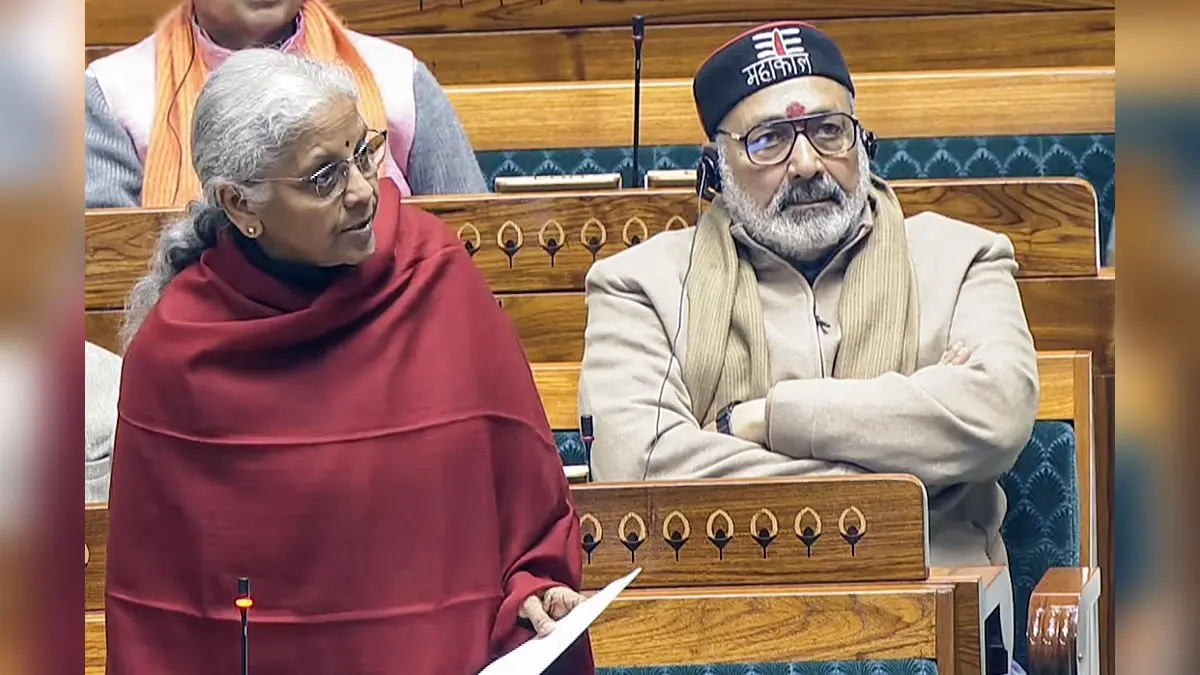
But Finance Minister Nirmala Sitharaman, who presents the budget for next fiscal year at 11 AM, will have to restrain spending as a share of gross domestic product, particularly after tax cuts are expected to reduce revenue by 1.5 trillion rupees ($16 billion) for this fiscal year.
India's deficit target for the 12 months through March is 4.4% of GDP.
"The nation is moving away from long-term problems to tread the path of long-term solutions. Long term solutions provide predictability that fosters trust in the world," Modi said on Thursday before the government's economic survey forecast growth of between 6.8% and 7.2% for the fiscal year starting in April.
India will continue with "next-generation reforms", as the next 25 years will be key to meeting the goal of making the South Asian nation a developed economy, he said.
Advertisement
To spur private investment and demand, New Delhi has rolled out a series of reforms in recent months, including consumption and income tax cuts, overhaul of labour laws and steps to open up the tightly controlled nuclear-power sector. More policy changes are expected in the budget.
Indian government also plans a third major push to boost manufacturing as a share of the economy, after two failed attempts. It is also expected to ease rules for investments in defence manufacturing.
Advertisement
Gross borrowing is expected to rise to between 16 trillion rupees and 16.8 trillion rupees for the year starting in April from this fiscal year's 14.6 trillion rupees.
India is also striking deals such as a landmark trade agreement with the European Union to offset the hit from the 50% tariffs President Donald Trump has imposed on some Indian goods shipped to the U.S. ($1 = 91.6710 Indian rupees)