
Budget 2026: Renewable, Storage Firms Seek Policy Push, PLI Support
Ahead of Budget 2026, clean energy and storage companies are seeking continued policy support for renewables, hybrid systems, energy storage and domestic manufacturing, citing India’s rapid capacity additions and rising investment momentum.
- Republic Business
- 2 min read

;'%3e%3cpath%20d='m8,15.99c4.41,0,7.99-3.58,7.99-7.99S12.41,0,8,0,0,3.59,0,8s3.58,7.99,7.99,7.99Z'%20style='stroke:%23fff;%20stroke-miterlimit:10;%20stroke-width:.02px;'/%3e%3cpath%20d='m3.08,3.37l3.82,5.11-3.84,4.15h.87l3.37-3.64,2.72,3.64h2.94l-4.04-5.39,3.58-3.87h-.86l-3.1,3.35-2.5-3.35h-2.94Zm1.27.64h1.35l5.97,7.99h-1.35l-5.97-7.99Z'%20style='fill:%23fff;'/%3e%3c/g%3e%3c/svg%3e)


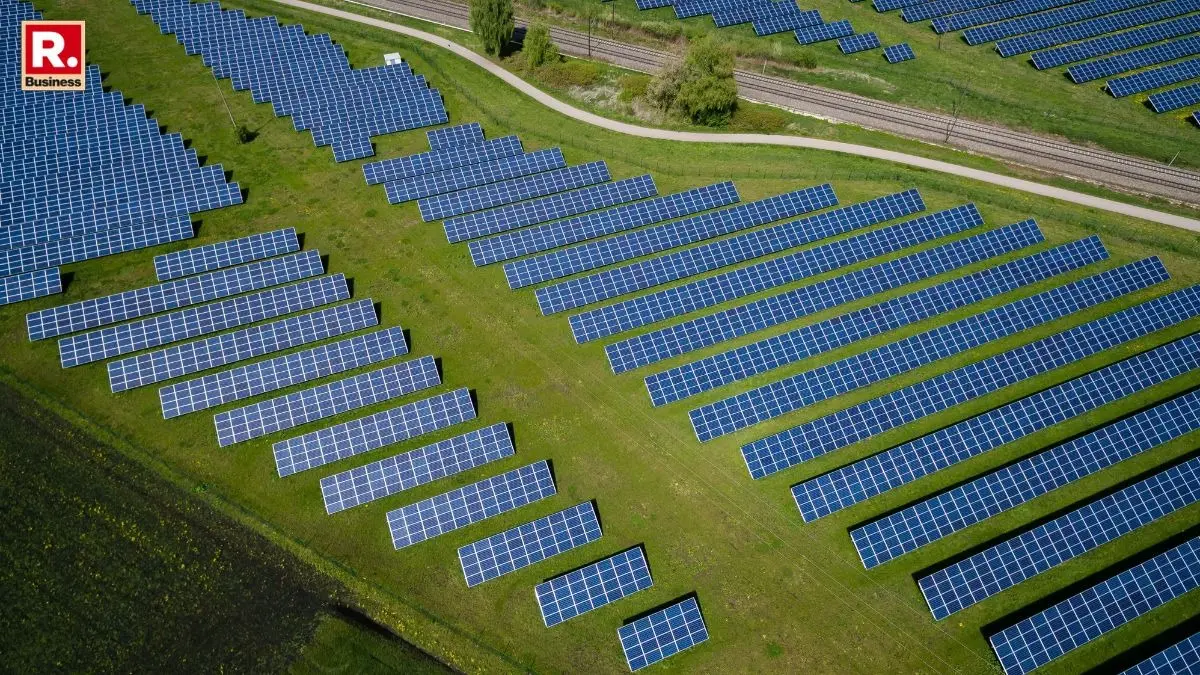
As the government prepares to present the Union Budget for 2026–27, renewable energy and energy storage companies are calling for sustained policy backing to maintain India’s clean energy momentum and support domestic manufacturing.
India added around 48–50 GW of renewable energy capacity in 2025, supported by investments of approximately ₹2 trillion, taking the country’s total non-fossil fuel capacity to about 262–263 GW, according to industry estimates. The expansion is seen as a key step toward India’s target of 500 GW of non-fossil capacity by 2030.
Renewables Scale Up, Focus Shifts to Hybrids and Storage
Dr Faruk G. Patel, Founder, Chairman, and Managing Director of KPI Green Energy, said India’s renewable journey is entering a new phase driven by scale and innovation.
“India’s renewable energy journey is transitioning into an era of innovation, scale, and economic opportunity,” Patel said.
Advertisement
He noted that the sector now requires policy support that goes beyond capacity addition and focuses on integration and reliability.
“In the upcoming Budget 2026, we look forward to continued policy support that accelerates the deployment of hybrid energy systems, energy storage, and green hydrogen value chains,” Patel said.
Advertisement
Patel added that strengthening incentives for domestic manufacturing and capital support mechanisms such as viability gap funding would help sustain investor confidence while improving energy security and job creation.
Battery Manufacturing, PLI Extension a Key Ask
Energy storage players, meanwhile, are emphasising the urgency of fiscal and policy support for battery manufacturing as India moves toward round-the-clock clean power.
Bhuvneshwar Pal Singh, Co-Founder and CFO of MaxVolt Energy Industries Limited, said long-term policy clarity would be critical for the sector’s next phase.
“The extension and deepening of production-linked incentives for battery and energy-storage manufacturing is no longer just a good thing; it is a necessity,” Singh said.
He added that smoother access to green finance and greater emphasis on research and development would help build a globally competitive ‘Make in India’ supply chain.
Energy Security and Circular Economy in Focus
Singh also highlighted the link between clean energy, geopolitics, and resource security.
“The rise in demand for resources linked to political unrest makes it unavoidable for a nation to switch over to a circular economy, not only for financial reasons but also for the sake of its security,” he said.
Industry executives said Budget 2026 could play a pivotal role in aligning renewable generation, storage capacity, and manufacturing incentives to ensure reliable clean power, attract capital, and reinforce India’s position as a global clean-tech hub.