
Bank of England Set to Keep Rates at 3.75% Amid Iran War; Inflation Risks Spark Rate Hike Bets
The Bank of England is expected to hold interest rates at 3.75% this Thursday as it assesses the economic damage from the Iran war. While Governor Andrew Bailey warns against premature moves, markets are pricing in hikes for July as UK inflation remains the highest in the G7.
- Republic Business
- 4 min read

;'%3e%3cpath%20d='m8,15.99c4.41,0,7.99-3.58,7.99-7.99S12.41,0,8,0,0,3.59,0,8s3.58,7.99,7.99,7.99Z'%20style='stroke:%23fff;%20stroke-miterlimit:10;%20stroke-width:.02px;'/%3e%3cpath%20d='m3.08,3.37l3.82,5.11-3.84,4.15h.87l3.37-3.64,2.72,3.64h2.94l-4.04-5.39,3.58-3.87h-.86l-3.1,3.35-2.5-3.35h-2.94Zm1.27.64h1.35l5.97,7.99h-1.35l-5.97-7.99Z'%20style='fill:%23fff;'/%3e%3c/g%3e%3c/svg%3e)


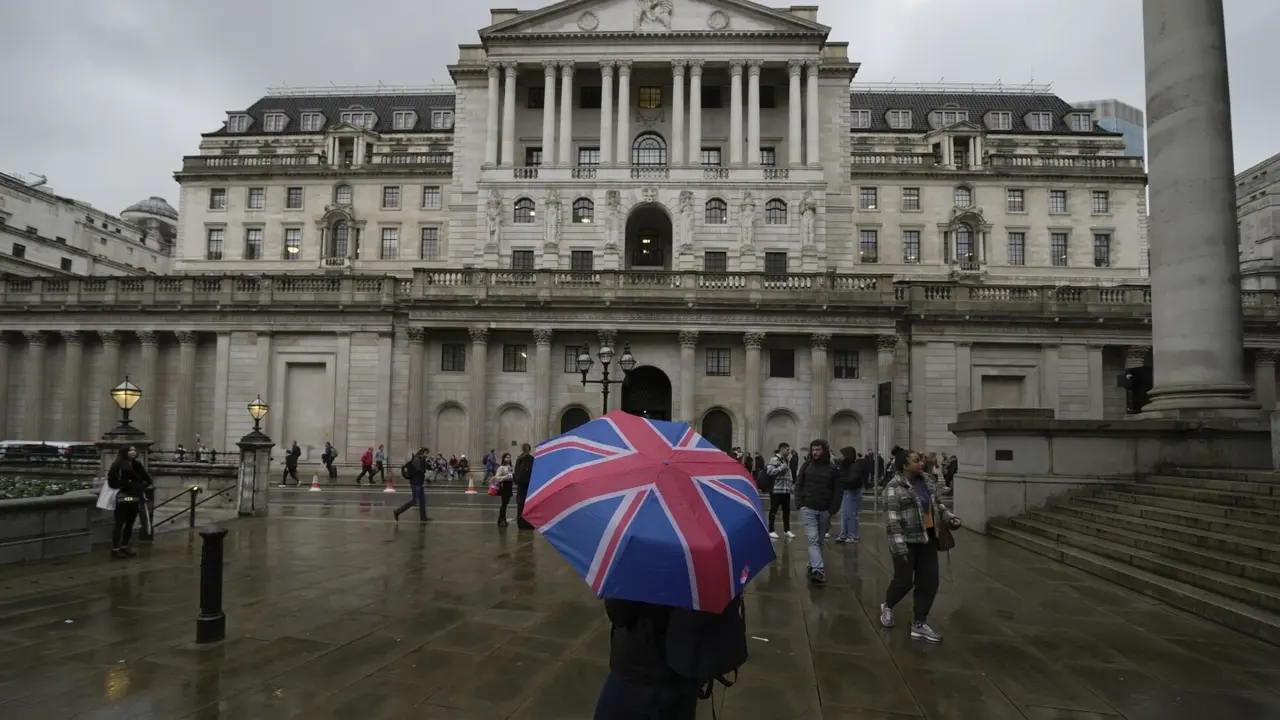
The Bank of England will keep interest rates on hold this week and try to look ahead to the damage building up for Britain's economy from the Iran war, while investors will be watching for any signs it is moving towards raising rates.
The BoE kept borrowing costs on hold in March as it waited to see the extent of the inflationary and growth hits from the conflict. With uncertainty still high, another no-change decision is expected on Thursday.
But investors say rate hikes are likely later this year. On Friday, they fully priced a quarter-point increase in July, another in September and a small chance of a third by year-end, despite Governor Andrew Bailey warning that such moves would be premature.
Those bets will intensify on Thursday this week if some Monetary Policy Committee members decide the risks of another bout of high inflation - with memories still fresh of how it surpassed 11% in 2022 - merit a rate hike now. Economists polled by Reuters last week mostly expected an 8-1 vote by the MPC to keep Bank Rate at 3.75% this week after March's 9-0 vote. Unlike financial markets, they mostly do not foresee rate hikes this year.
Advertisement
But some analysts said as many as three policymakers might call for Bank Rate to go up to 4.0% to prevent a jump in headline inflation from pushing up wage demands and prices charged by companies.
Investors view Britain's economy as particularly vulnerable to the jump in energy prices caused by the war due to the country's heavy use of natural gas. Data published last week showed a jump in input costs for firms and companies raising their expectations for price increases in the 12 months ahead at a record pace. Earlier this month the International Monetary Fund predicted British inflation, the highest in the Group of Seven for much of the last four years, would peak at 4% this year.
Advertisement
WAITING, BUT ALSO SEEING?
In a challenge to Bailey's view that it is too early to know the inflationary impact of the war, BoE Chief Economist Huw Pill said on April 17: "If you're waiting and seeing and you don't see, then you've just waited."
Pill and other MPC members who were uneasy about inflation pressure lingering in Britain's economy before the war are likely to focus on a rise in service price growth in March as well as the signs of strong price pressures for companies.
By contrast, other members might highlight the risk of a further weakening in hiring and the hit to confidence among consumers and businesses.
Given the lack of clarity about the duration of the war and the extent to which higher energy prices will feed through into broad inflation pressures, the MPC might choose to reiterate its message from March that it stands "ready to act."
Thomas Pugh, chief UK economist at accountancy firm RSM, said any hawkish tone to the BoE's message on Thursday does not mean rate rises will follow imminently.
"The economic data is likely to take a downturn over the next few months, which could shift the emphasis back to concerns about the economy before the next meeting," Pugh said.
The BoE is also due to publish the first full update of its economic forecasts since the war began which is likely to show higher inflation and weaker growth in 2026 and 2027.
Given the uncertain outlook and the challenge of making precise forecasts, Edward Allenby, senior UK economist at Oxford Economics, said he would put more weight on how MPC members position themselves regarding different scenarios that the BoE is expected to produce along with the best paths for rates.
"Our baseline forecast assumes Bank Rate will remain on hold for the rest of the year," Allenby said in a note to clients. "The committee will have more information about how the energy shock is feeding through to the economy by the end-July meeting," he added.
Bailey and other members of the MPC are due to hold a press conference at 1130 GMT, half an hour after their rates decision is announced. (Writing by William Schomberg; Editing by Hugh Lawson)