
From Aspiration to Reality: Mercedes, BMW, JLR, Audi Prices Likely to Fall After GST Cut
GST 2.0 has capped luxury car taxes at 40%, down from 45–50%, making brands like Mercedes, BMW, Audi and JLR more affordable. Effective from Sept 22, the reform is expected to fuel festive season demand and expand luxury car sales beyond the current 1% share in India’s auto market
- Republic Business
- 2 min read

;'%3e%3cpath%20d='m8,15.99c4.41,0,7.99-3.58,7.99-7.99S12.41,0,8,0,0,3.59,0,8s3.58,7.99,7.99,7.99Z'%20style='stroke:%23fff;%20stroke-miterlimit:10;%20stroke-width:.02px;'/%3e%3cpath%20d='m3.08,3.37l3.82,5.11-3.84,4.15h.87l3.37-3.64,2.72,3.64h2.94l-4.04-5.39,3.58-3.87h-.86l-3.1,3.35-2.5-3.35h-2.94Zm1.27.64h1.35l5.97,7.99h-1.35l-5.97-7.99Z'%20style='fill:%23fff;'/%3e%3c/g%3e%3c/svg%3e)


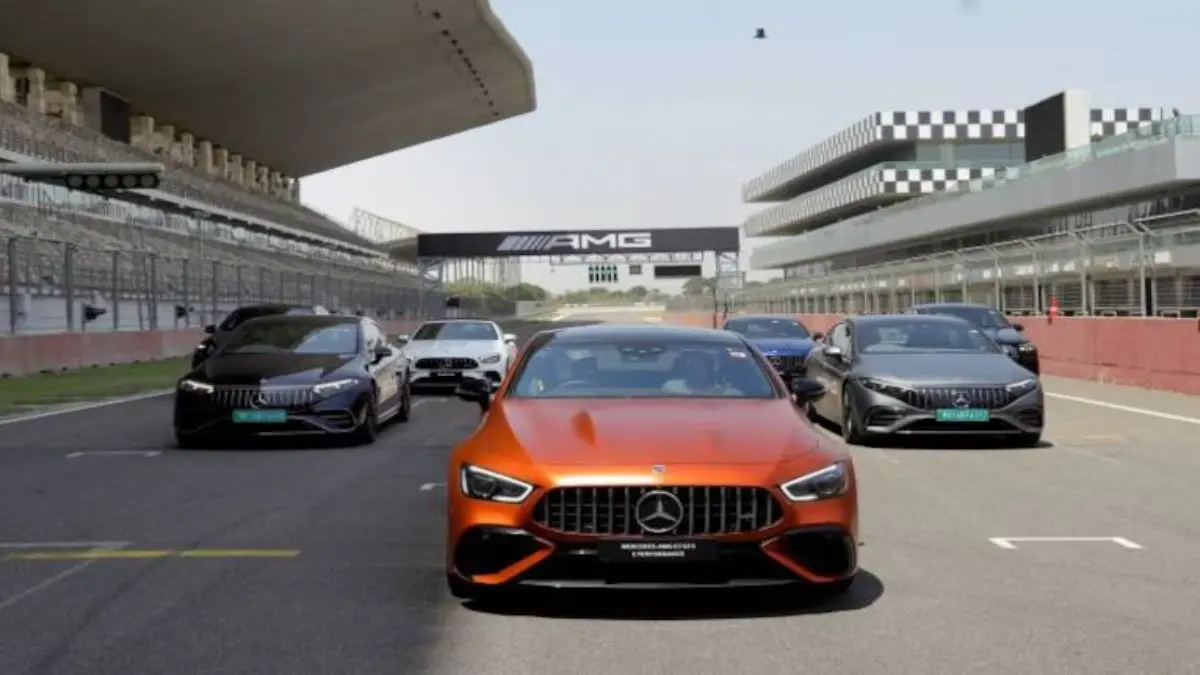
India’s luxury car market is poised for a shake-up following the GST Council’s recent overhaul of the tax structure under GST 2.0. The move is expected to make high-end vehicles from Mercedes-Benz, BMW, Audi, and Jaguar Land Rover (JLR) more affordable, boosting demand in a segment that has long remained niche.
As part of the rationalisation, only two main slabs—5% and 18%—now remain. The 12% and 28% rates have been scrapped, while a new 40% slab has been introduced for luxury and sin goods. Earlier, all internal combustion engine (ICE) cars were taxed at 28% plus a compensation cess of 1–22%. For luxury models, that cess ranged between 17–22%, pushing the effective tax burden to nearly 45–50%.
With GST 2.0, the compensation cess has been removed, and luxury cars will now be taxed at a maximum of 40%. This 5–10 percentage point reduction is expected to cut ex-showroom prices across the premium segment. The revised rates take effect from September 22, coinciding with the start of Navaratri—a period traditionally associated with strong auto sales.
Advertisement
Luxury carmakers are upbeat about the change. Mercedes-Benz, whose C-Class and E-Class have a strong following in India, is expected to see significant price corrections. BMW’s 3 Series and X1, Audi’s A4 and Q3, and JLR’s Range Rover Evoque are also likely to become more attainable. Dealers believe this could spark fresh interest, particularly among first-time buyers in the premium segment.
Despite India being the world’s third-largest car market, luxury models currently account for only around 1% of total sales. Industry observers reckon that the rate cut could help expand this share to 3% over time, aligning India more closely with global benchmarks.
Advertisement
Industry bodies like SIAM and FADA have welcomed the reform, noting that lower prices will not only lift sales but also strengthen allied industries like finance, insurance, and aftersales services.
For aspirational buyers, GST 2.0 may well be the turning point that turns the dream of owning a Mercedes, BMW, or Audi into reality.