
From India To China: Who Will Be Impacted If Iran Blocks Strait of Hormuz?
Fuel prices in India are expected to skyrocket if Iran blocks the backbone of maritime supply chain- Strait of Hormuz.
- Republic Business
- 4 min read

;'%3e%3cpath%20d='m8,15.99c4.41,0,7.99-3.58,7.99-7.99S12.41,0,8,0,0,3.59,0,8s3.58,7.99,7.99,7.99Z'%20style='stroke:%23fff;%20stroke-miterlimit:10;%20stroke-width:.02px;'/%3e%3cpath%20d='m3.08,3.37l3.82,5.11-3.84,4.15h.87l3.37-3.64,2.72,3.64h2.94l-4.04-5.39,3.58-3.87h-.86l-3.1,3.35-2.5-3.35h-2.94Zm1.27.64h1.35l5.97,7.99h-1.35l-5.97-7.99Z'%20style='fill:%23fff;'/%3e%3c/g%3e%3c/svg%3e)


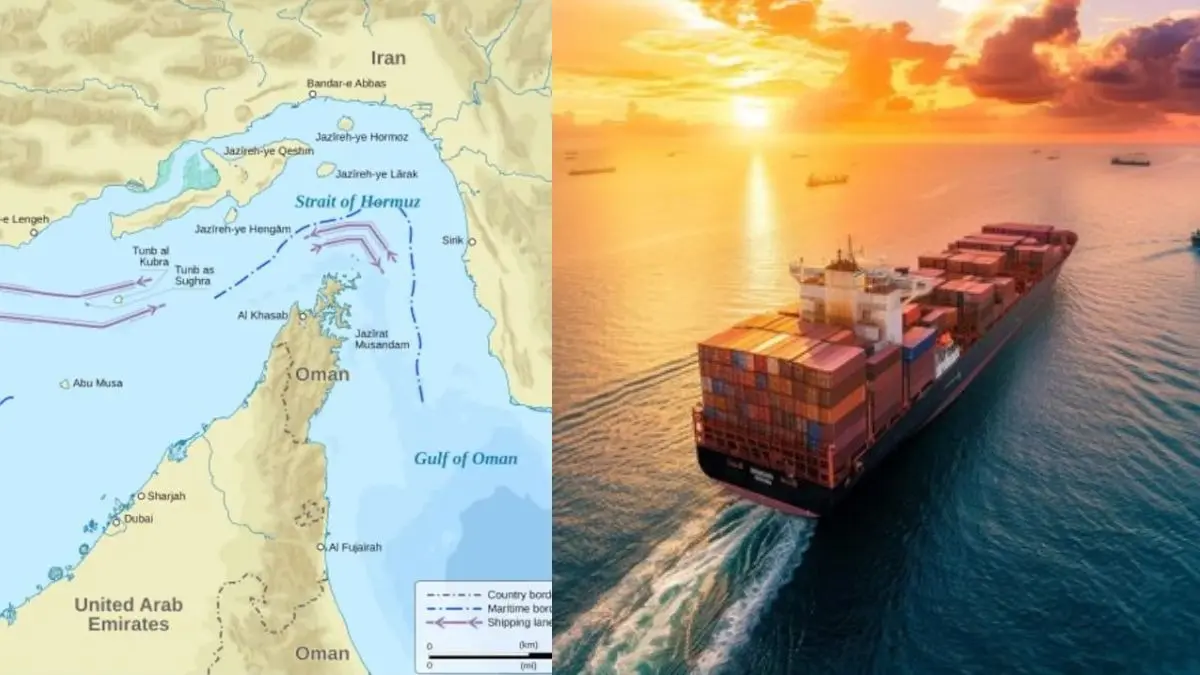
On the scale of impact that volatility in the Strait of Hormuz will have on India, Industrialist Harsh Goenka noted that the South Asian nation will be "worst affected".
The vital strait open for maritime trade located between Iran, Oman and the UAE, is credited for almost 20% of the world's oil supply flows, nearly 17 million barrels every day.
This oil comes from eight countries located in the Persian Gulf including Iran, Iraq, Kuwait, Bahrain, Qatar, Saudi Arabia and the UAE for the United Arab Emirates.
Countries Likely To Be Impacted If Iran Blocks Strait of Hormuz
Saudi Arabia, Kuwait and Qatar, 90% of their oil exports pass through this narrow route to reach the rest of the world. If Iran blocks the Strait of Hormuz, following countries will suffer the most damage.
Advertisement
First is India because it imports 85% of its oil and 60% of that comes from Middle Eastern countries like Iraq, Saudi Arabia, Kuwait and the UAE.
Fuel prices in India would skyrocket and as a result everything related to oil and all industries would face severe disruption. Industries could shut down, there would be job losses and the economy would be severely affected.
Advertisement
However, India's energy stocks such as Oil India, and ONGC painted a different outlook. The rising crude oil prices turned out to be a positive cue for upstream oil marketing companies as higher prices translates into higher revenue. In trade on March 2, the shares of Oil and Natural Gas Corporation Ltd (ONGC) rose 5% to hit an 52-week-high of Rs 293.15 on the BSE, while Oil India rose 4.5% to Rs 505.50 per share.
The second most affected country would be China. China is the world's largest oil importer, bringing in 10 million barrels of oil every day. 40% of China's oil imports pass through this Strait of Hormuz. Although China has built oil pipelines with Russia and Central Asia, they don't even fulfill 20% of its energy needs.
So, if the Strait of Hormuz is blocked, China's economy could suffer a massive blow and if China's economy is shaken, its effects will be felt all over the world. The third most affected country would be Japan as it imports 90% of its oil and 75% of that passes through the Strait of Hormuz. The fourth most affected country would be Saudi Arabia.
Currently, 80-90% of Saudi Arabia's oil goes to the rest of the world through Strait of Hormuz, while only 10% goes to Europe via its Red Sea coastline. So if this choke point is blocked, Saudi Arabia's economy will be heavily impacted. Imagine that a country suddenly loses 80-90% of its revenue.
Next is Pakistan, which receives nearly 90% of its oil through the Strait of Hormuz.
Since Pakistan shares a border with Iran and several government reports suggest that 35% of Pakistan's diesel comes unofficially from Iran. So if the Strait is blocked, Pakistan might turn to Iran for oil, either quietly or through an official deal. Next in line is the UAE because as nearly as 72% of its oil exports rely on this Strait of Hormuz.
The country does have a backup option, the Habshan-Fujairah pipeline, which allows it to bypass the Strait and export up to 60% of its oil. But for a major economy like the UAE, losing the remaining 40% would still be a serious blow. Next comes the European countries like France, Germany and Italy, which on average get 10% of their oil through the Strait of Hormuz.
A blockade here would hit them hard as well. Globally, experts warn that oil prices could soar past $150 a barrel, causing widespread inflation and possibly triggering a major global recession. So this small 33 kilometre area holds enough power to shake the entire world.