
From Jobs to Jewellery: How US Tariffs Could Pinch Indian Consumers
The US has imposed steep 50% tariffs on Indian exports since August 27, 2025. While the direct GDP impact is small, analysts warn of second-order risks — from job losses in textiles and gems to rising costs for everyday goods. Consumers may see weaker demand and higher prices inthe coming months.
- Republic Business
- 2 min read

;'%3e%3cpath%20d='m8,15.99c4.41,0,7.99-3.58,7.99-7.99S12.41,0,8,0,0,3.59,0,8s3.58,7.99,7.99,7.99Z'%20style='stroke:%23fff;%20stroke-miterlimit:10;%20stroke-width:.02px;'/%3e%3cpath%20d='m3.08,3.37l3.82,5.11-3.84,4.15h.87l3.37-3.64,2.72,3.64h2.94l-4.04-5.39,3.58-3.87h-.86l-3.1,3.35-2.5-3.35h-2.94Zm1.27.64h1.35l5.97,7.99h-1.35l-5.97-7.99Z'%20style='fill:%23fff;'/%3e%3c/g%3e%3c/svg%3e)


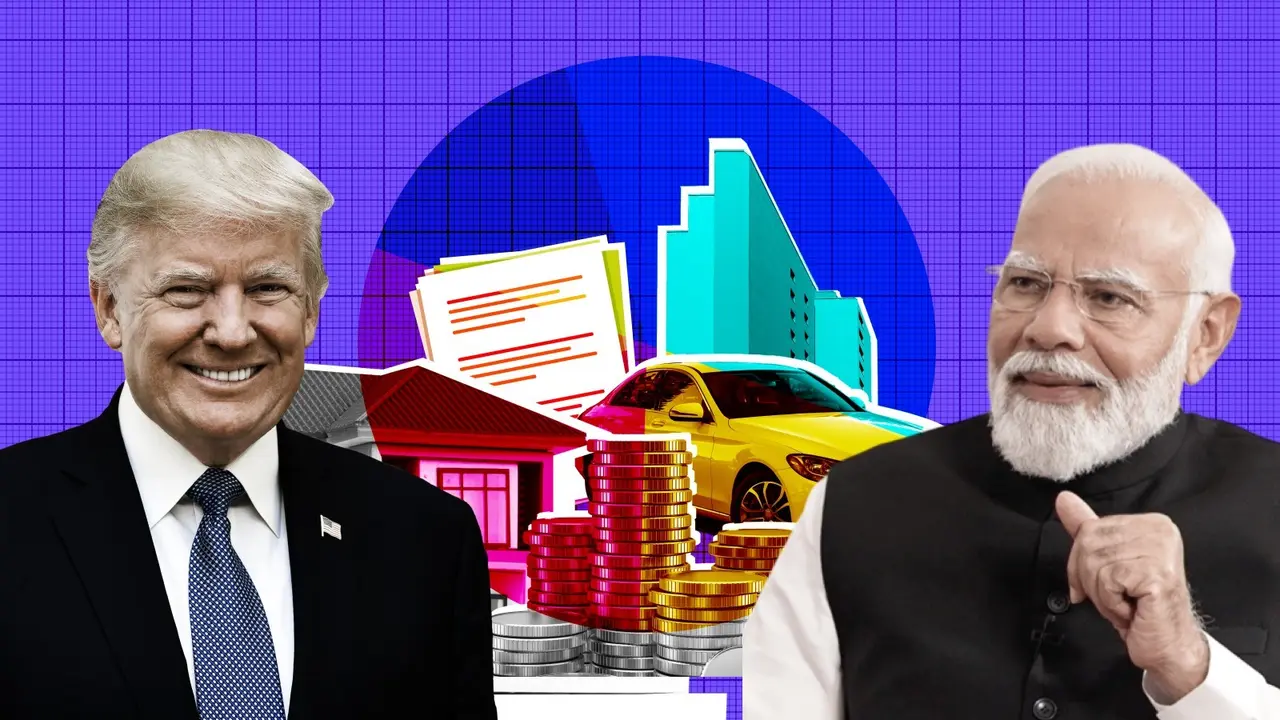
The worst-case tariff scenario has played out, with the US slapping an effective 50% levy on imports from India starting August 27, 2025.
According to Emkay Global, the direct economic hit is limited to about 0.5% of GDP for FY26, but the larger risks lie in indirect consequences.
Jobs at Risk, Consumption Impacted
Experts highlight that around 3 lakh workers in textiles and jewellery are vulnerable to layoffs due to shrinking export demand. These are largely low-income jobs, which means India’s mass-market consumption could take a hit. “Mass layoffs potentially hurt consumption,” the Emkay report noted, warning of a cascading effect on household demand.
Impact on Consumers
While the tariffs directly affect exporters, consumers may also feel the pinch. A weaker rupee and potential price hikes in imported goods could translate into higher costs for electronics, lifestyle products, and even household staples. Additionally, job insecurity among low-income workers could suppress consumer spending on discretionary categories like fashion, jewellery, and travel.
Foreign Investment Concerns
The rupee has already weakened against Asian peers, with foreign portfolio investors (FPIs) pulling out over ₹52,000 crore in July–August 2025. Analysts caution that persistent outflows may push up borrowing costs, which could filter down to consumers via costlier loans and EMIs.
GST 2.0 Could Offer Relief
Markets are now eyeing the upcoming GST Council meeting on September 4–5, where a new three-tier GST structure (5%, 12%, 40%) is expected. Analysts believe this could act as a growth catalyst. If GST cuts materialize in consumer goods, households may see some relief in prices, offsetting the tariff shock.
Read More - India's Q1 GDP Growth Beats Expectations, Experts Call It 'Impressive'
Expert View
“We remain constructive on a consumption revival cascading from multiple fiscal and monetary stimuli,” said Emkay Global analysts, maintaining a Nifty target of 28,000 for September 2026. However, they cautioned that second-order risks from job losses and currency weakness remain significant