
India Goes Big on Chips: Cabinet Okays Rs 4,594 Crore Investment in Semiconductor Revolution
The Union Cabinet has approved Rs 4,594 crore for four semiconductor projects in Odisha, Punjab and Andhra Pradesh. The facilities will boost domestic chip production, attract private investment, create jobs, and strengthen India’s position in the global electronics supply chain.
- Republic Business
- 3 min read

;'%3e%3cpath%20d='m8,15.99c4.41,0,7.99-3.58,7.99-7.99S12.41,0,8,0,0,3.59,0,8s3.58,7.99,7.99,7.99Z'%20style='stroke:%23fff;%20stroke-miterlimit:10;%20stroke-width:.02px;'/%3e%3cpath%20d='m3.08,3.37l3.82,5.11-3.84,4.15h.87l3.37-3.64,2.72,3.64h2.94l-4.04-5.39,3.58-3.87h-.86l-3.1,3.35-2.5-3.35h-2.94Zm1.27.64h1.35l5.97,7.99h-1.35l-5.97-7.99Z'%20style='fill:%23fff;'/%3e%3c/g%3e%3c/svg%3e)


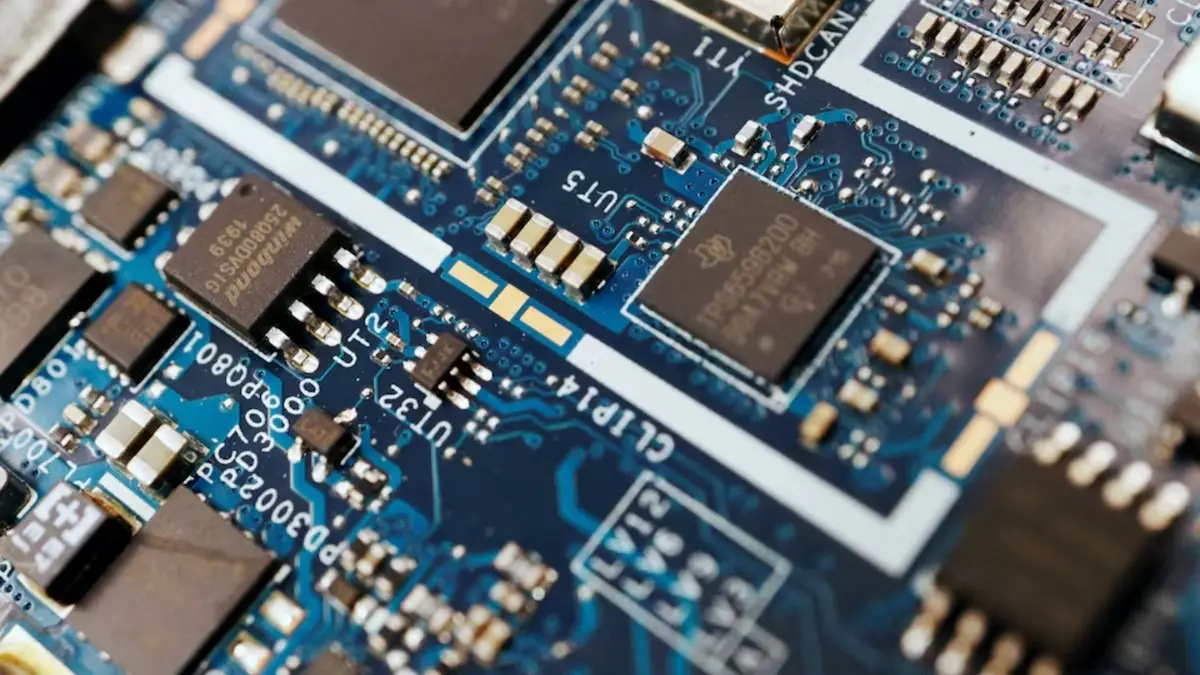
The Union Cabinet has approved Rs 4,594 crore for setting up four semiconductor projects in Odisha, Punjab and Andhra Pradesh, giving a major push to India’s goal of becoming a global chip manufacturing hub. The initiative aims to build a strong electronics manufacturing base and cut reliance on imported semiconductors.
The Ministry of Electronics and Information Technology (MEIT) stated that the projects will focus on chip assembly, testing, marking and packaging (ATMP) facilities, as well as manufacturing of compound semiconductors. MEIT claims these projects are expected to attract additional private investments, create thousands of jobs, and support India’s growing demand for semiconductors across sectors such as automotive, telecommunications, consumer electronics, and renewable energy.
Project locations and partners
The Odisha project, to be established near Bhubaneswar, will specialise in ATMP operations for power electronics components used in electric vehicles, industrial motors, and renewable energy systems.
In Punjab, a unit near Mohali will cater to optoelectronic semiconductors, which are critical for fibre-optic communication and advanced imaging. Additionally, Andhra Pradesh will host two projects—one in Tirupati focusing on compound semiconductors for high-frequency applications, and another in Visakhapatnam dedicated to advanced packaging solutions.
Advertisement
While the Cabinet has sanctioned Rs 4,594 crore from the central exchequer, the projects are structured under a public–private partnership model. The government funding will cover capital support, infrastructure development, and initial operational assistance, with industry partners committing additional investments.
Advertisement
Strategic importance
According to industry estimates, India’s semiconductor market is projected to reach $64 billion by 2026, driven by rising demand in electronics manufacturing and emerging technologies like 5G, AI, and electric mobility. Currently, the country imports nearly all of its semiconductor requirements, making it vulnerable to global supply disruptions—a challenge highlighted during the pandemic.
Union IT and Electronics Minister Ashwini Vaishnaw said the new projects will help “lay the foundation for a robust domestic semiconductor ecosystem” and “position India as a trusted partner in the global electronics value chain.” He also noted that the strategic distribution of the projects across states reflects the government’s commitment to balanced regional development.
Employment and skills development
The initiatives are expected to generate direct employment for over 6,000 skilled workers and create indirect opportunities for another 20,000 people in allied sectors. Each facility will include training centres in collaboration with local technical institutions to build a talent pipeline for the semiconductor industry.
Industry analysts see the Cabinet’s decision as a critical step towards realising the goals of the India Semiconductor Mission, launched in 2021.
Pankaj Mohindroo, Chairman of the India Cellular and Electronics Association (ICEA), praised the government’s recent approvals under the India Semiconductor Mission, highlighting that these projects reflect “the strong vision of Prime Minister Shri Narendra Modi and the decisive leadership of Shri Ashwini Vaishnaw.” He added that ICEA’s leadership forums will work to “scale up manufacturing, strengthen design capabilities, mobilise capital, and nurture talent” to help India achieve lasting global leadership in semiconductors.