
India Looks To Domestic Demand, New Trade Deals To Cushion Blow From US Tariffs: GTRI
With the United States imposing steep 50% tariffs on a wide range of Indian exports starting today, trade experts say New Delhi will have to quickly recalibrate its strategy to protect exporters, especially those in labour-heavy sectors.d.
- Republic Business
- 2 min read

;'%3e%3cpath%20d='m8,15.99c4.41,0,7.99-3.58,7.99-7.99S12.41,0,8,0,0,3.59,0,8s3.58,7.99,7.99,7.99Z'%20style='stroke:%23fff;%20stroke-miterlimit:10;%20stroke-width:.02px;'/%3e%3cpath%20d='m3.08,3.37l3.82,5.11-3.84,4.15h.87l3.37-3.64,2.72,3.64h2.94l-4.04-5.39,3.58-3.87h-.86l-3.1,3.35-2.5-3.35h-2.94Zm1.27.64h1.35l5.97,7.99h-1.35l-5.97-7.99Z'%20style='fill:%23fff;'/%3e%3c/g%3e%3c/svg%3e)


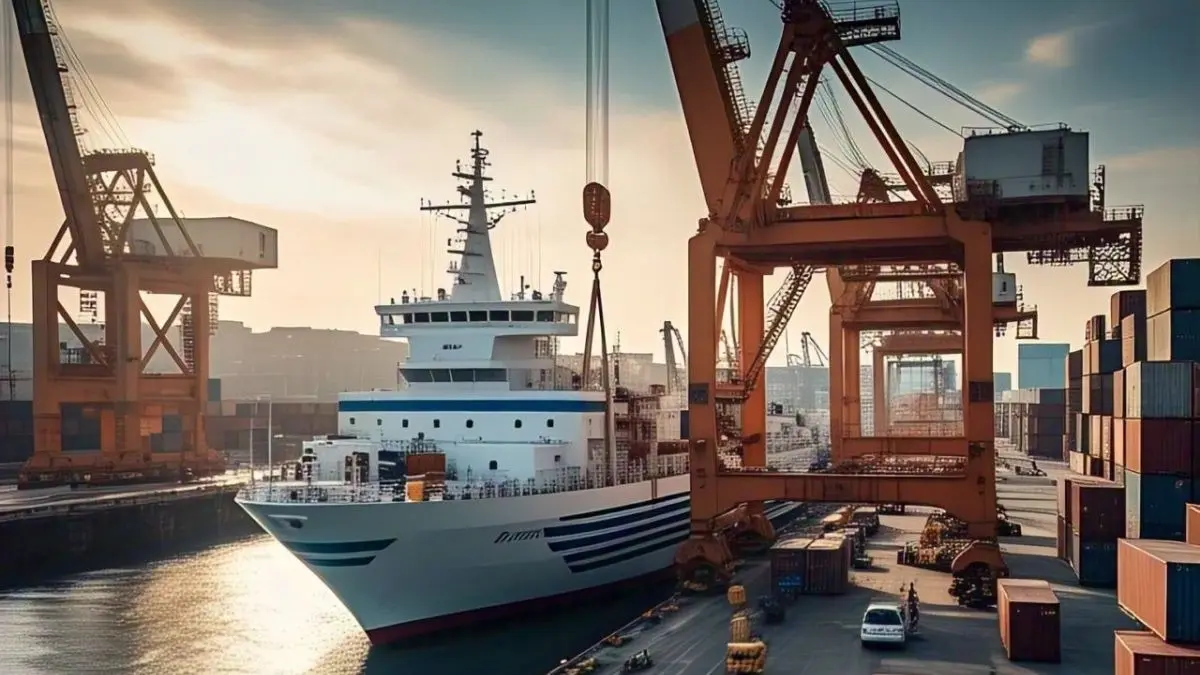
With the United States imposing steep 50% tariffs on a wide range of Indian exports starting today, trade experts say New Delhi will have to quickly recalibrate its strategy to protect exporters, especially those in labour-intensive sectors.
Ajay Srivastava, founder of the Global Trade Research Initiative (GTRI), noted that while the new duties will hurt, India is not without options.
“Our exports make up just 20% of the economy, while the domestic market absorbs nearly 80% of production. Given that India is growing at 6–7% annually, rising consumption at home can take in part of the shock,” he was quoted as saying to ANI.
The second route, he added, lies in finding new destinations for shipments that will struggle in the US. New Delhi has already fast-tracked negotiations on free trade agreements (FTAs) with the European Union and Peru, while the India-UK trade pact is ready for implementation.
“If these deals are activated quickly, they can provide a cushion against the US setback,” Srivastava explained.
Advertisement
Also Read: From Chips to Charts: India’s Electronics Boom Powers Export Revival, Says GTRI | Republic World
Sectors such as textiles, garments, gems, jewellery, and shrimp are expected to be among the hardest hit. These industries rely heavily on American buyers and face stiff competition from rivals like China, Bangladesh, and Vietnam — all of whom enjoy access at lower tariff rates.
Advertisement
“Unless there is relief, most Indian products risk being priced out of the US market,” he cautioned.
However, Srivastava pointed out that smaller and medium-sized exporters are less exposed. Many of them avoid the US due to its costly certification requirements and instead focus on lower-end markets, which limits their vulnerability to Washington’s move.
On the question of whether trade talks with Washington are effectively over, he remained optimistic. “Negotiations have only paused, not ended. Both countries are still open to engagement, and talks could resume at any time,” he said.
In the longer term, GTRI suggests that India must go beyond trade diversions and build resilience by improving product quality and lowering manufacturing costs, thereby strengthening the global competitiveness of its exports.