
India-New Zealand FTA: Five Key Takeaways After PM Modi's Call With NZ Counterpart
India and New Zealand have concluded a historic Free Trade Agreement. The deal, finalised in just nine months, offers zero-duty access for all Indian exports, tariff cuts on 95% of New Zealand goods, a $20 billion investment pledge, enhanced student and professional visas. The agreement aims to double bilateral trade in five years.
- Republic Business
- 4 min read

;'%3e%3cpath%20d='m8,15.99c4.41,0,7.99-3.58,7.99-7.99S12.41,0,8,0,0,3.59,0,8s3.58,7.99,7.99,7.99Z'%20style='stroke:%23fff;%20stroke-miterlimit:10;%20stroke-width:.02px;'/%3e%3cpath%20d='m3.08,3.37l3.82,5.11-3.84,4.15h.87l3.37-3.64,2.72,3.64h2.94l-4.04-5.39,3.58-3.87h-.86l-3.1,3.35-2.5-3.35h-2.94Zm1.27.64h1.35l5.97,7.99h-1.35l-5.97-7.99Z'%20style='fill:%23fff;'/%3e%3c/g%3e%3c/svg%3e)


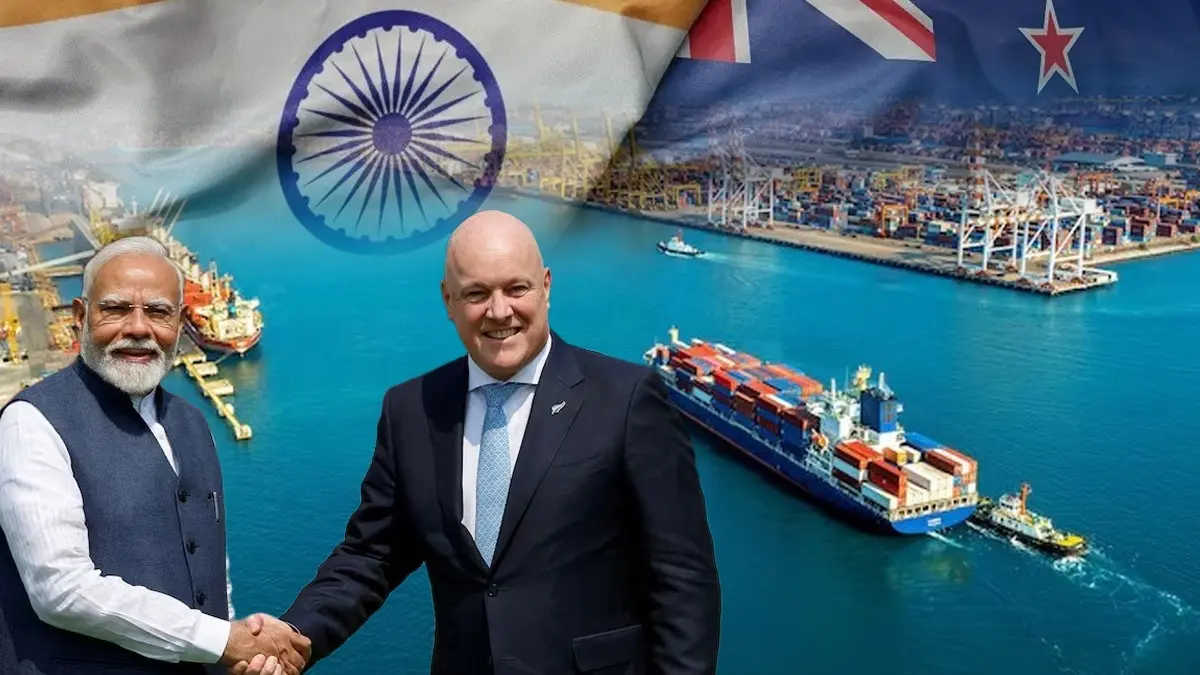
Prime Minister Narendra Modi held a telephone conversation with New Zealand Prime Minister Christopher Luxon on Monday, during which the two leaders announced the conclusion of a comprehensive Free Trade Agreement between the two countries.
The deal was finalised in a record nine months after negotiations began in March 2025. The agreement was wrapped up after five formal rounds and several meetings, making it one of the quickest trade deals India has completed with a developed nation.
According to ANI, the leaders noted that this swift progress shows the political determination from both sides to strengthen economic relations.
New Zealand FTA, PM Christopher Luxon says," We’ve concluded a Free Trade Agreement with India. This will open doors for New Zealand farmers, growers, and businesses - boosting exports, creating jobs, and lifting incomes to help all Kiwis get ahead."
Advertisement
Here are the five primary takeaways from the agreement:
1. Massive Investment Commitment
A standout feature of this deal is New Zealand’s pledge to invest USD 20 billion into India over the next 15 years focusing on areas like manufacturing, infrastructure, services and innovation. Modeled after India's previous agreement with the EFTA (European Free Trade Association), this commitment is designed to fuel Indian infrastructure and manufacturing.
Advertisement
Notably, if these investment targets aren't met, a "rebalancing mechanism" allows for the suspension of trade concessions, ensuring accountability.
2. Market Access and Tariff Cuts
The agreement creates a more open trading environment by reducing import taxes:
New Zealand's Side: They will eventually eliminate tariffs on 100% of Indian goods, providing a massive boost to Indian exporters of textiles, leather and engineering products.
India's Side: India will reduce its average tariff from roughly 16% to 9% over a decade. However, India has successfully protected its sensitive agricultural sectors; specifically dairy, sugar and spices, which are excluded from the deal to safeguard local farmers.
3. Student and Professional Mobility
Indian STEM graduates can now work in New Zealand for up to three years and PhD holders for four years, with no limit on the number of people who can apply.
A new visa category which allows 5,000 skilled Indian professionals (including IT experts, engineers and traditional AYUSH practitioners) to work in New Zealand. Additionally, 1,000 young Indians can participate in a "Working Holiday" program annually.
4. Focus on Services and Traditional Medicine
New Zealand has opened up 118 different service sectors to Indian businesses. In a global first for New Zealand, they have included a specific "Annex" on health and traditional medicine.
This officially eases the path for Indian practitioners of Ayurveda, Yoga and other traditional services to operate within the New Zealand market.
5. Support for Smaller Businesses (MSMEs)
The agreement also includes specific provisions to help Micro, Small and Medium Enterprises (MSMEs). By improving access to trade data and building direct business-to-business links, the FTA aims to help smaller entrepreneurs navigate the complexities of international trade and join global supply chains.
Commerce and Industry Minister Piyush Goyal, described the FTA as one that "puts people first". He stated, "Today this Free Trade Agreement is about building trade around people and launching opportunities, for our farmers, for our entrepreneurs, for our students, for our Women and for our innovators."
Both leaders expressed confidence in doubling bilateral trade over the next five years. Current trade in goods and services stands at around USD 2.4 billion, with merchandise trade at USD 1.3 billion in 2024-25, as reported by ANI.
Both sides also welcomed advances in cooperation on defence, sports, education and people-to-people ties.