
India-New Zealand FTA Signed: What Gets Cheaper for You and How the ‘Red Lines’ Protect Farmers
The India-New Zealand FTA secures Zero-Duty access for 100% of Indian exports, specifically boosting the textile, leather, and gems industries. It introduces a "Visa Jackpot" of 5,000 annual slots for Indian professionals and extended work rights for students. Critically, India has successfully excluded the dairy, poultry, and sugar sectors to protect domestic farmers, while New Zealand gains concessional access to India's wine and wood markets.
- Republic Business
- 2 min read

;'%3e%3cpath%20d='m8,15.99c4.41,0,7.99-3.58,7.99-7.99S12.41,0,8,0,0,3.59,0,8s3.58,7.99,7.99,7.99Z'%20style='stroke:%23fff;%20stroke-miterlimit:10;%20stroke-width:.02px;'/%3e%3cpath%20d='m3.08,3.37l3.82,5.11-3.84,4.15h.87l3.37-3.64,2.72,3.64h2.94l-4.04-5.39,3.58-3.87h-.86l-3.1,3.35-2.5-3.35h-2.94Zm1.27.64h1.35l5.97,7.99h-1.35l-5.97-7.99Z'%20style='fill:%23fff;'/%3e%3c/g%3e%3c/svg%3e)


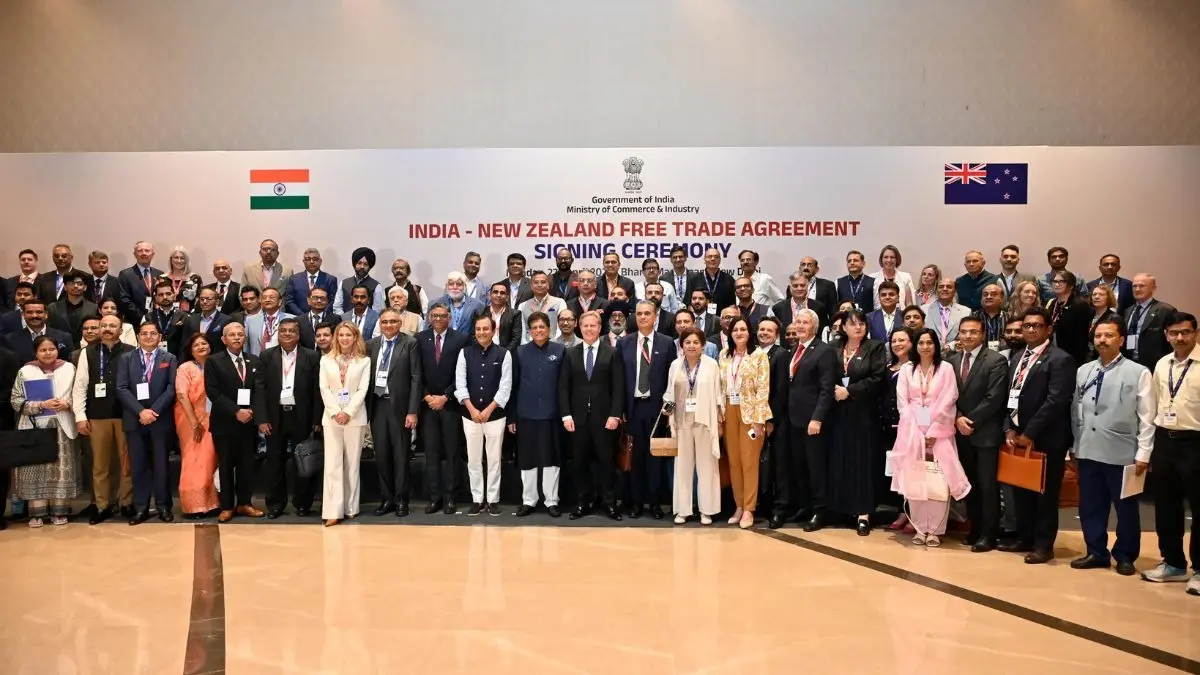
India and New Zealand officially signed a comprehensive Free Trade Agreement (FTA) today in Delhi. The pact, inked by Union Commerce Minister Piyush Goyal and NZ Trade Minister Todd McClay, marks one of India's fastest-ever negotiations with a developed nation, concluding in just nine months.
The agreement is set to double bilateral trade to $5 billion by 2030, and a massive $20 billion investment commitment from Wellington into India’s manufacturing and infrastructure sectors. While the deal opens the floodgates for Indian professionals and "Made in India" goods, it maintains a strategic step to protect India’s rural heartland.
The Winners: What Gets Cheaper?
For Indian Exporters (Selling to NZ):
- Textiles & Apparel: Immediate removal of 5% tariffs makes Indian garments a top choice in the Pacific.
- Leather & Footwear: Zero-duty access will directly benefit hubs like Agra and Kanpur.
- Gems & Jewellery: Indian craftsmanship becomes significantly more competitive against global rivals.
- Engineering & Auto Parts: Tariffs on Indian-made machinery and auto components have been eliminated.
For Indian Consumers (Buying from NZ):
- Sheep Meat & Wool: Tariffs eliminated on day one, making high-quality wool and meat products more affordable.
- Logs & Forestry Products: Cheaper raw materials for India’s furniture and construction industries.
- Premium Wine: Duties will be reduced over a 10-year period (similar to the Australia-India deal template).
- Seafood: Tariffs on premium mussels and salmon will be phased out over seven years.
What is Protected?
1. The Dairy Shield: India maintained a non-negotiable stance on dairy. Milk, cream, cheese, butter, and yogurt are strictly excluded from tariff cuts, ensuring India's 80 million dairy farmers remain safe from New Zealand's dairy giants.
2. Agricultural Staples: To prevent domestic market volatility, staples such as sugar, onions, pulses, corn, and edible oils remain on the exclusion list.
Advertisement
3. Sensitive Metals & Defense: Specific categories of copper, aluminum, and defense-related items are protected to support local industry and national security.