
OpenAI vs Elon Musk: How Tesla boss' love affair with ChatGPT maker turned sour
Musk proposed merging OpenAI with Tesla or exerting full control over the organisation, leading to a divergence in views, according to OpenAI.
- Republic Business
- 3 min read

;'%3e%3cpath%20d='m8,15.99c4.41,0,7.99-3.58,7.99-7.99S12.41,0,8,0,0,3.59,0,8s3.58,7.99,7.99,7.99Z'%20style='stroke:%23fff;%20stroke-miterlimit:10;%20stroke-width:.02px;'/%3e%3cpath%20d='m3.08,3.37l3.82,5.11-3.84,4.15h.87l3.37-3.64,2.72,3.64h2.94l-4.04-5.39,3.58-3.87h-.86l-3.1,3.35-2.5-3.35h-2.94Zm1.27.64h1.35l5.97,7.99h-1.35l-5.97-7.99Z'%20style='fill:%23fff;'/%3e%3c/g%3e%3c/svg%3e)


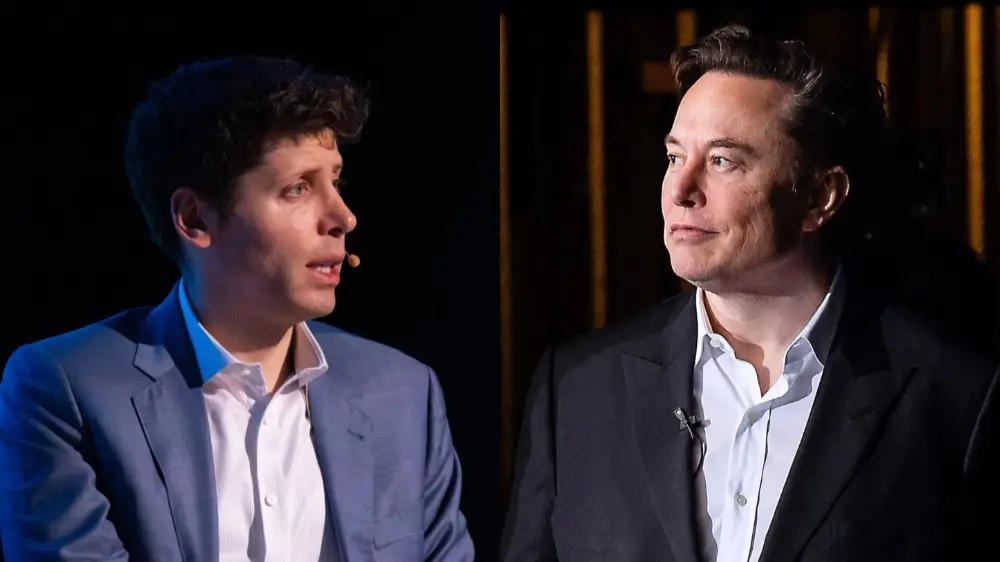
OpenAI vs Elon Musk: OpenAI, the developer of ChatGPT, refuted claims made by billionaire Elon Musk, stating that his allegations of the company abandoning its original humanitarian mission are unfounded. In a recent blog post, OpenAI announced its intention to seek the dismissal of all claims filed by Musk in a lawsuit against the organisation, asserting its commitment to its founding principles.
Background of the tussle
OpenAI's core mission revolves around ensuring the benefits of Artificial General Intelligence (AGI) reach humanity, aiming for safe and beneficial AGI development while fostering widespread advantages. However, a legal tussle has emerged between the organisation and Elon Musk, who filed a lawsuit against the Microsoft-backed company last week. Musk alleges a breach of contract, contending that OpenAI has shifted its focus to profit-making endeavours.
Refuting allegations
OpenAI's blog post addressed Musk's claims, highlighting key aspects of their relationship and the organisation's trajectory. They clarified that, while Musk initially supported the company financially, the resources needed for AGI development far exceeded their initial estimations. Musk's proposed funding of $1 billion was deemed insufficient, with OpenAI raising less than $45 million from Musk and over $90 million from other donors.
Transition to “for-profit” structure
As discussions evolved, Musk and OpenAI considered transitioning to a “for-profit” entity to access the necessary resources. However, disagreements arose regarding control and ownership. Musk proposed merging OpenAI with Tesla or exerting full control over the organisation, leading to a divergence in views. Despite efforts to reach a consensus, terms could not be agreed upon, prompting Musk's departure from OpenAI.
Advertisement
OpenAI, in a blog post, stressed its unwavering commitment to advancing its mission, focusing on building widely-accessible tools with broad societal benefits. The organisation highlighted instances where its technology positively impacted various sectors, including agriculture, healthcare, and language preservation.
Legal implications
Elon Musk's legal action against OpenAI raises questions about the company's governance and strategic direction. While Musk seeks to enforce the original vision of OpenAI, the legal battle underscores broader tensions surrounding corporate governance and the pursuit of profit in the AI sector.
Advertisement
The lawsuit between Musk and OpenAI has sparked a contentious debate among prominent figures in Silicon Valley. Notable investors and tech leaders, including Vinod Khosla and Marc Andreessen, have weighed in on the dispute, offering divergent perspectives on the role of profit and open-source principles in AI development.
“With @elonmusk, feels like a bit of sour grapes in suing @OpenAI, not getting in early enough, not staying committed and now a rival effort. Like they say if you can't innovate, litigate and that's what we have here. Elon of old would be building with us to hit the same goal”, said Vinod Khosla.
Marc Andreessen responded to Khosla saying, “Vinod is lobbying to ban open source”.
As OpenAI seeks dismissal of Elon Musk's claims, the case represents a pivotal moment in the intersection of technology, ethics, and corporate governance. As the case unfolds, it may shed light on the evolving dynamics of AI governance and the responsibilities of stakeholders in shaping the future of artificial intelligence.