
Iran War Escalation Could Trigger Global Recession, IMF Warns
The IMF warns Iran war could push global economy to recession, with three scenarios, including 'reference forecast' sees 3.1% growth and 4.4% inflation, 'adverse scenario' sees 2.5% growth and 5.4% inflation, and 'severe scenario' sees 2% growth and 6% inflation.
- Republic Business
- 5 min read

;'%3e%3cpath%20d='m8,15.99c4.41,0,7.99-3.58,7.99-7.99S12.41,0,8,0,0,3.59,0,8s3.58,7.99,7.99,7.99Z'%20style='stroke:%23fff;%20stroke-miterlimit:10;%20stroke-width:.02px;'/%3e%3cpath%20d='m3.08,3.37l3.82,5.11-3.84,4.15h.87l3.37-3.64,2.72,3.64h2.94l-4.04-5.39,3.58-3.87h-.86l-3.1,3.35-2.5-3.35h-2.94Zm1.27.64h1.35l5.97,7.99h-1.35l-5.97-7.99Z'%20style='fill:%23fff;'/%3e%3c/g%3e%3c/svg%3e)


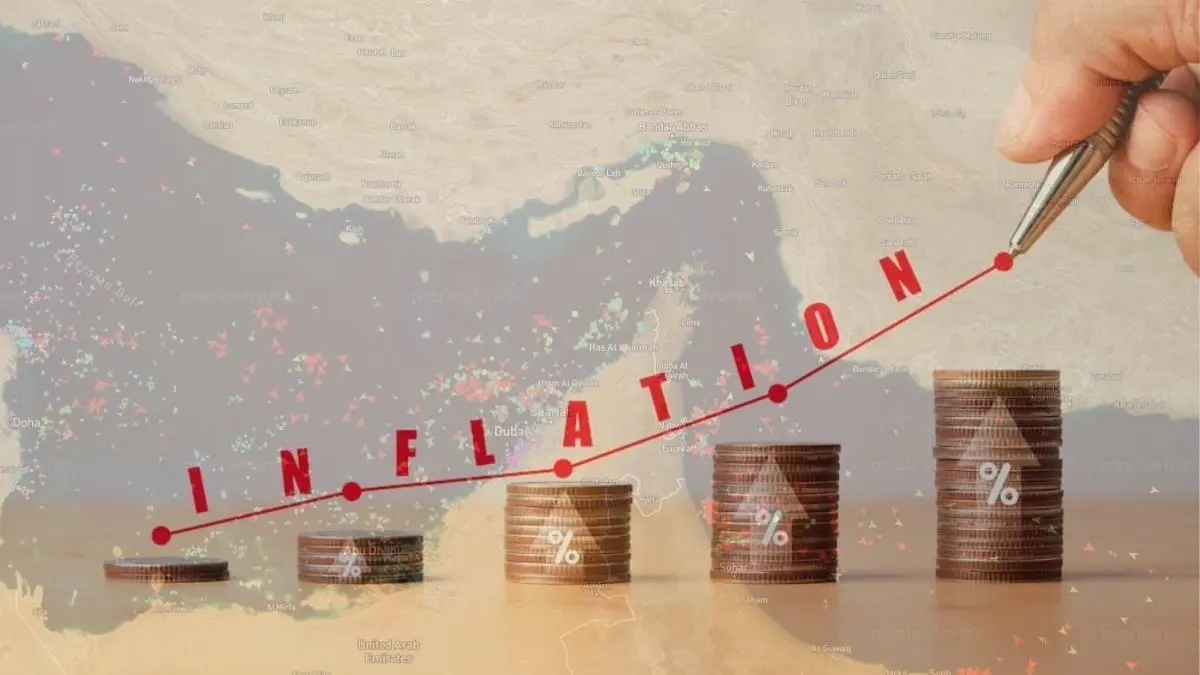
New Delhi: Amidst the ongoing West Asia crisis, the International Monetary Fund (IMF) has warned that a further escalation of the Iran war could push the world economy to the brink of recession. It further warned that the recession could drive inflation sharply higher and unsettle financial markets. In its latest half-yearly World Economic Outlook, the Washington-based institution said the economic damage from the Middle East conflict is already mounting and has forced it to trim global growth forecasts for 2026.
The IMF, against an increasingly volatile backdrop, said the United Kingdom (UK) would see the steepest downgrade of any G7 economy this year and is set to record the joint-highest inflation rate among the group. Even if the shock from energy costs begins to ease by the middle of 2026, the scars on growth and prices will linger. The warning comes as finance ministers and central bank governors gather in Washington for the spring meetings of the IMF and World Bank.
Following a failed peace talks between the US and Iran, oil prices briefly jumped back above $100 a barrel on Monday after weekend talks between the two countries ended in a stalemate and a US blockade of the Strait of Hormuz began. Brent later eased 0.9% to $98.5 a barrel on Tuesday amid hopes of further peace talks.
What Could Be The 3 Scenarios For The Global Economy
The IMF has set out three possible paths for the war in its report, noting that even a short-lived conflict would leave growth weaker and inflation higher than forecast last autumn. In its central ‘reference forecast’, which assumes disruption fades by mid-2026, global growth would slip from 3.4% last year to 3.1% in 2026, a downgrade of 0.1 percentage points. Headline inflation would climb to 4.4% as households continue to feel the hit from higher energy bills.
Advertisement
The organisation further asserted that should the conflict become more protracted, the Fund’s ‘adverse scenario’ sees the global oil price holding at $100 this year before falling back to $75 in 2027. The growth would drop to 2.5% this year while inflation would rise to 5.4% under that outlook. Additionally, the longer shutdown of the Strait of Hormuz and further damage to drilling and refining facilities would deepen and prolong the economic disruption, the report said.
The ‘severe scenario’ envisages a lengthy, intensive war that keeps oil above $110 into 2027. In that case, global growth would collapse to about 2% this year, a threshold seen as equivalent to a worldwide recession. The IMF estimates global growth has fallen below that rate only four times since 1980, most recently during the Covid pandemic in 2020 and after the 2008 financial crisis. Inflation under this scenario would exceed 6%, forcing central banks worldwide to raise interest rates to stop fast-rising prices from becoming entrenched.
Advertisement
Developing Nations Would Be Hit Hardest
While countries across the world would face slower growth and higher inflation, the IMF said net energy importers and developing nations would be hit hardest, and the United States has also not been spared. With the fallout already reaching American households as Donald Trump issues conflicting statements about Washington’s aims in the Middle East, the IMF lowered its forecast for US growth in 2026 by 0.1 percentage points to 2.3%.
On the other hand, the UK faces a sharper adjustment. The Fund cut its 2026 forecast for Britain by 0.5 percentage points to 0.8%, the biggest downgrade in the G7. It also warned that inflation would climb to almost 4%. The report noted that confidence has been shaken, with businesses already flagging risks to investment and hiring. The people walking past a branch of HSBC in London were reminded this week that the Iran war is hitting confidence, as lenders and firms weigh up the economic risks.
Coordinated Response Demand Of The Time
Chancellor Rachel Reeves is expected to use the IMF meetings to urge a coordinated response to the economic fallout from the war. Due to her arrival in Washington late on Tuesday, she is also set to outline the UK government’s approach to providing targeted and temporary support for businesses. Responding to the IMF report, Reeves said, “The war in Iran is not our war, but it will come at a cost to the UK. These are not costs I wanted, but they are costs we will have to respond to. I have vowed that my economic approach to this crisis will be both responsive to a changing world and responsible in the national interest, keeping inflation and interest rates in check to protect households and businesses.”
IMF chief economist Pierre-Olivier Gourinchas stressed that “despite the recent news of a temporary ceasefire, some damage is already done, and the downside risks remain elevated". He added that the best way to limit economic damage is to bring an end to the conflict.
Risks And Policy Advice
The IMF, beyond calling for peace, further urged central banks to stay vigilant against second-round effects on wages and prices. For governments considering emergency financial support, it is recommended to focus on temporary and targeted measures because most countries have unsustainably high debt levels. “Untargeted measures, price caps, subsidies, and similar interventions, are popular. But they are frequently poorly designed and costly,” Gourinchas said. The IMF cautioned that poorly calibrated fiscal responses could worsen debt burdens without shielding the most vulnerable.
With energy markets still choppy and the Strait of Hormuz blockade in place, the IMF said the world economy faces a close call for a global recession for only the fifth time since 1980. It also asserted that much will depend on whether diplomacy can prevent the conflict from becoming deep-rooted. However, for now, the IMF's warning sends a clear message that the war’s economic shock is real, and the costs are spreading far beyond the Middle East.