
Is Trump the Reason Behind India’s Market Slump? IT & Pharma Sectors Set to Bear The Brunt
Indian equities stumble as Donald Trump’s latest policy moves shake investor confidence. H-1B visa reforms and a proposed 100% duty on patented drugs hit IT and pharma sectors, driving foreign outflows. Market experts warn of heightened volatility, though some see opportunities in domestically driven sectors like consumer and financials.
- Republic Business
- 4 min read

;'%3e%3cpath%20d='m8,15.99c4.41,0,7.99-3.58,7.99-7.99S12.41,0,8,0,0,3.59,0,8s3.58,7.99,7.99,7.99Z'%20style='stroke:%23fff;%20stroke-miterlimit:10;%20stroke-width:.02px;'/%3e%3cpath%20d='m3.08,3.37l3.82,5.11-3.84,4.15h.87l3.37-3.64,2.72,3.64h2.94l-4.04-5.39,3.58-3.87h-.86l-3.1,3.35-2.5-3.35h-2.94Zm1.27.64h1.35l5.97,7.99h-1.35l-5.97-7.99Z'%20style='fill:%23fff;'/%3e%3c/g%3e%3c/svg%3e)


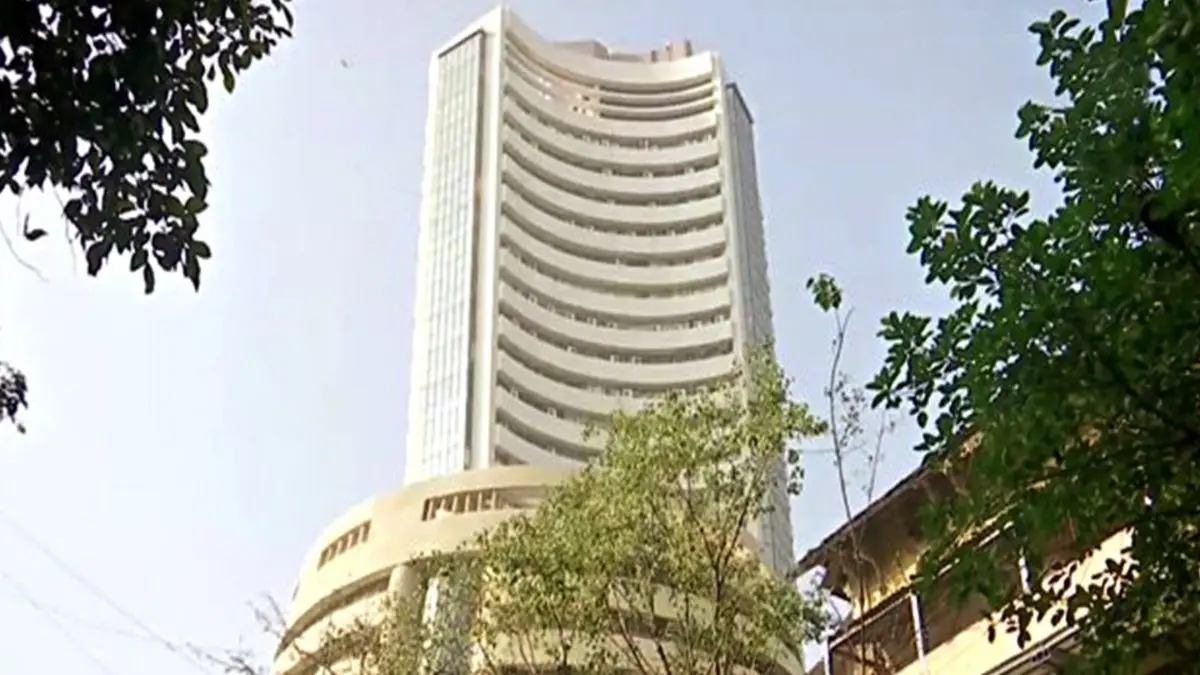
Indian stock bulls have been dealt a fresh blow as Donald Trump’s latest policy announcements disrupted signs of a market rebound. The MSCI India index has fallen in all five sessions following Trump’s executive order to overhaul the H-1B visa program, a move that threatens the $280 billion Indian software services industry.
Simultaneously, Trump’s proposal to impose a 100% duty on branded and patented pharmaceuticals triggered a broader selloff in Asian drug stocks, including India’s major drugmakers.
Prior to these shocks, the MSCI India gauge had been on a three-week winning streak, rising more than 4%, marking its longest run since May.
Foreign Investors Retreat Amid Rising Geopolitical Tensions
Trump’s actions have unsettled foreign investors who had begun adjusting to earlier 50% US tariffs on Indian goods, souring bilateral relations. Global funds turned net sellers of Indian equities in recent sessions after two consecutive weeks of buying.
“Escalating US–India tensions add another layer of pressure,” said Jian Shi Cortesi, fund manager at GAM Investment Management in Zurich. “The related headlines provide investors with an additional nudge to reallocate away from India toward markets displaying stronger momentum, such as China and South Korea.”
Economic Growth Concerns Add Pressure
Indian equities have struggled to maintain momentum in 2025 amid slowing economic growth and modest corporate earnings expansion. The MSCI India gauge has gained roughly 2% this year, lagging broader Asian equities by over 19 percentage points after outperforming them over 2021-2024.
Investor optimism had been fueled by Prime Minister Narendra Modi’s nationwide consumption tax cut effective Sept. 22, the Reserve Bank of India’s continued focus on growth, and hopes for a positive outcome from renewed US-India trade negotiations. Trump’s latest measures have cast doubt on these expectations.
Tech and Pharma Sectors Take the Brunt
The MSCI India gauge declined about 3% this week, its largest fall since February. IT stocks lost 7.9% over five sessions, marking the steepest drop since April. With a near-10% weighting in the MSCI index, tech sector weakness had a pronounced effect.
Indians account for over 70% of H-1B visa recipients. Economists warn that visa restrictions may reduce remittance inflows and weaken the rupee, already among Asia’s worst performers.
The Indian currency slumped to a record low on Tuesday amid concerns that services exports could be affected alongside the tariff-hit merchandise sector.
Meanwhile, an index of Indian drugmakers dropped more than 2% on Friday, registering its worst daily performance since early August following Trump’s proposed tariffs.
“The underperformance of Indian asset prices looks set to continue,” analysts Udith Sikand and Tom Miller of Gavekal Research wrote. “The longer the 50% tariffs remain in place, the more likely it is that India’s economic growth disappoints.”
Foreign funds have sold roughly $16 billion of Indian equities on a net basis in 2025, on track to become the second-largest outflow after the $17 billion record withdrawal in 2022. Local institutional purchases have cushioned the market from a sharper fall.
Some Optimism Amid Market Volatility
Not all analysts are pessimistic. Strategists at HSBC Holdings, led by Herald van der Linde, recently upgraded Indian equities to overweight from neutral.
“In stark contrast to the crowded trades in Korea and Taiwan, India is Asia’s quiet corner,” they noted. “While earnings growth expectations can fall a little further, valuations are no longer a concern, government policy is becoming a positive factor for equities, and most foreign funds are lightly positioned.”
The MSCI India gauge currently trades at 21.8 times 12-month forward earnings, down from 24.5 a year ago. Investors expect the near-term trajectory to be heavily influenced by geopolitical developments.
Allspring Global Investments has increased exposure to domestically focused sectors such as consumer and financials, which are less exposed to Trump’s America First policies. Hedging costs for Indian equities rose this week for the first time in a month, with the 30-day volatility index on the NSE closing above its 50-day moving average, suggesting traders are bracing for heightened market swings.
Gary Dugan, CEO of the Global CIO Office, said he would redirect portfolios toward China and potentially Latin America if US-India tensions escalate further.