
Italy imposes 40% windfall tax on banks for 2023
Sharply higher official interest rates have yielded record profits for banks amid rising cost of loans.
- Republic Business
- 4 min read

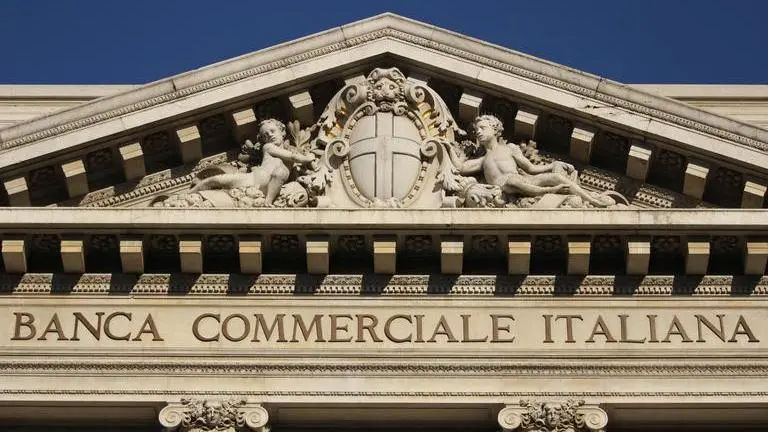
Italy dealt a surprise blow to its banks and sent shockwaves across the banking sector in Europe imposing a one-off 40 per cent tax on profits from higher interest rates, after reprimanding lenders for failing to reward deposits.
Sharply higher official interest rates have resulted in record profits for banks, as the cost of loans rose while lenders held off paying more on deposits.
Spain and Hungary have already levied windfall taxes on the banking sector and others may now follow suit.
Earlier in the year, the Italian government had floated the idea, however it had appeared to have cooled on the plan.
Advertisement
Lenders had been ready for "the chopping block" as per a senior banking executive, "but then the axe didn't come down".
Since then, however, bumper first-half results from banks brought the issue back into focus and prompted the government to act on the eve of the summer political shutdown.
Advertisement
Was it a suprise?
One government source said the move came as a surprise even to some ministers at Monday night's cabinet meeting. A second source made clear the government intended "to punish banks' unfair behaviour".
Lenders in Italy have passed on to depositors on average 12 per cent of the rise in rates, versus 22 per cent in the euro area, Jefferies calculated.
"One has only to look at banks' first-half profits ... to realise that we are not talking about a few millions, but ... of billions," Deputy Prime Minister Matteo Salvini said in a news conference in Rome late on Monday.
"If (it is true that) the burden deriving from the cost of money has ... doubled for households and businesses, what current account holders receive has certainly not doubled," Salvini said.
Italy's banking share index had plunged 7.70 per cent by 12:12 GMT on Tuesday, with sector leader Intesa Sanpaolo down 8.4 per cent and rival UniCredit down 7 per cent. Italian banks dragged the European index down 3.3 per cent, with a Moody's downgrade of some US banks also weighing.
Italian banks are up 50 per cent over the past year, outperforming a 20 per cent European sector rise.
The government wants to use the proceeds to help those struggling with the cost of living, such as mortgage holders.
Windfall for the treasury
Citi analysts calculated that the tax could wipe about a fifth off Italian banks' 2023 net income, based on a preliminary draft of the measure. Bank of America forecasts 2-3 billion euros of proceeds for the government.
As per sources, the Treasury is expected to garner less than 3 billion euros ($3.3 billion) from the measure.
It would be similar to the 2.8 billion euros raised by this year's windfall tax levied on energy companies.
The tax will be applied only in 2023, with banks paying the sums by June 30, 2024. It applies to the net interest margin (NIM), a measure of income deriving from the gap between lending and deposit rates.
The country will tax 40 per cent of the NIM earned in 2022 or 2023, depending on which sum is greater, targeting the yearly rise above thresholds set at more than 5 per cent for 2022 and 10 per cent for 2023. The thresholds were 3 per cent and 6 per cent under the early draft.
Intesa at the end of last month said it expected to garner over 13.5 billion euros this year from its only NIM.
All main Italian lenders posted better-than-expected results for the first six months and raised their profit outlook attributed to higher rates.
Italian banks never charged for deposits when official rates fell below zero, unlike peers in other European countries
Since rates have risen, they have slashed current account costs however, have refused to reward cash held there, saying that the money is for day-by-day use and not an investment.
(With Reuters inputs)