
Budget Session: Lok Sabha Passes IBC Amendment Bill 2025 to Fast-Track Corporate Insolvency Cases
The Lok Sabha passed the IBC Amendment Bill 2025 on March 30, 2026, introducing a mandatory 14-day admission rule and project-wise resolution for real estate. Finance Minister Nirmala Sitharaman stated the Bill aims to cut resolution times to 150 days for small businesses and protect homebuyers' rights to possession. The amendments seek to recover ₹4.11 lakh crore in stuck assets by moving toward a more coordinated, out-of-court resolution framework.
- Republic Business
- 2 min read

;'%3e%3cpath%20d='m8,15.99c4.41,0,7.99-3.58,7.99-7.99S12.41,0,8,0,0,3.59,0,8s3.58,7.99,7.99,7.99Z'%20style='stroke:%23fff;%20stroke-miterlimit:10;%20stroke-width:.02px;'/%3e%3cpath%20d='m3.08,3.37l3.82,5.11-3.84,4.15h.87l3.37-3.64,2.72,3.64h2.94l-4.04-5.39,3.58-3.87h-.86l-3.1,3.35-2.5-3.35h-2.94Zm1.27.64h1.35l5.97,7.99h-1.35l-5.97-7.99Z'%20style='fill:%23fff;'/%3e%3c/g%3e%3c/svg%3e)


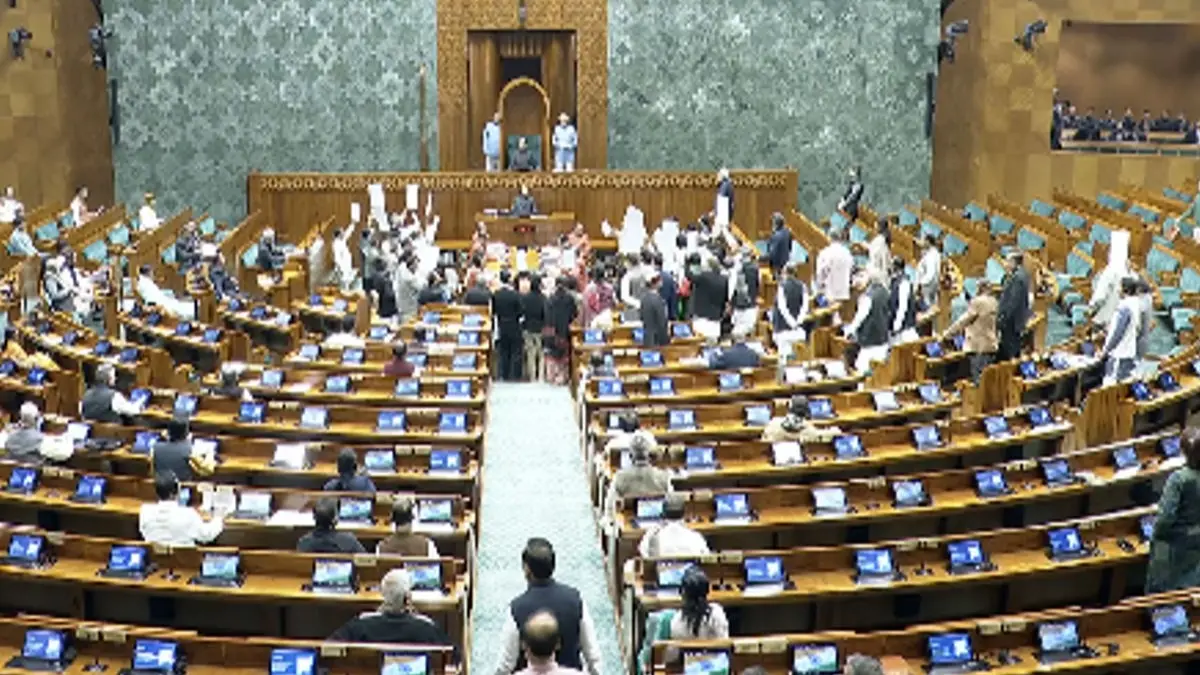
The Lok Sabha on Monday passed the Insolvency and Bankruptcy Code (Amendment) Bill, 2025, marking a critical legislative step in the final week of the Budget Session. Finance Minister Nirmala Sitharaman, replying to the debate on the Bill as reported by the Select Committee, stated that the 12 major amendments are designed to transition the IBC from a mistrust-based regime toward a framework of institutional trust and coordination.
The Bill seeks to address chronic procedural bottlenecks that have pushed the average resolution time to over 760 days, far exceeding the original statutory limit. A central pillar of the amendment is the mandatory 14-day admission rule, which requires the National Company Law Tribunal (NCLT) to admit or reject an insolvency application within two weeks if a default is established via digital records from an Information Utility. This move is specifically intended to strip away the "judicial discretion" that previously allowed erstwhile promoters to stall proceedings for months at the entry stage.
Corporate Resolution
The amendment formally codifies the Project-Wise Resolution framework for the real estate sector, allowing for the surgical resolution of a single distressed project without triggering an insolvency process for the developer’s entire corporate entity. Additionally, the Bill introduces the Creditor-Initiated Insolvency Resolution Process (CIIRP), an "out-of-court" mechanism designed to facilitate faster settlements. Under this new track, the resolution process must be completed within 150 days, significantly shortening the recovery cycle for creditors.
The Finance Minister emphasized that the “Clean Slate” principle has been further strengthened to protect successful bidders of distressed assets. This ensures that once a resolution plan is approved, the new management is shielded from the undisclosed liabilities or criminal proceedings of the prior promoters. Sitharaman noted that this clarity is essential for "unlocking" approximately ₹4.11 lakh crore currently trapped in various stages of the insolvency pipeline.
Advertisement
The Bill also tightens the noose on personal guarantors, preventing them from using "interim moratoriums" to shield personal assets like luxury properties or vehicles from recovery. To support the "Debtor-in-Possession" model, the amendment allows existing management in specific sectors to continue operations under professional supervision during the resolution period, aimed at preventing the erosion of business value during the transition.