
Morgan Stanley Flags Inflation Risks if US-Iran Conflict Drags Beyond Weeks
Morgan Stanley economists argue that the length of the conflict is the single most critical variable for 2026 market performance. With US President Donald Trump indicating that military operations could last four to five weeks, the report says that an extended timeline would likely trigger a supply shock through the Strait of Hormuz.
- Republic Business
- 3 min read

;'%3e%3cpath%20d='m8,15.99c4.41,0,7.99-3.58,7.99-7.99S12.41,0,8,0,0,3.59,0,8s3.58,7.99,7.99,7.99Z'%20style='stroke:%23fff;%20stroke-miterlimit:10;%20stroke-width:.02px;'/%3e%3cpath%20d='m3.08,3.37l3.82,5.11-3.84,4.15h.87l3.37-3.64,2.72,3.64h2.94l-4.04-5.39,3.58-3.87h-.86l-3.1,3.35-2.5-3.35h-2.94Zm1.27.64h1.35l5.97,7.99h-1.35l-5.97-7.99Z'%20style='fill:%23fff;'/%3e%3c/g%3e%3c/svg%3e)


A new report from Morgan Stanley warns that the escalating conflict in West Asia, triggered by recent US-Israeli strikes on Iran and subsequent retaliatory attacks, could severely destabilize the US economy. The bank highlights that while a brief conflict may have limited fallout, a prolonged struggle extending beyond a few weeks poses a major risk to global price stability.
The report highlights the strong link between oil prices and inflation. According to Morgan Stanley’s estimates, every 10% increase in oil prices could add roughly 0.35 percentage points to US headline inflation.
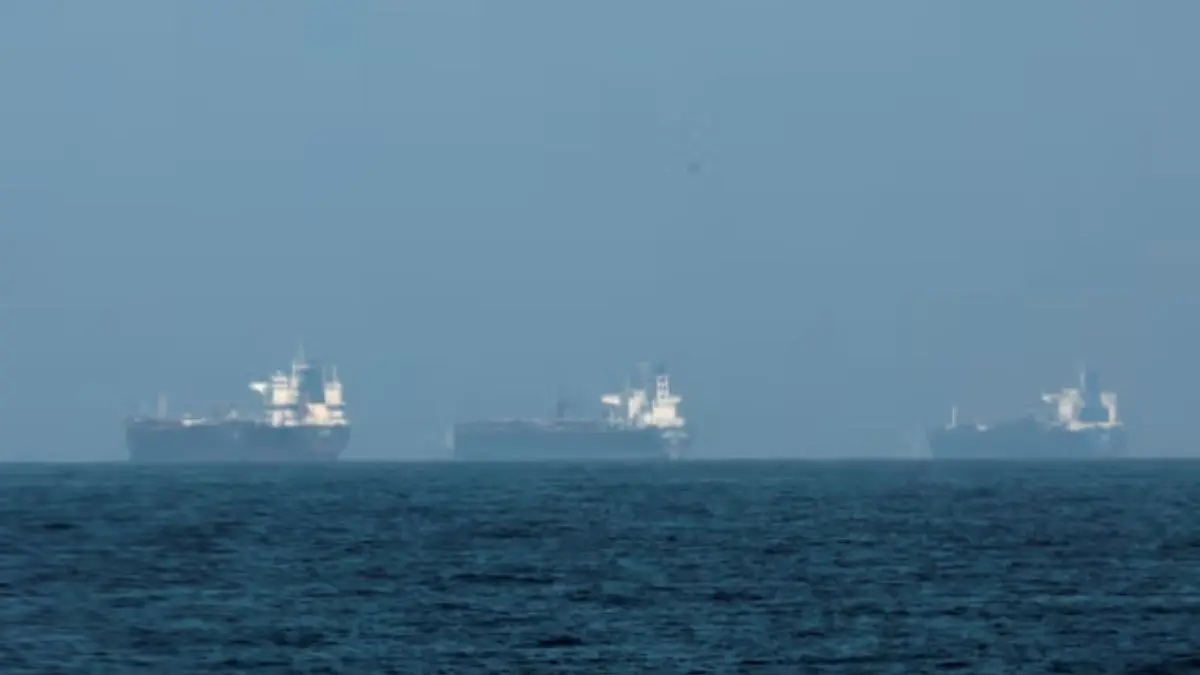
Energy supply risks are also significant. Nearly 20% of global oil and LNG shipments pass through the Strait of Hormuz. This makes it one of the most critical chokepoints for global energy trade. Any prolonged disruption in this corridor could amplify volatility across global commodity and financial markets.
Consumption Could Slow After Price Shock
Morgan Stanley also noted that consumer demand typically weakens several months after energy price spikes. Historical data suggest that real consumption tends to decline two to three months after a major oil shock, as households adjust spending to accommodate higher fuel and transportation costs.
Advertisement
The report also flagged potential fiscal implications. US defense spending could surge to around $1.5 trillion, representing a roughly 50% increase from current levels if the conflict intensifies. Such spending levels would approach those last seen during the Korean War era.
A Difficult Policy Path for the Fed
The conflict creates what analysts describe as a “supply-shock trade-off” for the Federal Reserve. Traditional monetary policy tools are often less effective in addressing inflation driven by supply disruptions, particularly energy costs.
Advertisement
Raising interest rates aggressively could suppress economic growth, while easing policy to support growth risks worsening inflation. Morgan Stanley suggests that policymakers may be forced into smaller, incremental policy adjustments or even a pause in rate changes until price stability becomes clearer.
With the US midterm elections approaching in 2026, rising living costs could quickly become a major political issue. Higher fuel prices, transportation costs, and energy bills could weaken consumer sentiment and add pressure on policymakers.
At the same time, increased military expenditure could widen the US fiscal deficit and add to the country’s growing debt burden.
Investment Strategy
Despite the near-term risks, Morgan Stanley remains cautiously constructive on US equities over the longer term. The bank noted that equity markets historically delivered double-digit gains three to six months after both Gulf Wars, suggesting that markets often recover once geopolitical uncertainty stabilises.
However, the outlook depends heavily on energy prices. The report warns that a sustained 75–100% surge in oil prices would significantly alter the market outlook.
In the current environment, Morgan Stanley recommends investors focus on high-quality companies with strong balance sheets, while also increasing exposure to defense, security, and aerospace sectors that could benefit from rising government spending. The bank also advised actively managing exposure to energy markets to capture volatility opportunities.