
Mumbai Set To Change Global Urban Business Landscape, Expert Akshat Khetan Explains
Mumbai is emerging as a global economic hub with major infrastructure growth, decentralised planning, and rising investor interest, positioning it as a key force in the future of urban development.
- Republic Business
- 4 min read

;'%3e%3cpath%20d='m8,15.99c4.41,0,7.99-3.58,7.99-7.99S12.41,0,8,0,0,3.59,0,8s3.58,7.99,7.99,7.99Z'%20style='stroke:%23fff;%20stroke-miterlimit:10;%20stroke-width:.02px;'/%3e%3cpath%20d='m3.08,3.37l3.82,5.11-3.84,4.15h.87l3.37-3.64,2.72,3.64h2.94l-4.04-5.39,3.58-3.87h-.86l-3.1,3.35-2.5-3.35h-2.94Zm1.27.64h1.35l5.97,7.99h-1.35l-5.97-7.99Z'%20style='fill:%23fff;'/%3e%3c/g%3e%3c/svg%3e)


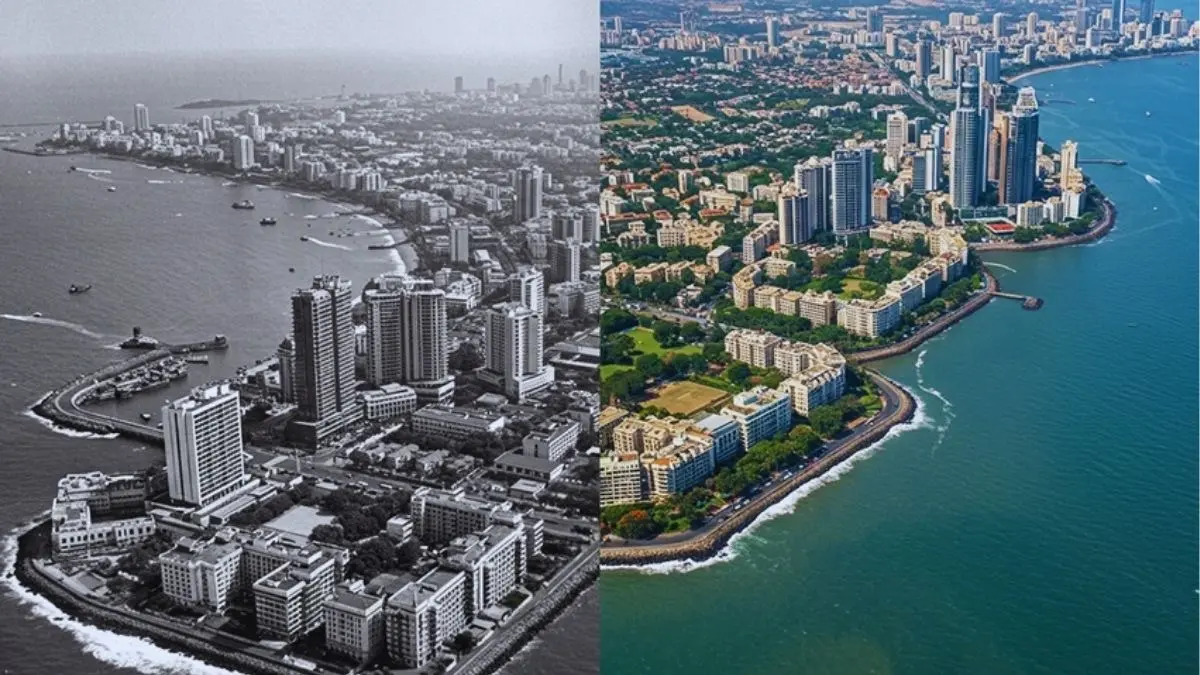
In an era shaped by geopolitical volatility and shifting economic alliances, the global map of power is being quietly redrawn. As traditional strongholds grapple with internal pressures and regional uncertainties, new urban centers are emerging as anchors of stability and growth. According to expert Akshat Khetan, Mumbai is rapidly positioning itself not merely as a participant in this transition, but as a defining force in the next chapter of global urban evolution.
India’s financial capital, long regarded as the country’s commercial backbone, is now entering a phase of structural transformation. Under the leadership of Devendra Fadnavis, Mumbai is being reimagined through a lens that moves beyond incremental development. The vision is expansive—one that seeks to create multiple interconnected economic hubs, effectively building what Khetan describes as a “third and fourth Mumbai.”
This approach signals a fundamental shift in urban planning philosophy. Rather than stretching an already burdened core, the strategy focuses on decentralisation—unlocking new growth corridors, redistributing economic activity, and building parallel ecosystems that can operate with autonomy while remaining deeply interconnected.
Historically, global cities in the Middle East such as Dubai, Abu Dhabi, and Doha have attracted capital through a combination of strategic geography, infrastructure excellence, and policy agility. However, evolving geopolitical dynamics and questions around long-term stability have begun to influence investor sentiment. Simultaneously, the United States continues to face economic recalibrations that are subtly redirecting global capital flows.
Advertisement
It is within this shifting context that Mumbai’s opportunity becomes increasingly pronounced.
Central to this transformation is a large-scale infrastructure push that integrates multimodal connectivity across roadways, metro networks, rail systems, coastal routes, and aviation. The development of Navi Mumbai as a parallel urban engine, alongside landmark projects such as the Mumbai Trans Harbour Link, reflects a deliberate attempt to expand the city’s economic geography. The upcoming Navi Mumbai International Airport is expected to further enhance global accessibility, positioning Mumbai as a more efficient gateway for international business and trade.
Advertisement
Khetan emphasises that connectivity—physical, economic, and digital—forms the backbone of any global city. In Mumbai’s case, the alignment of these elements is not incidental but strategic, aimed at creating a seamless urban grid capable of sustaining long-term growth.
Equally critical is the evolution of the city’s real estate landscape. As traditional central business districts approach saturation, emerging corridors linked to infrastructure projects are witnessing a surge in investor interest. These zones are not merely extensions of the city but are being developed as independent economic clusters, each with the capacity to host commercial, residential, and industrial ecosystems.
The “third and fourth Mumbai” concept, therefore, is not just an urban expansion model—it is a blueprint for distributed prosperity. By reducing pressure on legacy infrastructure while unlocking new land value, the city is creating a more resilient and scalable economic framework.
What further strengthens Mumbai’s case is its inherent economic diversity. Unlike many global cities that rely heavily on singular sectors, Mumbai thrives on a multi-sectoral foundation—finance, entertainment, technology, manufacturing, and services operate in tandem, reinforcing each other and insulating the city from sector-specific shocks.
This transformation is also being accelerated by India’s broader economic momentum. As one of the fastest-growing major economies, the country is increasingly viewed as a reliable destination for global investment. Mumbai, as its financial nucleus, naturally becomes the primary beneficiary of this capital influx.
Khetan underscores that the city’s rise is not rooted in competition alone but in capability. While other global hubs may offer infrastructure excellence, Mumbai combines scale with depth—a vast domestic market, a skilled workforce, and an entrepreneurial culture that is both dynamic and deeply entrenched.
That said, the path forward is not without challenges. Urban congestion, environmental sustainability, and equitable access to growth remain critical concerns that must be addressed through policy innovation and disciplined execution. However, these are challenges inherent to expansion—signals of momentum rather than stagnation.
As global economic gravity continues to shift, cities that can anticipate change and act decisively will define the future. In Khetan’s assessment, Mumbai is demonstrating precisely that capacity.
The coming decade will likely determine whether Mumbai can fully realise this ambition. Yet, if current trajectories hold, the city is not just on course to compete with established global hubs—it is poised to reshape the very framework through which urban economic power is understood.
In that context, Mumbai’s evolution is no longer a domestic story. It is a global one—unfolding at scale, with intent, and with the potential to redefine what a 21st-century megacity can truly become.
ALSO READ: As AI Floods the Internet With Synthetic Content, Trust Will Become the New Digital Currency