
Nirmala Sitharaman's Historic Budget: Finance Minister Set For New Record With 9th Consecutive Union Budget
Finance Minister Nirmala Sitharaman will present her 9th consecutive Union Budget on February 1, setting a new record and surpassing predecessors like P Chidambaram, Pranab Mukherjee and Dr Manmohan Singh.
- Republic Business
- 4 min read

;'%3e%3cpath%20d='m8,15.99c4.41,0,7.99-3.58,7.99-7.99S12.41,0,8,0,0,3.59,0,8s3.58,7.99,7.99,7.99Z'%20style='stroke:%23fff;%20stroke-miterlimit:10;%20stroke-width:.02px;'/%3e%3cpath%20d='m3.08,3.37l3.82,5.11-3.84,4.15h.87l3.37-3.64,2.72,3.64h2.94l-4.04-5.39,3.58-3.87h-.86l-3.1,3.35-2.5-3.35h-2.94Zm1.27.64h1.35l5.97,7.99h-1.35l-5.97-7.99Z'%20style='fill:%23fff;'/%3e%3c/g%3e%3c/svg%3e)


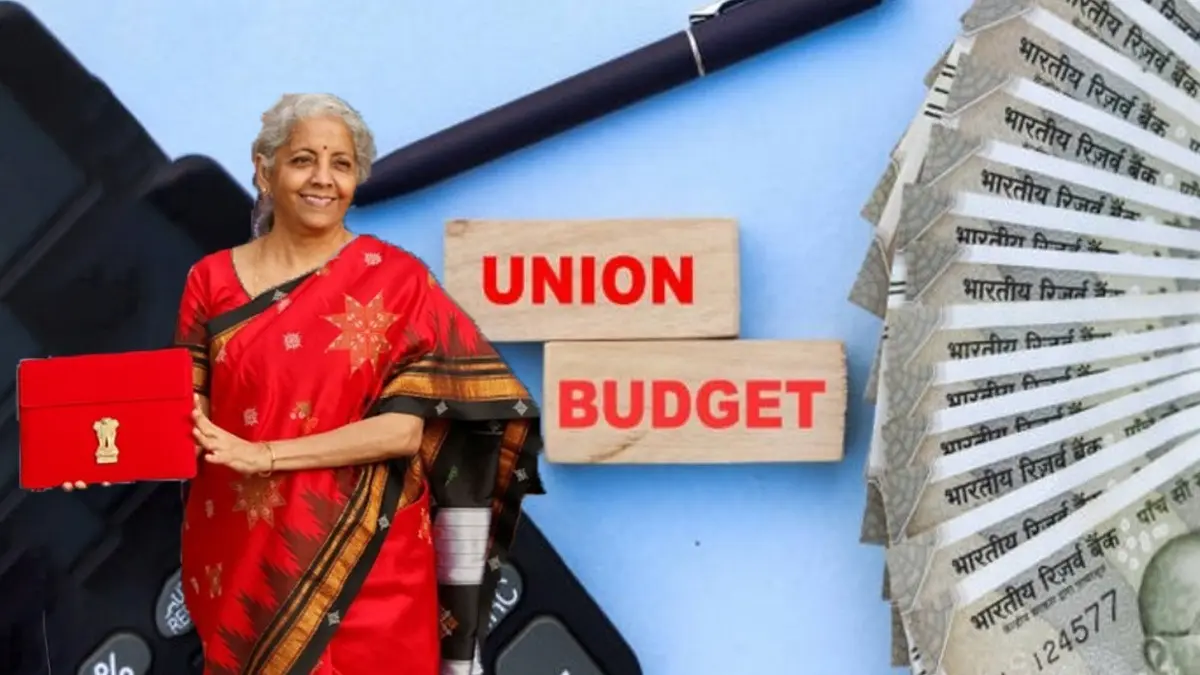
New Delhi: A new chapter in India’s parliamentary history is set to be written this Sunday. Nirmala Sitharaman, the first full-time woman Finance Minister, will achieve a historic feat on February 1 by presenting the Union Budget for the 9th consecutive time. The milestone sets a new record in the history of Indian governance, surpassing the consecutive streaks of all her predecessors.
By delivering the Budget-2026, Sitharaman moves ahead of stalwarts like P Chidambaram and Pranab Mukherjee, and edges closer to the all-time record held by former Prime Minister Morarji Desai.
One Step Away From Morarji Desai's Record
Nirmala Sitharaman, with this historic achievement, has redefined the standards of longevity and continuity in the Finance Ministry. Morarji Desai currently holds the record for the most budgets presented, with a total of 10 delivered between 1959 and 1969. However, his presentations were split across two distinct tenures.
Sitharaman’s ninth budget is notable not just for its volume but for its unbroken sequence. In doing so, she has overtaken former Finance Ministers, including P Chidambaram, who presented 9 budgets (non-consecutive), Pranab Mukherjee, who presented 8 budgets (non-consecutive) and Manmohan Singh, who presented 6 budgets (non-consecutive).
Advertisement
"This is registered as a proud moment in the parliamentary history of the country," Prime Minister Narendra Modi remarked, noting that she is the first woman to lead the ministry for such an extensive, uninterrupted period.
Budget Evolved From Colonial Shadows To Modernity
The traditions surrounding the Indian Union Budget have undergone tectonic shifts over the decades. From the first budget presented by RK Shanmukham Chetty on November 26, 1947, the process has evolved to meet the needs of a growing economy.
Advertisement
The timing and presentation of the Indian budget have evolved to shed colonial-era habits and improve efficiency. For decades, the budget was announced at 5 pm to align with the working hours of the British Parliament in London. This was changed in 1999 when then-Finance Minister Yashwant Sinha moved the announcement to 11 am. Furthermore, in 2017, the government shifted the date from the last day of February to February 1st, ensuring that the legislative process is completed before the new financial year begins in April.
The shift to a morning presentation was initiated by Yashwant Sinha in 1999, while Arun Jaitley introduced the move to February 1 to ensure that budgetary allocations could be implemented by the start of the new financial year on 1 April.
The format of the budget has also undergone a modern transformation. Traditionally, Finance Ministers carried their documents in a leather briefcase, a practice inspired by the British ‘budget box’. However, starting in 2021, the government transitioned to a fully digital format to promote a ‘Paperless Budget’. Now, the Finance Minister presents the financial statement using a digital tablet, reflecting India's push toward a more sustainable and technologically advanced administration.
Speech Records
Finance Minister Sitharaman also holds the record for the longest budget speech by duration. On February 1, 2020, her address lasted an exhausting 2 hours and 42 minutes. Interestingly, while she holds the time record, former PM Dr Manmohan Singh’s landmark 1991 liberalisation speech remains the longest by word count, totalling 18,650 words.
However, at the other end of the spectrum, the record for the shortest speech is still held by Hirubhai Mulljibhai Patel, who in 1977 delivered an interim budget speech of only 800 words.
The Budget 2026-27 arrives at a critical juncture. Faced with global economic volatility, heightened geopolitical tensions, and shifting trade dynamics, the 2026-27 Union Budget is expected to prioritise structural reforms. The observers are looking for measures that will strengthen domestic manufacturing, streamline investment, and accelerate job creation to maintain India's momentum as a leading global economy.