
OpenAI Signs Pentagon Deal to Deploy AI on Classified Networks, Embeds Surveillance and Weapons Safeguards
OpenAI has signed an agreement with the U.S. Department of Defense to deploy its AI models within classified networks. The deal embeds safeguards against domestic mass surveillance and mandates human oversight in use-of-force scenarios. As the Pentagon increases multi-billion-dollar investments in AI and digital modernization, the agreement marks a significant expansion of commercial generative AI into national security infrastructure.
- Republic Business
- 3 min read

;'%3e%3cpath%20d='m8,15.99c4.41,0,7.99-3.58,7.99-7.99S12.41,0,8,0,0,3.59,0,8s3.58,7.99,7.99,7.99Z'%20style='stroke:%23fff;%20stroke-miterlimit:10;%20stroke-width:.02px;'/%3e%3cpath%20d='m3.08,3.37l3.82,5.11-3.84,4.15h.87l3.37-3.64,2.72,3.64h2.94l-4.04-5.39,3.58-3.87h-.86l-3.1,3.35-2.5-3.35h-2.94Zm1.27.64h1.35l5.97,7.99h-1.35l-5.97-7.99Z'%20style='fill:%23fff;'/%3e%3c/g%3e%3c/svg%3e)


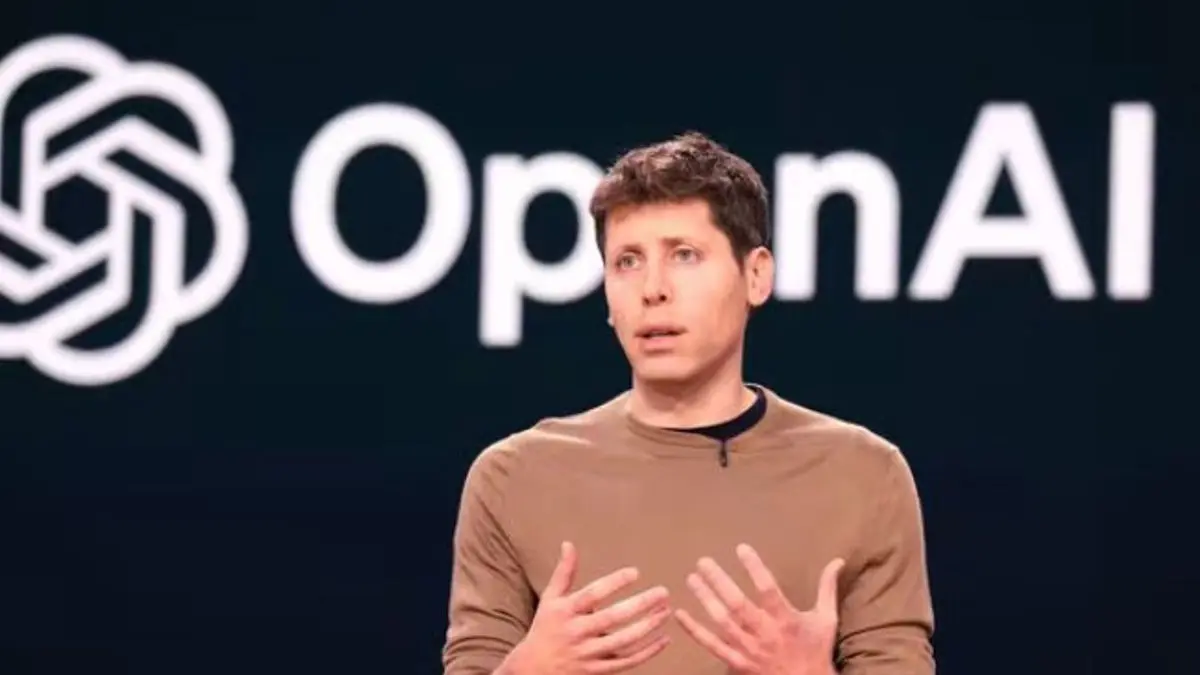
OpenAI has signed a significant agreement with the United States Department of Defense to deploy its artificial intelligence models within classified government networks.
The move places one of the world’s most prominent AI companies inside secure national security systems for the first time. It also reflects the Pentagon’s accelerating push to integrate advanced AI tools across defense operations.
The U.S. defense budget runs into the hundreds of billions of dollars annually, with billions increasingly directed toward digital modernization, cybersecurity, and artificial intelligence. AI is now seen as central to intelligence processing, operational planning, logistics optimisation and cyber threat detection.
This agreement positions OpenAI within that expanding, high-value ecosystem.
Advertisement
Safety Principles Embedded in the Agreement
CEO Sam Altman confirmed the development in a statement on X, saying: “Tonight, we reached an agreement with the Department of War to deploy our models in their classified network.” Altman added that the Defense Department demonstrated “a deep respect for safety” throughout negotiations.
According to him, two non-negotiable principles have been incorporated into the agreement:
Advertisement
- A prohibition on domestic mass surveillance
- Human responsibility in decisions involving the use of force, including autonomous weapons systems
“Two of our most important safety principles are prohibitions on domestic mass surveillance and human responsibility for the use of force,” Altman said, noting that the Department “agrees with these principles” and that they are already reflected in U.S. law and policy.
OpenAI will deploy its models only within secure cloud environments approved for classified operations. The company is also assigning Forward Deployed Engineers to oversee integration, compliance, and technical safeguards.
Strategic and Commercial Significance
For the Pentagon, AI tools offer the ability to analyse massive datasets in real time, improve situational awareness and accelerate decision-making. These capabilities are increasingly critical in cyber defence, intelligence synthesis, and operational simulations.
For OpenAI, the deal represents a major strategic shift. The company, best known for consumer-facing generative AI tools, is now formally embedded in a national security framework. It also signals the growing convergence between Silicon Valley AI firms and state defense infrastructure. With governments around the world committing billions of dollars to sovereign AI capabilities, partnerships between private AI developers and defense agencies are likely to expand.
Altman has further urged that similar safety standards be applied across defense AI contracts, potentially setting a benchmark for how future agreements in this sector are structured. The partnership underscores a broader reality: generative AI is no longer confined to chatbots and productivity tools. It is rapidly becoming part of core state and military systems.