
PM Modi Defiant As Trump Turns Up Heat On India Over Russian Oil, Tariffs & Trade - Report
As US President Donald Trump threatens harsher action over India’s Russian oil imports, Prime Minister Narendra Modi is standing firm, prioritizing national interest and local manufacturing. Amid rising global instability and trade tensions, India signals no retreat, defending its sovereign choices in oil trade and diplomatic alignment with Russia.
- Republic Business
- 5 min read

;'%3e%3cpath%20d='m8,15.99c4.41,0,7.99-3.58,7.99-7.99S12.41,0,8,0,0,3.59,0,8s3.58,7.99,7.99,7.99Z'%20style='stroke:%23fff;%20stroke-miterlimit:10;%20stroke-width:.02px;'/%3e%3cpath%20d='m3.08,3.37l3.82,5.11-3.84,4.15h.87l3.37-3.64,2.72,3.64h2.94l-4.04-5.39,3.58-3.87h-.86l-3.1,3.35-2.5-3.35h-2.94Zm1.27.64h1.35l5.97,7.99h-1.35l-5.97-7.99Z'%20style='fill:%23fff;'/%3e%3c/g%3e%3c/svg%3e)


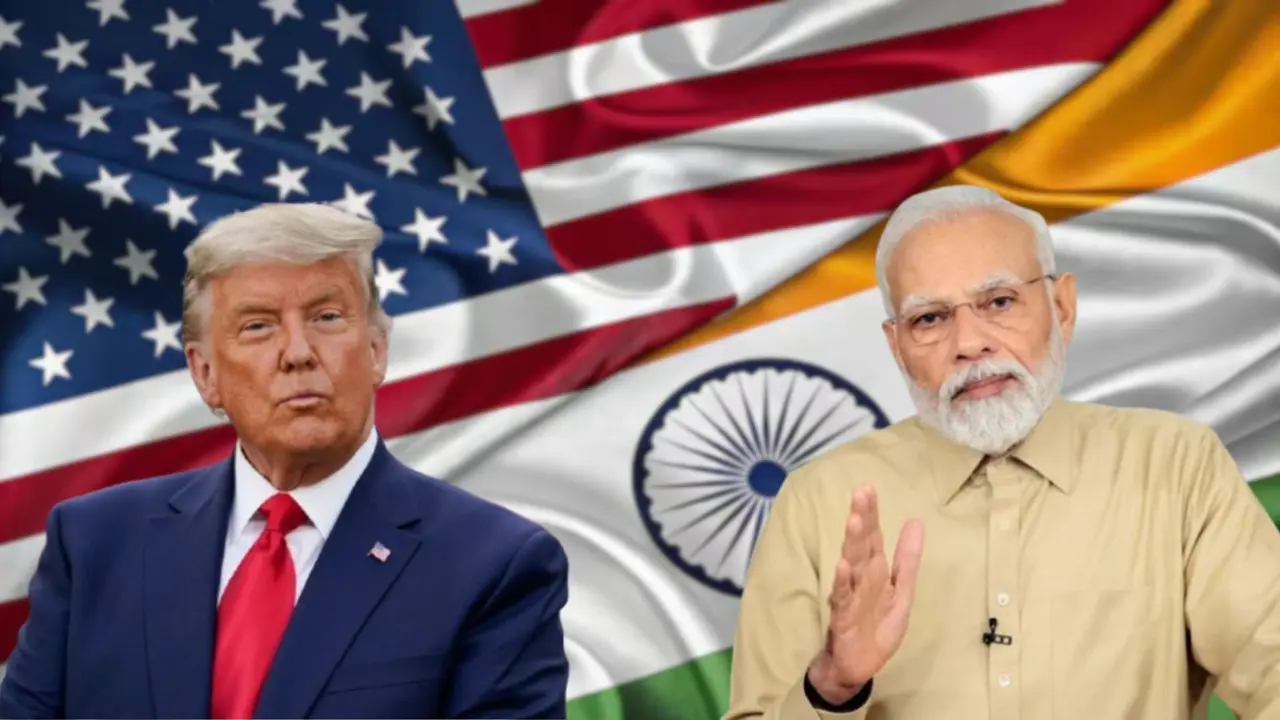
Prime Minister Narendra Modi struck a firm tone over the weekend amid escalating pressure from US President Donald Trump, signalling that India will not halt its purchases of Russian crude despite intensifying threats from Washington, including new tariffs and diplomatic warnings.
The standoff reflects growing tensions between two strategic partners at odds over India’s continued economic engagement with Moscow during the ongoing Russia-Ukraine conflict.
No Order to Stop Russian Oil Purchases
India’s government has issued no directive instructing refiners, whether state-run or private, to stop buying Russian crude, according to multiple people familiar with the matter, Bloomberg reported.
These sources, who declined to be named due to the sensitivity of the issue, emphasised that crude sourcing remains a commercial decision. Refiners have been allowed to continue purchasing from suppliers of their choice, including those from Russia.
While discussions of diversifying away from Russian oil have occurred, one source told Bloomberg that any internal conversations were merely contingency planning “in case Russian crude were to become unavailable.”
Despite these rumours, the New York Times reported that Indian officials have confirmed the country will persist in importing Russian oil, even under threat of US penalties. A spokesperson for India’s Oil Ministry did not respond to Bloomberg's request for comment outside business hours.
Modi: “Buy Local”
Speaking at a rally in Uttar Pradesh on Saturday, Prime Minister Modi urged Indians to support domestic production, linking the message to both economic self-reliance and geopolitical resilience.
“The world economy is going through many apprehensions — there is an atmosphere of instability,” Modi said. “Now, whatever we buy, there should be only one scale: we will buy those things which have been made by the sweat of an Indian.”
Modi’s comments appeared to double down on his long-standing "Make in India" initiative, now revived with renewed urgency in the face of Trump’s aggressive tariff moves. Just days earlier, the Trump administration slapped a 25% tariff on Indian exports to the US, reigniting trade tensions between the two countries.
Trump: “They Can Take Their Dead Economies Down Together”
President Trump, in sharp and combative language last week, singled out India for maintaining close ties with Russia and participating in the BRICS grouping.
“They can take their dead economies down together,” Trump said, suggesting India’s continued partnership with Moscow could isolate it from the West.
This marks a significant tonal shift from earlier US administrations, which had largely tolerated India’s historical relations with Russia, seeing New Delhi as a vital strategic counterweight to China in the Indo-Pacific.
However, Trump’s latest rhetoric suggests a new willingness to upend that balance in order to gain leverage against Russian President Vladimir Putin.
US Accusations: Tariffs, Immigration, and Oil
Stephen Miller, Trump’s deputy chief of staff, escalated criticism of India during a Sunday interview, alleging that New Delhi was imposing “massive” tariffs on American goods and “cheating” the US immigration system.
“President Trump… has always had a tremendous relationship with India and the prime minister,” Miller said. “But we need to get real about dealing with the financing of this war.”
He added, “All options are on the table to deal diplomatically, financially and otherwise with the ongoing war in Ukraine, so we can achieve peace.”
India: Buying Cheap Russian Oil, Defending National Interests
India has emerged as the world’s largest buyer of Russian seaborne crude, increasing purchases from near-zero levels to about one-third of its total imports. The cheaper barrels, often available at a discount due to sanctions pressure on Russia, have become a lifeline for India’s energy security and economy.
Although China remains Moscow’s top political and economic backer, the US has limited leverage over Beijing due to its dominance in rare-earth supplies vital for American tech manufacturing. India, in contrast, is now facing direct US pressure over oil imports and trade policy.
New Trade Tensions as Negotiators Head to Delhi
Despite the friction, India expects a delegation of US trade negotiators to visit later this month to continue talks on a bilateral trade agreement. But Indian officials have already drawn red lines.
An Indian government official told Bloomberg that New Delhi would not allow access to its dairy and agriculture sectors, citing cultural, political, and religious sensitivities.
Foreign Ministry spokesperson Randhir Jaiswal defended India’s independent foreign policy approach.
“Our bilateral relationships with various countries stand on their own merit and should not be seen from the prism of a third country,” he said.
Asked about India-US ties, he added, “We are confident that the relationship will continue to move forward.”
A Historical Bond with Russia
India’s ties with Russia span decades, rooted in Cold War-era military and diplomatic cooperation. Moscow remains one of India’s largest defence suppliers, and the relationship has evolved into a steady, pragmatic partnership.
That history explains India’s reluctance to sever economic ties over the Ukraine war, despite increasing Western pressure. Indian officials have consistently argued that buying oil from Russia serves the country’s strategic and economic interests, especially amid volatile global energy markets.
In Saturday’s rally, Modi highlighted the economic rationale behind self-reliance. “The interests of our farmers, our small industries and the employment of our youth are of paramount importance,” the prime minister said.
The remarks signal that the domestic political stakes are as high as the geopolitical ones. With an eye on upcoming state elections and a general election in 2026, Modi appears intent on presenting a strong nationalist stance in the face of external pressure.
Read More - Will the Stock Market Crash or Bounce Back This Week?
As Trump continues to tighten the screws on India over its Russian oil ties, trade practices, and immigration, Modi’s administration is signalling a refusal to bend. With both leaders driven by domestic political priorities and nationalist rhetoric, the standoff could deepen before diplomacy prevails.
(With Inputs From Bloomberg)