
RBI Deputy Governor Slams Stablecoins: CBDCs Superior for India’s Payments Future
RBI Dy Gov T Rabi Sankar at Mint BFSI Conclave: CBDCs outshine risky stablecoins, offering fiat trust, programmability sans threats to monetary stability. India’s UPI/RTGS suffice; push CBDC anonymity, FPS links, bilateral corridors over private tokens.
- Republic Business
- 4 min read

;'%3e%3cpath%20d='m8,15.99c4.41,0,7.99-3.58,7.99-7.99S12.41,0,8,0,0,3.59,0,8s3.58,7.99,7.99,7.99Z'%20style='stroke:%23fff;%20stroke-miterlimit:10;%20stroke-width:.02px;'/%3e%3cpath%20d='m3.08,3.37l3.82,5.11-3.84,4.15h.87l3.37-3.64,2.72,3.64h2.94l-4.04-5.39,3.58-3.87h-.86l-3.1,3.35-2.5-3.35h-2.94Zm1.27.64h1.35l5.97,7.99h-1.35l-5.97-7.99Z'%20style='fill:%23fff;'/%3e%3c/g%3e%3c/svg%3e)


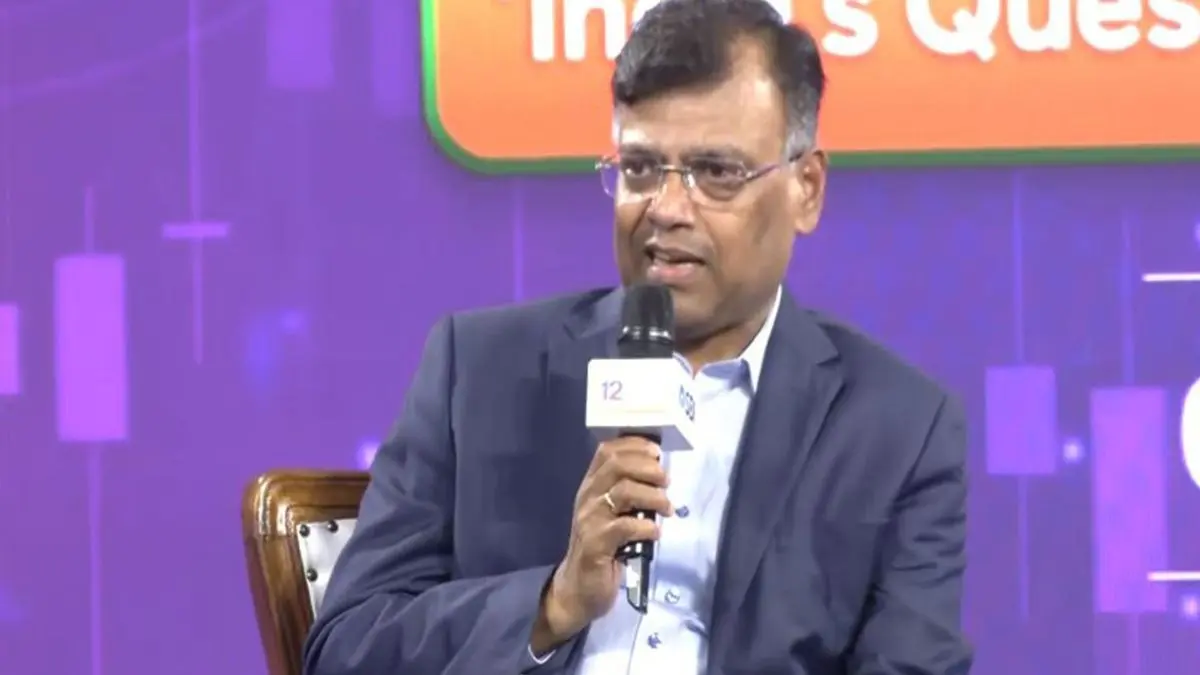
Central Bank Digital Currencies (CBDCs) are digital tokens like Stablecoins, but they are inherently superior since they satisfy all the attributes that money should have, RBI Deputy Governor T Rabi Sankar argued.
According to the RBI Deputy Governor, sovereign-backed digital currencies are fiat, single, trusted, represent value and do not pose many of the risks associated with Stablecoins.
Speaking at an event in Mumbai, themed 'Stablecoins - Do They Have a Role in the Financial System', the RBI Deputy Governor noted that India's approach to Stablecoins must be guided by caution and an appreciation of domestic imperatives. Stablecoins lack the basic attributes of money, their advantages are neither unique nor unambiguous, and their risks are all too real, he said.
"Stablecoins can undermine trust in the currency and finance system. India already benefits from a payments landscape that is highly efficient, reliable, and robust. Systems such as UPI, RTGS, and NEFT provide fast, low-cost, and secure payment capabilities to millions of users," the RBI Deputy Governor said at the Mint Annual BFSI Conclave 2025 on December 12, 2025, in Mumbai. The speech text was made available on the RBI website.
"This leaves little justification for their (stablecoins') integration into the financial system, even before considering the broader risks they pose. India's policy on stablecoins must be driven by domestic priorities," he added.
Domestic priorities must drive India's policy on stablecoins, he suggested.
At the same time, he also noted that India must acknowledge the promise of innovation that technologies such as blockchain and tokenization bring.
Advertisement
"They (CBDCs) can perform all the functions stablecoins claim to offer, such as programmability, atomic settlement, and lower cross-border frictions, while being fully anchored within the existing financial system. Encouraging CBDC use domestically is essential and can be done by making CBDC functionally similar to physical cash, especially with respect to tiered anonymity. For example, ensuring anonymity for small-value CBDC transactions, much like cash, would provide users comfort and trust while preserving safeguards for high-value flows. Such an approach also avoids disintermediation risks for the banking system," he argued.
The cross-border dimension is even more critical. Much of the appeal of stablecoins lies in their promise of cheaper, faster international transfers. But the same efficiency can be achieved through bilateral or multilateral CBDC corridors, he suggested. "This is an area where India can play a shaping role, by helping build the case for interoperable CBDC arrangements among emerging markets and beyond." Another pillar of India's approach should be the interlinking of fast payment systems (FPS), he further suggested.
Advertisement
“Interlinking domestic FPS directly contributes to the G20 objectives of faster, cheaper, more accessible and transparent cross-border payments. The recent linkages between UPI and several partner jurisdictions are important steps forward, increasingly reducing the need for any private digital alternatives for remittances. "Finally, as India weighs policy choices, it must also address a central argument often made by proponents of stablecoins who claim that the associated risks can be managed through regulation, he noted.
He believes regulation can mitigate some risks, but the larger question remains. "Can we afford to experiment with the foundations of global monetary and financial stability that have been carefully built over the years for instruments that lack the safety features of money, that are inherently risky and that remain untested at scale? As highlighted in the BIS Annual Economic Report 2025, society faces a clear choice, which is either to strengthen the monetary system using proven foundations of trust and advanced, programmable technologies, or to risk repeating the hard lessons of history by relying on unsound private digital currencies with real societal costs," he questioned.
Beyond the facilitation of illicit payments and circumvention of control measures, stablecoins raise significant concerns for monetary stability, fiscal policy, banking intermediation, and systemic resilience. "Do stablecoins serve a purpose? It seems to me that they do not; at any rate, they do not serve a purpose that cannot be served better by fiat money," he concluded.