
RBI Expands Credit Access: MSMEs Get Higher Collateral-Free Loans, REIT Financing Eased
The Reserve Bank of India on Friday announced key regulatory changes aimed at improving access to formal credit across the economy. The central bank raised the collateral-free loan limit for MSMEs and allowed banks to extend credit to Real Estate Investment Trusts, signalling a shift toward addressing structural financing gaps rather than relying solely on interest rate moves.
- Republic Business
- 3 min read

;'%3e%3cpath%20d='m8,15.99c4.41,0,7.99-3.58,7.99-7.99S12.41,0,8,0,0,3.59,0,8s3.58,7.99,7.99,7.99Z'%20style='stroke:%23fff;%20stroke-miterlimit:10;%20stroke-width:.02px;'/%3e%3cpath%20d='m3.08,3.37l3.82,5.11-3.84,4.15h.87l3.37-3.64,2.72,3.64h2.94l-4.04-5.39,3.58-3.87h-.86l-3.1,3.35-2.5-3.35h-2.94Zm1.27.64h1.35l5.97,7.99h-1.35l-5.97-7.99Z'%20style='fill:%23fff;'/%3e%3c/g%3e%3c/svg%3e)


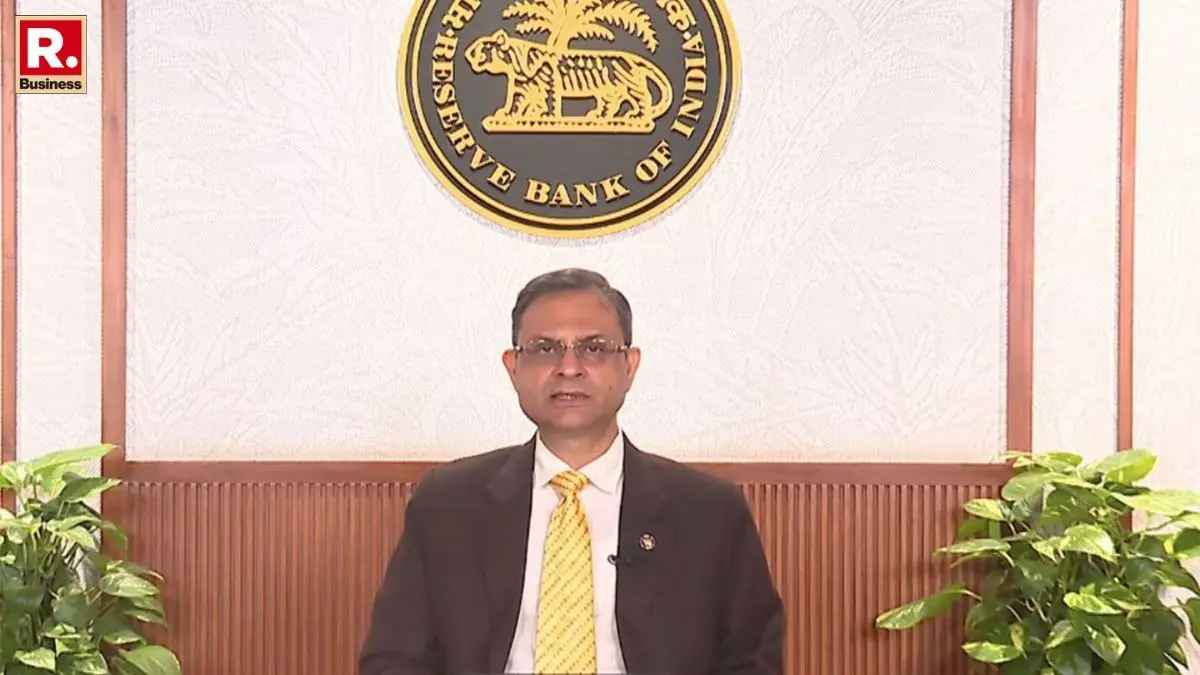
The Reserve Bank of India (RBI) used its latest monetary policy meeting to roll out targeted credit reforms designed to ease long-standing financing constraints faced by small businesses and the commercial real estate sector.
The central bank doubled the ceiling for collateral-free loans to micro, small, and medium enterprises (MSMEs) from ₹10 lakh to ₹20 lakh. The revised limit will apply to fresh loans and renewals from the next financial year, hence offering eligible enterprises greater access to unsecured bank credit.
For many MSMEs, the availability of finance has historically been tied to asset ownership rather than business viability. By raising the unsecured loan threshold, the RBI aims to reduce dependence on collateral-backed borrowing, particularly for service-oriented and early-stage firms that often lack tangible assets but have steady cash flows.
The central bank views the MSME sector as a crucial link between employment, consumption, and exports. Improved access to formal credit is expected to support capacity expansion, improve working capital management, and reduce reliance on informal lending channels.
Advertisement
Banks Allowed to Lend to REITs
Alongside MSME relief, the RBI announced that commercial banks will be permitted to lend to Real Estate Investment Trusts (REITs), subject to prudential safeguards. This marks a departure from earlier restrictions that limited banks’ direct exposure to REIT structures.
REITs, which own and operate income-generating commercial properties, typically rely on a mix of investor capital and market borrowings. Allowing bank financing is expected to broaden funding options, improve liquidity, and reduce financing costs for operational real estate assets such as office parks, warehouses, and retail complexes.
Advertisement
The move also aligns REIT financing norms more closely with those applicable to infrastructure investment vehicles, reflecting the growing institutionalisation of India’s commercial real estate market.
Together, the two measures highlight a policy change from headline interest rate actions to targeted regulatory interventions. With the repo rate unchanged, the RBI appears focused on improving the flow and distribution of credit rather than its price.
By easing access for MSMEs and formalising funding channels for REITs, the central bank is addressing gaps where credit demand exists, but transmission has remained uneven.
What It Means Going Forward?
For banks, the changes open new lending opportunities but also require tighter risk assessment, especially in unsecured MSME loans and real estate-linked exposures. For borrowers, the reforms could translate into easier access to capital, longer loan tenure,s and potentially better pricing over time.
The RBI indicated that detailed operational guidelines will follow, and the impact of these reforms will be closely monitored as they take effect from the next fiscal year.