
RBI Slashes Repo Rate To 5.25% And Lifts GDP Outlook: What It Means For Your Money
The RBI cut the repo rate to 5.25% and upgraded India’s FY26 GDP forecast to 7.3%, signalling stronger growth and easing inflation. The move marks the end of the current easing cycle. Borrowers can expect cheaper EMIs and better credit access, while depositors may see banks reducing FD rates further.
- Republic Business
- 5 min read

;'%3e%3cpath%20d='m8,15.99c4.41,0,7.99-3.58,7.99-7.99S12.41,0,8,0,0,3.59,0,8s3.58,7.99,7.99,7.99Z'%20style='stroke:%23fff;%20stroke-miterlimit:10;%20stroke-width:.02px;'/%3e%3cpath%20d='m3.08,3.37l3.82,5.11-3.84,4.15h.87l3.37-3.64,2.72,3.64h2.94l-4.04-5.39,3.58-3.87h-.86l-3.1,3.35-2.5-3.35h-2.94Zm1.27.64h1.35l5.97,7.99h-1.35l-5.97-7.99Z'%20style='fill:%23fff;'/%3e%3c/g%3e%3c/svg%3e)


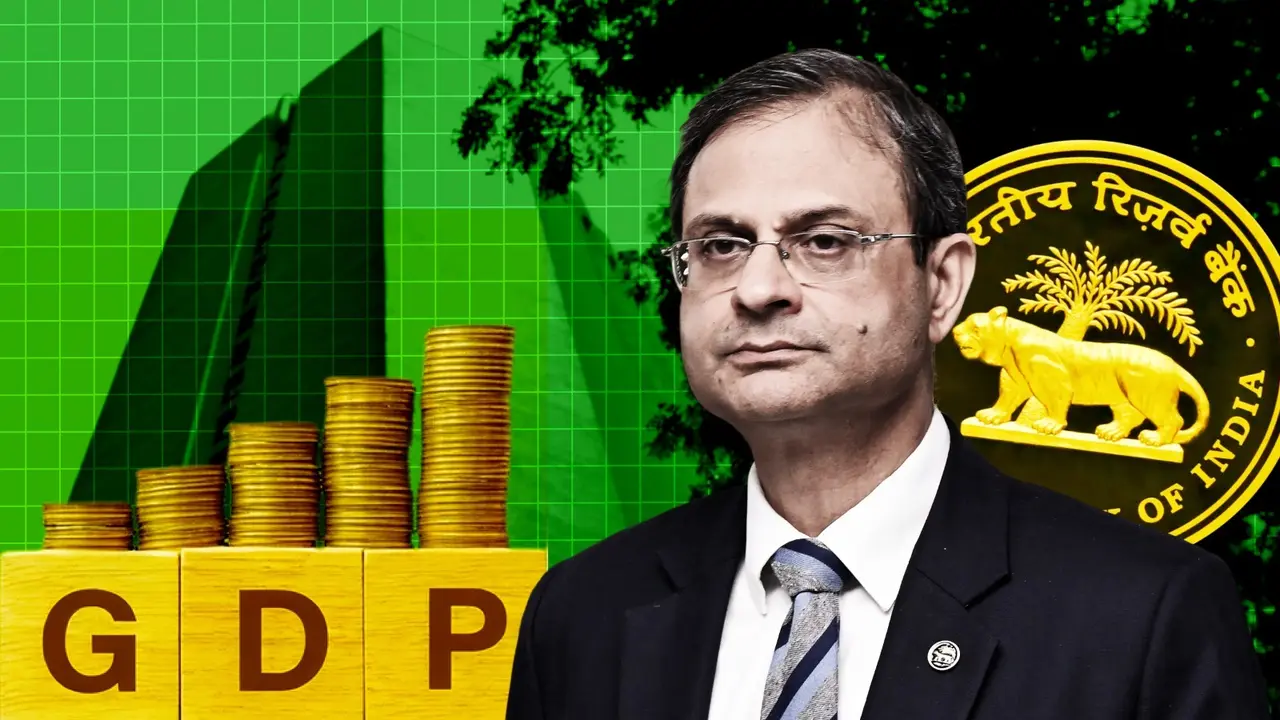
In a landmark December policy, the Reserve Bank of India (RBI) reduced the repo rate by 25 basis points to 5.25%, ending its two-meeting pause and extending the monetary easing cycle that began in February. The central bank has now delivered 125 bps of cumulative cuts in 2025, supported by sharply moderating inflation and better-than-expected economic expansion.
Alongside the rate cut, the RBI raised the FY26 GDP growth forecast to 7.3%, up from 6.8%, signalling renewed confidence in India’s economic resilience despite global uncertainties.
The decision was unanimously approved by the six-member Monetary Policy Committee (MPC), which met from December 3–5.
For consumers, this policy signals cheaper loans, lower borrowing costs, and slightly less attractive FD returns in the months ahead.
India’s Growth Story Strengthens: RBI Upgrades GDP to 7.3%
The RBI expects economic momentum to improve through FY26 and early FY27.
Revised Growth Estimates:
FY26 GDP growth: 7.3% (earlier 6.8%)
Advertisement
Q3 FY26 inflation: 7% (earlier 6.4%)
Q4 FY26 inflation: 6.5% (earlier 6.2%)
Advertisement
FY27 Real GDP:
Q1: 6.7%
Q2: 6.8%
Governor Sanjay Malhotra attributed the optimism to sustained manufacturing gains and a strong agricultural outlook.
“Manufacturing activity continues to improve. On the supply side, agricultural growth is supported by healthy kharif crop production, higher reservoir levels and better rabi crop sowing," Malhotra said.
“We approach the new year with hope and vigour to further accelerate growth… It’s a rare goldilocks situation.”
High-frequency indicators, he added, reflect resilient domestic activity despite volatile global conditions.
Why the RBI Cut Rates by 25 bps
The 25-basis-point cut to 5.25% forms part of a broader easing cycle that began earlier this year. The central bank signalled that this move was made possible by:
A rare and sharp moderation in inflation
The policy was also shaped by the central bank’s internal assessment of core inflation.
Sugandha Sachdeva, Founder, SS WealthStreet, said: “The RBI has delivered a widely anticipated 25-basis-point rate cut, taking the total easing for the year to 125 basis points after the 100bps reduction already implemented earlier. However, the central bank signalled that this move likely marks the end of the current easing cycle, as it maintained a neutral policy stance. The decision was supported by a favourable macroeconomic backdrop,GDP growth accelerated to a six-quarter high of 8.2%, while CPI inflation eased sharply to 0.25% in October, the lowest reading in the current CPI series, aided by a low base and subdued food prices.”
Liquidity Boost: OMOs + USD/INR Swaps to Make Loans Cheaper
To ensure transmission of the rate cut, the RBI also announced ₹1 lakh crore in OMO purchases and a $5 billion sell-buy swap.
Sachdeva added: “The RBI has delivered a widely anticipated 25-basis-point rate cut, taking total easing for the year to 125 bps. Liquidity infusion via OMOs and the USD/INR swap will reduce funding costs, strengthen monetary transmission and support investment and consumption.”
She added that India’s macro backdrop is supportive, with:
GDP growth at a 6-quarter high of 8.2%
CPI inflation at a record low of 0.25% in October
Crude oil prices subdued
Reforms boosting demand
Sachdeva expects improved foreign investor sentiment as well:
“The GDP upgrade to 7.3% underscores confidence in India’s trajectory. Combined with lower rates, it may revive foreign inflows after $17 billion of outflows this year.”
What This Means for Your EMIs, Loans & Home Purchases
This is where consumers feel the impact most immediately.
Home Loans, Auto Loans and Personal Loans Will Get Cheaper
Banks and NBFCs are expected to reduce lending rates over the next 4–6 weeks.
Lower cost of funds combined with RBI’s liquidity push should translate into:
Lower home loan EMIs
More competitive auto loan rates
Easier personal loan access
Better refinancing opportunities
Dr. Ravi Singh, Chief Research Officer, Master Capital Services Ltd, said: “The policy is constructive for rate-sensitive sectors like Banks, NBFCs, Autos and Real Estate. Lower funding costs and improved credit transmission will strengthen demand and earnings visibility.”
He added that by retaining a neutral stance, the RBI keeps room open for calibrated easing if required.
Fixed Deposits: FD Rates Likely to Fall Further
This is the part consumers may not like.
Banks had already reduced fixed deposit rates after the RBI’s earlier cuts. With the fourth cut of the year, FD rates are likely to fall further in the coming weeks.
What Depositors Should Know:
Existing FD holders are not impacted
New FDs will offer lower maturity values
Small Finance Banks (SFBs) may still offer temporary high rates to attract deposits
Senior citizen schemes remain attractive versus bank FDs
As per policy trends, banks will realign FD rates as transmission improves.
Retail Credit Demand Expected to Rise
Retail loan activity has already been picking up — and the latest rate cut could accelerate it further.
Amit Bansal, Founder, BharatLoan, said: “Retail credit demand is firming up, with personal loan enquiries rising 6–8% over the past quarter. Improved liquidity should boost affordability and borrower sentiment.”
He added that this environment supports better financial planning for salaried consumers. Vikkas Goyal, Founder, Rupee112, echoed: “Historically, lenders increase disbursement activity by 8–10% in quarters following rate cycles like this. Borrowers also make more confident financial decisions when cost-of-credit conditions soften. The policy strengthens both lender confidence and borrower sentiment.”
Markets Now Need to Deliver
Summing up the policy mood, N. ArunaGiri, CEO, TrustLine Holdings, said:
“In essence, the RBI has done its due part. It is for the economy / markets now to lap it up and deliver.”
A Strong Growth Signal With Direct Consumer Benefits
The RBI’s decision combines a growth upgrade, a policy rate cut, and liquidity support, forming a strong push toward boosting consumption, credit availability, and economic momentum.