
India’s New Fiscal Year: 5 Major Changes in Banking, Tax, and Travel Rules Explained
Major rule changes from April 1, 2026 will impact every household, including LPG cylinder price changes, new income tax rules, ATM withdrawal limits, PAN card updates, and railway ticket cancellation charges. Here’s a complete breakdown of the 5 big financial changes affecting your daily expenses.
- Republic Business
- 3 min read

;'%3e%3cpath%20d='m8,15.99c4.41,0,7.99-3.58,7.99-7.99S12.41,0,8,0,0,3.59,0,8s3.58,7.99,7.99,7.99Z'%20style='stroke:%23fff;%20stroke-miterlimit:10;%20stroke-width:.02px;'/%3e%3cpath%20d='m3.08,3.37l3.82,5.11-3.84,4.15h.87l3.37-3.64,2.72,3.64h2.94l-4.04-5.39,3.58-3.87h-.86l-3.1,3.35-2.5-3.35h-2.94Zm1.27.64h1.35l5.97,7.99h-1.35l-5.97-7.99Z'%20style='fill:%23fff;'/%3e%3c/g%3e%3c/svg%3e)


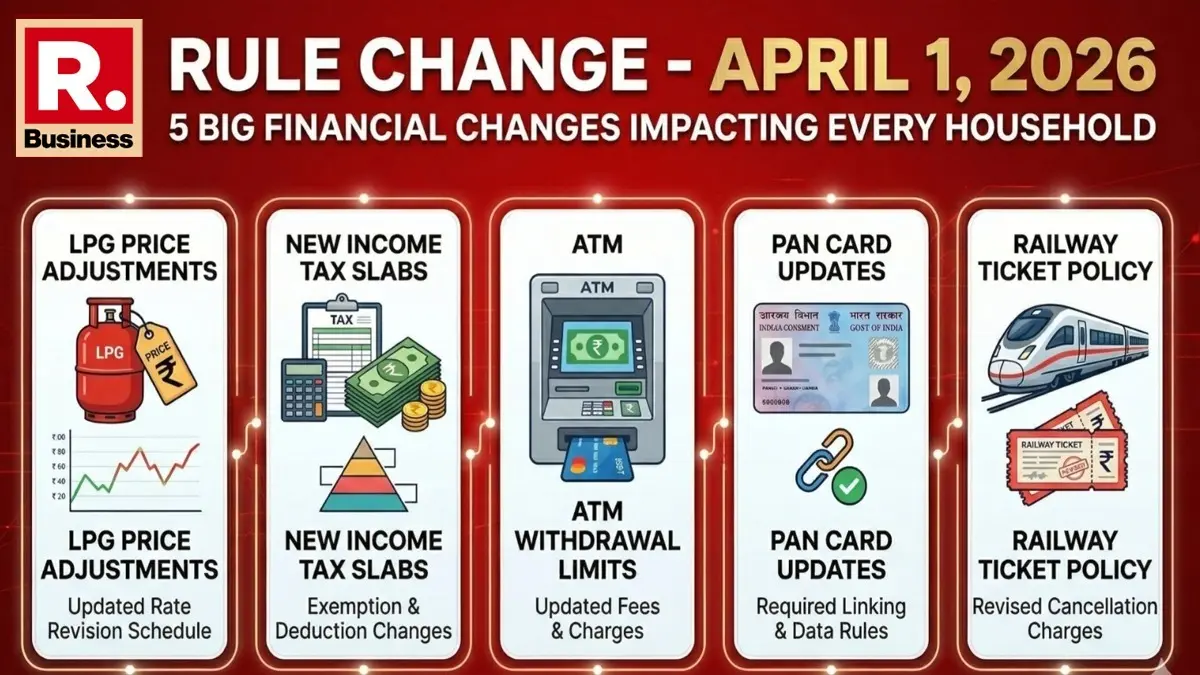
As the 2026-27 financial year approaches, Indian citizens are bracing for a wave of regulatory changes set to take effect on April 1, 2026. From a historic overhaul of the nation's income tax framework to stricter digital banking fees and railway refund policies, these "Big 5" changes will directly impact the monthly budgets and administrative habits of millions.
1. Income Tax Act, 2025
In what experts are calling the most significant fiscal reform in decades, the 65-year-old Income Tax Act of 1961 officially retires on March 31. Starting April 1, the Income Tax Act, 2025 becomes the law of the land.
The new law eliminates the confusing "Assessment Year" (AY) and "Previous Year" (PY) terminology, replacing them with a singular, intuitive "Tax Year." Furthermore, the government has sweetened the New Tax Regime by increasing the Section 87A rebate to ₹60,000, effectively exempting individuals earning up to ₹12 lakh from paying any income tax.
Advertisement
2. PAN Cards
The Income Tax Department has tightened the screws on documentation. From April 1, Aadhaar will no longer be accepted as valid proof of Date of Birth (DOB) for PAN applications or updates.
Advertisement
Applicants must now produce a Birth Certificate, Passport, or Class 10 Certificate. Additionally, any minor phonetic or spelling mismatch between PAN and Aadhaar records will lead to immediate application rejection, forcing citizens to ensure their Aadhaar data is perfectly updated before seeking a PAN.
3. ATM & Banking
The "free lunch" for cardless cash is ending. Major lenders, including HDFC Bank and PNB, have announced that UPI-based cash withdrawals at ATMs will now be counted toward a customer’s monthly free transaction limit (typically five transactions).
Once this limit is breached, customers will be slapped with a fee of ₹23 plus GST per withdrawal. Furthermore, PNB is slashing daily withdrawal limits on Platinum cards from ₹1 lakh to ₹50,000, citing a move to curb high-value fraudulent activities.
4. Indian Railways
Travelers planning summer trips face a stricter cancellation regime. Indian Railways is doubling the "no-refund" window; passengers will now receive zero refund if a confirmed ticket is cancelled within 8 hours of scheduled departure, compared to the previous 4-hour limit.
5. Energy Costs
The kitchen budget remains under pressure as the new fiscal year begins. While the government has extended the ₹300 subsidy for Ujjwala Yojana beneficiaries through 2026-27, retail prices for domestic 14.2 kg cylinders have remained elevated following a ₹60 hike in March due to global crude volatility.
Commercial LPG prices are also expected to see a revision on the morning of April 1, which could impact the cost of dining out and street food.