
Rupee Depreciation Will Not Raise CPI Inflation Due To Low Food Imports: Report
The report highlighted by Bank of Baroda suggests that the recent depreciation in the Indian Rupee is unlikely to have a significant impact on CPI inflation in the country, as India has a low dependence on imports for food products.
- Republic Business
- 3 min read

;'%3e%3cpath%20d='m8,15.99c4.41,0,7.99-3.58,7.99-7.99S12.41,0,8,0,0,3.59,0,8s3.58,7.99,7.99,7.99Z'%20style='stroke:%23fff;%20stroke-miterlimit:10;%20stroke-width:.02px;'/%3e%3cpath%20d='m3.08,3.37l3.82,5.11-3.84,4.15h.87l3.37-3.64,2.72,3.64h2.94l-4.04-5.39,3.58-3.87h-.86l-3.1,3.35-2.5-3.35h-2.94Zm1.27.64h1.35l5.97,7.99h-1.35l-5.97-7.99Z'%20style='fill:%23fff;'/%3e%3c/g%3e%3c/svg%3e)


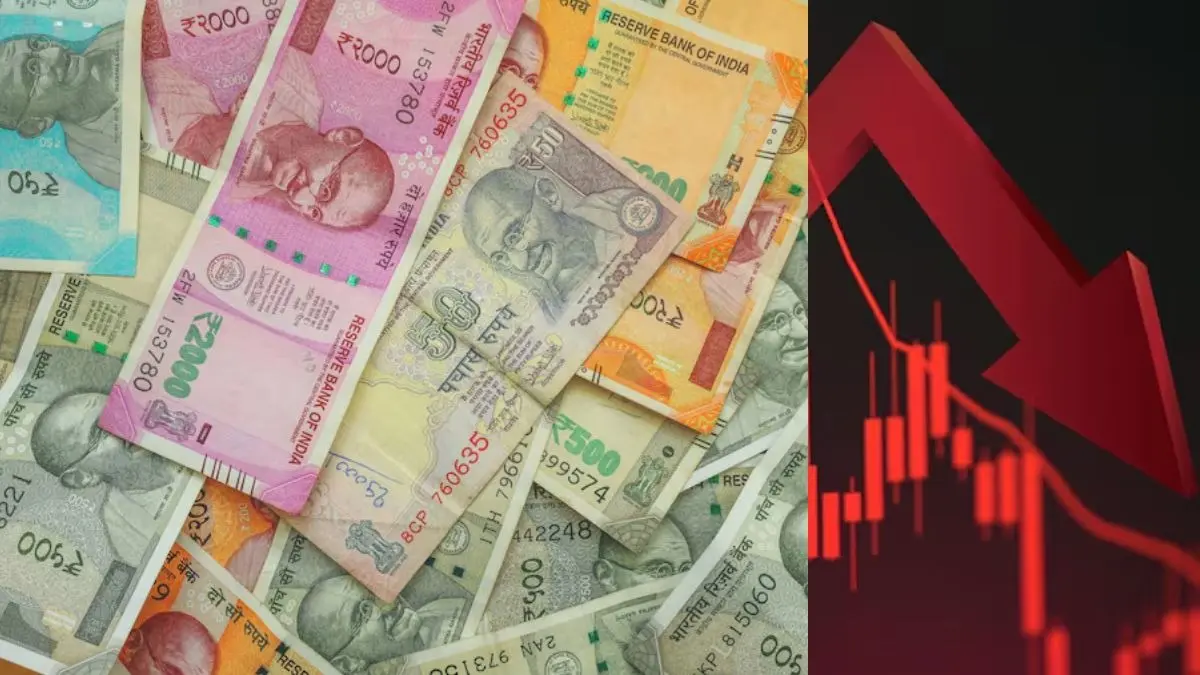
The recent depreciation in the Indian Rupee is unlikely to have any significant impact on CPI inflation in the country, as India has a low dependence on imports for food products, as highlighted a report by Bank of Baroda.
According to the report, the impact of Rupee depreciation on domestic inflation is expected to remain muted due to the country's strong agricultural production and near self-sufficiency in several key crops.
The Indian Rupee has depreciated sharply in the last few days, crossing multiple psychological levels. It closed at 90.19 per US dollar on 4 December 2025, touching a historic low.
The report stated, "Our analysis shows that since India has a low dependence on imports for food products, the impact of INR depreciation on domestic inflation is likely to be muted".
Advertisement
The report attributed this weakening of the currency to several factors, including strong demand from importers, slowdown in foreign inflows, high trade deficit, and uncertainty over the US trade deal.
The decline in the rupee has prompted discussion on the potential impact on the domestic economy, particularly the fear of rising inflation.
Advertisement
The report analysis shows that a 5 per cent depreciation in the Rupee is likely to push up inflation by around 15-25 basis points on an annualized basis. The products expected to face the major impact include gold, edible oils, and pulses.
Although India is a net importer, the report emphasized that the structure of its consumption basket provides a cushion.
The CPI basket in India is heavily skewed toward food products, which account for approximately 46 per cent of the index. Since India is a major producer of agricultural products with near 100 per cent self-sufficiency in several crops, the import dependency for food items remains very low.
As the currency weakens, the price of imported goods rises, thereby contributing to inflation.
The Bank of Baroda report stated that the major impact of currency depreciation is likely to be visible in the miscellaneous category, which includes gold, a commodity that is largely imported.
Despite this, the report maintained that the fall in the Indian Rupee is unlikely to have a significant bearing on CPI inflation and will not alter the overall inflation outlook.
So the report outlined that while the recent bout of weakness in the Indian Rupee raises concerns regarding its impact on the domestic economy, the low import dependence for food products and the structure of the CPI basket suggest that inflationary pressures arising from currency depreciation are expected to remain limited.