
Rupee Hits Record Low; Goldman Sachs Predicts 95 Per USD Amid Oil Surge
Goldman Sachs warns of a slip to 95 per USD by 2027 after the rupee hits record low of 92.62.
- Republic Business
- 3 min read

;'%3e%3cpath%20d='m8,15.99c4.41,0,7.99-3.58,7.99-7.99S12.41,0,8,0,0,3.59,0,8s3.58,7.99,7.99,7.99Z'%20style='stroke:%23fff;%20stroke-miterlimit:10;%20stroke-width:.02px;'/%3e%3cpath%20d='m3.08,3.37l3.82,5.11-3.84,4.15h.87l3.37-3.64,2.72,3.64h2.94l-4.04-5.39,3.58-3.87h-.86l-3.1,3.35-2.5-3.35h-2.94Zm1.27.64h1.35l5.97,7.99h-1.35l-5.97-7.99Z'%20style='fill:%23fff;'/%3e%3c/g%3e%3c/svg%3e)


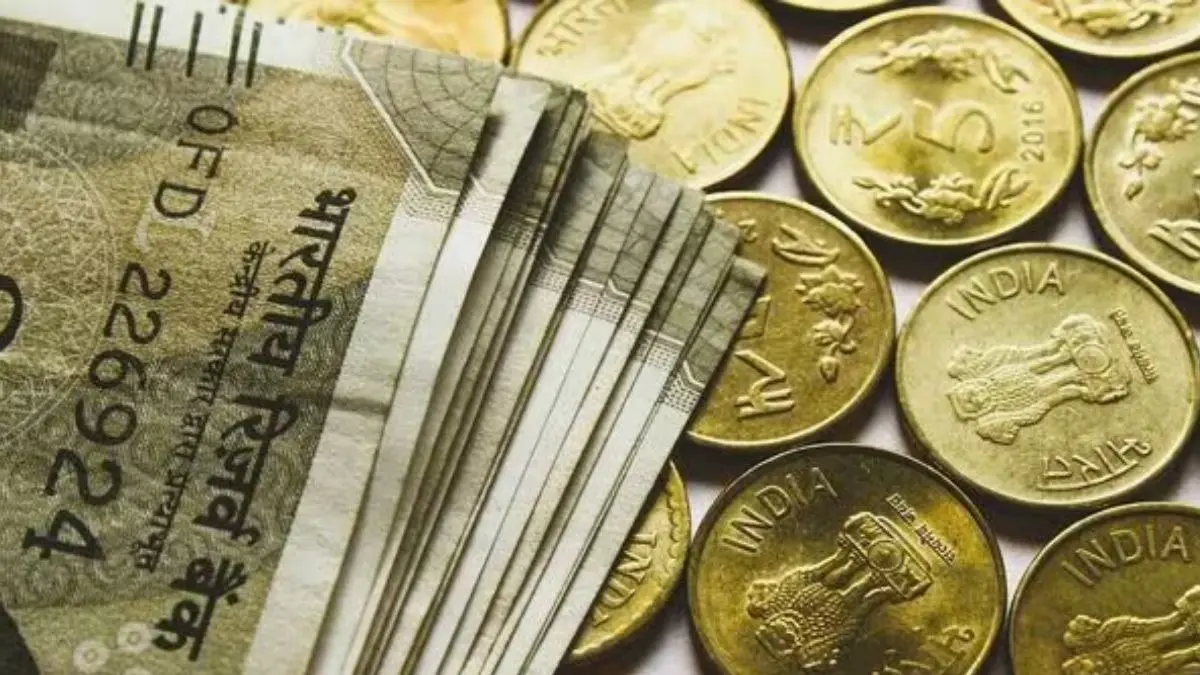
After the rupee declined to its new lifetime low of Rs 92.62 per dollar on March 18, Goldman Sachs noted that this South Asian currency might slip to 95 per US dollar over the next year.
Goldman Sachs Group Inc.'s Chief Economist for India, Santanu Sengupta, noted that the 95 per US dollar projection was underpinned by a structurally widening current account deficit and the macro fallout from the US-Israeli war on Iran, which has effectively closed the Strait of Hormuz to commercial shipping.
As of 17 March 2026, USD/INR stood at 92.41, down 6.75% over the past twelve months and near its all-time closing low of 92.46.
The rupee has lost approximately 1.77% in the past month alone, with the RBI deploying an estimated USD 18–20 billion in a single week to defend orderly market conditions.
Advertisement
Simultaneously, overseas portfolio investors have withdrawn over USD 5.5 billion from Indian equities in March, coinciding with an 8% decline in the Nifty 50.
Advertisement
Meanwhile, Goldman Sachs has also revised down India's GDP growth forecast for FY26 to 6.5% from 7.0%, raised its inflation estimate by 30 basis points, and projected the current account deficit (CAD) to widen by 0.8 percentage points to 1.2% of GDP.
On the other hand, Morgan Stanley estimates that every USD 10/bbl sustained rise in oil prices reduces India's GDP growth by 20–30 basis points and widens the CAD by 50 basis points.
This proves to be an alarming multiple given that Brent has surged from USD 73/bbl pre-conflict to a peak of USD 120/bbl before settling around USD 100–103.
Key Triggers For Rupee To Hit 95 Per USD
Current Account Dynamics: Goldman Sachs projects India's current account deficit to widen by 0.8 percentage points to 1.2% of GDP in FY26. This compares with a relatively contained 0.4% in FY25 and reflects the sharp increase in the energy import bill.
A wider CAD structurally reduces INR support from external flows and increases the economy's sensitivity to sudden stop risks in capital flows.
Portfolio Outflow Pressure: Foreign portfolio investors have pulled over USD 5.5 billion from Indian equities in March 2026 alone, contributing to an 8% decline in the Nifty 50. T
he combination of risk-off sentiment, elevated crude and a weakening rupee creates a self-reinforcing loop: falling equities prompt further FPI selling, which accelerates rupee depreciation, which in turn erodes USD-denominated returns and discourages fresh inflows.
RBI Intervention and Reserve Adequacy: The RBI has been an active seller of US dollars, with estimates suggesting it sold USD 18–20 billion in a single week to cushion the rupee. It has also used buy-sell swaps to replenish INR liquidity.
However, intervention is inherently a rearguard action when macro fundamentals are deteriorating: it smooths the path of depreciation but cannot reverse the underlying current account and portfolio pressures. Goldman notes that the RBI will likely continue to provide liquidity support rather than aggressively tightening policy at this stage.
12-Month Trajectory: Our base case sees USD/INR reaching 94–95 by Q1 2027, consistent with Goldman's projection. The path is likely to be non-linear: bouts of RBI-engineered calm interspersed with sharp selloffs triggered by oil price spikes, further FPI exits, or adverse geopolitical developments. The INR/USD rate was down 2.85% in 2026 as of mid-March; the trajectory to 95 implies a further ~3% depreciation from current levels.
Wahdi Securities has also endorsed Goldman Sachs' “directional call for USD/INR at 95 over the next 12 months”.