
Rupee Weakens Past 90: What India’s Trade Tensions With The US Mean For You
The Indian Rupee (INR) hit an all-time low of 90.14 against the US Dollar (USD), primarily triggered by stalled US trade deal talks and punitive US tariffs on Indian goods. This record fall immediately escalates the cost of imports, including petrol, foreign education and electronics like iPhones, impacting millions of Indian budgets.
- Republic Business
- 3 min read

;'%3e%3cpath%20d='m8,15.99c4.41,0,7.99-3.58,7.99-7.99S12.41,0,8,0,0,3.59,0,8s3.58,7.99,7.99,7.99Z'%20style='stroke:%23fff;%20stroke-miterlimit:10;%20stroke-width:.02px;'/%3e%3cpath%20d='m3.08,3.37l3.82,5.11-3.84,4.15h.87l3.37-3.64,2.72,3.64h2.94l-4.04-5.39,3.58-3.87h-.86l-3.1,3.35-2.5-3.35h-2.94Zm1.27.64h1.35l5.97,7.99h-1.35l-5.97-7.99Z'%20style='fill:%23fff;'/%3e%3c/g%3e%3c/svg%3e)


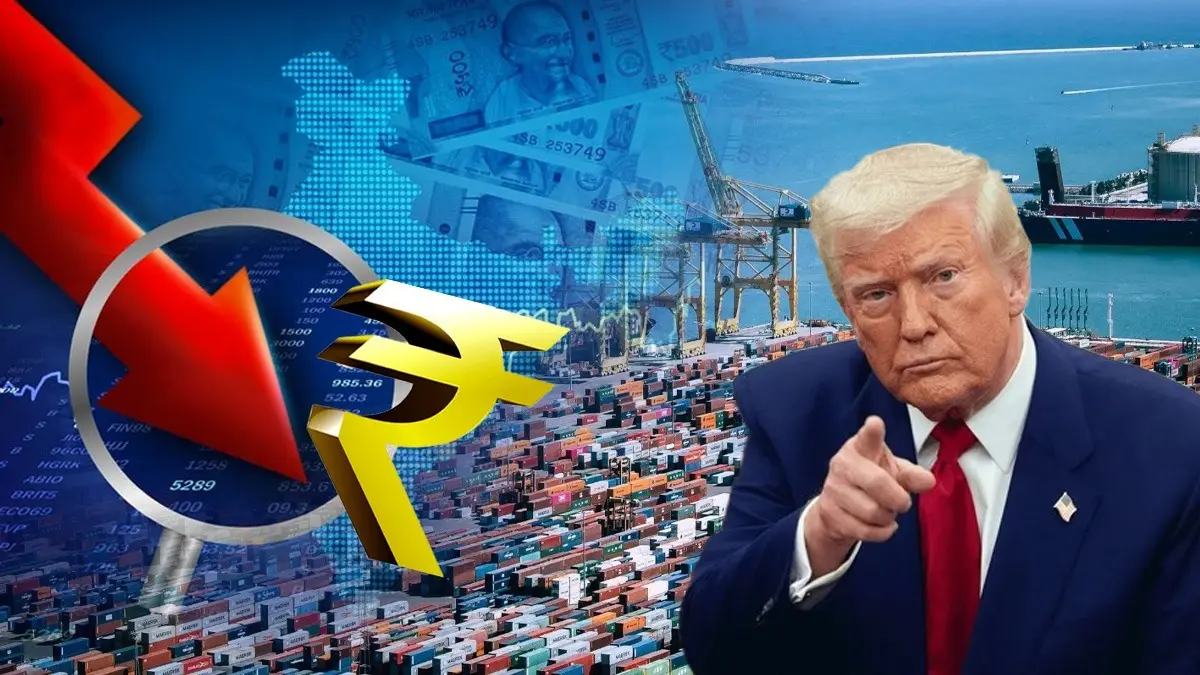
For the first time ever, the Indian rupee crossed the 90-mark against the US dollar on Wednesday, touching an intra-day low of 90.14 before closing around 90.01.
For millions of Indian families, businesses, importers and investors, this is no longer just a number on the forex screen; it is starting to hurt the monthly budget, loan EMIs, education abroad plans and the price of everything from petrol to iPhones.
The trigger? India now faces the highest US tariffs among major economies after talks for a bilateral trade deal stalled again. With no relief in sight, analysts say the rupee’s slide may have further to go and that will directly hit your wallet.
Why the Rupee is Falling So Fast Now
The underlying weakness has been building for months: slowing exports, record trade deficit, foreign investors pulling money out of Indian stocks and falling FDI. But the final push past 90 came from the trade standoff with Washington.
Advertisement
“The recent tariff dispute with the United States has really accelerated the decline. Until this issue is resolved – with India now paying the highest U.S. tariffs globally – the pressure remains,” Sat Duhra, portfolio manager at Janus Henderson Investors in Singapore, told Reuters.
Exporters are bleeding and dollars are not coming in as fast as they are going out to pay for oil, electronics and gold.
Advertisement
Will the RBI Stop the Slide?
The Reserve Bank of India stepped in, selling dollars to cap the fall, but traders say the interventions have become lighter than before.
“RBI seems to be adopting a more soft-touch approach…it may want to use its intervention power judiciously,” Abhishek Goenka, founder of forex advisory IFA Global, told Reuters.
Why the caution? The central bank is already sitting on a $63-65 billion short-dollar forward position. Aggressive defence now would only add to that pile and create bigger problems later when those contracts mature.
“Not having a trade deal means they need to extend support to exporters… the central bank’s resistance to a weaker rupee has diminished,” Dhiraj Nim, economist and FX strategist at ANZ in Mumbai, told Reuters.
He sees the rupee heading to 91.30 by end-2026 if the tariff pain continues.
What This Means for Your Pocket
Petrol, diesel, LPG: Already up; expect another round when oil companies pass on the higher dollar cost.
Imported gadgets, iPhones, laptops: gets costlier almost immediately.
Foreign education & travel: Fees and tickets will get pricier.
EMIs on foreign-currency loans (ECBs taken by companies): Corporate India will pay more; some of that cost will reach you via higher prices or layoffs.
Gold: Wedding season just became heavier on the pocket.
On the flip side, a weaker rupee makes Indian exports cheaper and could eventually help IT, pharma and textile companies, if they survive the tariff blow first.
Is There Any Hope Left in 2025-26?
Some analysts still see light at the end of the tunnel, but only if global factors cooperate.
Bank of America economists told Reuters they expect the dollar itself to weaken next year, which could help the rupee recover to around 86 by the end of 2026, but only if portfolio outflows stop.
Radhika Rao, senior economist at DBS Bank in Singapore, told Reuters the RBI now appears willing to let the currency “find its equilibrium” to keep Indian goods competitive in global markets.