
Rupee’s Recovery at Risk: Analysts Warn $115 Brent Crude Could Push CAD Toward Breaking Point
The Indian Rupee is navigating geopolitical friction and surging energy costs, trading near historic lows of 94.77 despite domestic growth. While the Economic Survey suggests the currency is "punching below its weight," experts warn that a sustained Brent crude price above $110 could balloon the CAD beyond the 3% threshold, making a 2026 recovery increasingly unlikely.
- Republic Business
- 4 min read

;'%3e%3cpath%20d='m8,15.99c4.41,0,7.99-3.58,7.99-7.99S12.41,0,8,0,0,3.59,0,8s3.58,7.99,7.99,7.99Z'%20style='stroke:%23fff;%20stroke-miterlimit:10;%20stroke-width:.02px;'/%3e%3cpath%20d='m3.08,3.37l3.82,5.11-3.84,4.15h.87l3.37-3.64,2.72,3.64h2.94l-4.04-5.39,3.58-3.87h-.86l-3.1,3.35-2.5-3.35h-2.94Zm1.27.64h1.35l5.97,7.99h-1.35l-5.97-7.99Z'%20style='fill:%23fff;'/%3e%3c/g%3e%3c/svg%3e)


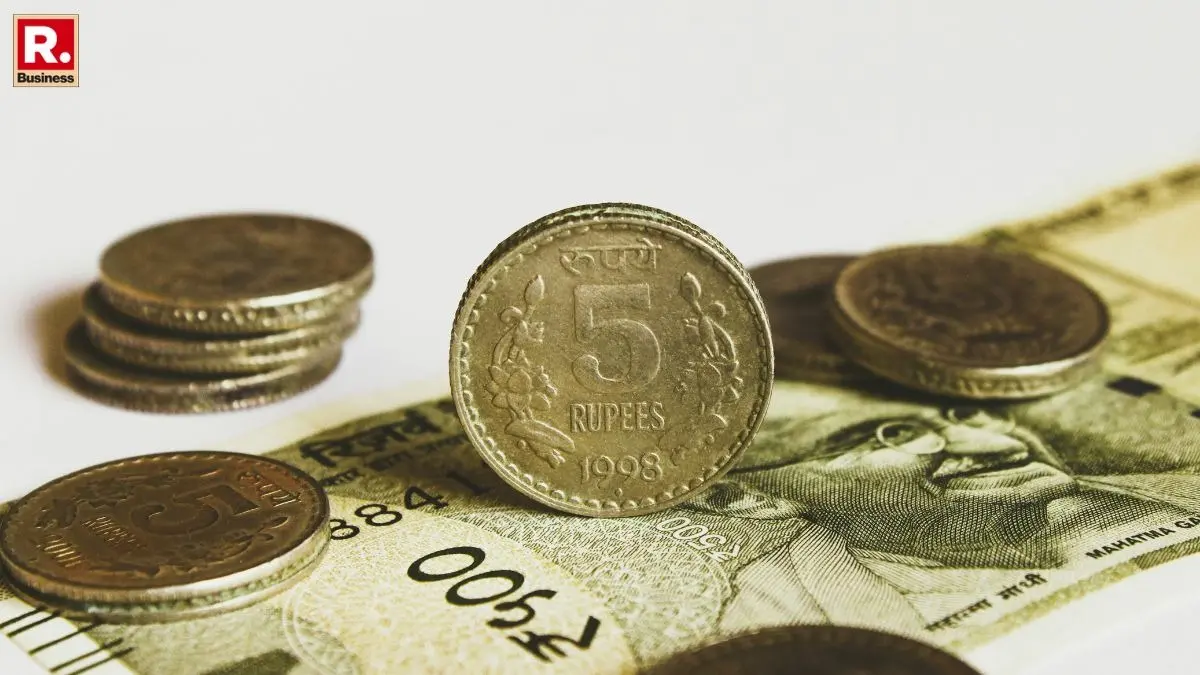
The Indian rupee is locked in a tug-of-war between its strongest-ever domestic fundamentals and a surge in global crude prices that threatens to redefine its natural value. Despite India remaining a bright spot in emerging markets, the currency has drifted toward the 94.77 mark against the U.S. dollar. The decline comes as the Economic Survey suggests the rupee is punching below its weight. This shows the gap between a stable internal economy and a volatile external environment.
As the currency nears the psychological 95-level, the debate among market participants has shifted from if the rupee will fall, to how the Reserve Bank of India will manage the descent.
"The observation that the rupee is 'punching below its weight' reflects the gap between India’s relatively strong domestic fundamentals and external pressures like global dollar strength," says Piyush Jhunjhunvala, CEO & Founder, Stockify. "With the currency nearing 95, the Reserve Bank of India will not be able to defend any specific level as a hard red line. Historically, the RBI has focused primarily on managing volatility rather than on targeting a fixed exchange rate."
Anand K. Rathi, Co-Founder of MIRA Money, agrees, noting that while growth is high and fiscal consolidation is on track, the pressure is an outside-in phenomenon. "In this situation, the RBI is not likely to strongly defend a certain level, say 95. Any sudden action could take away money from the home market and make things worse financially," Rathi warns.
Advertisement
The Oil Factor
The primary headwind remains the Strait of Hormuz. With disruptions projected to push Brent crude to an average of $115 in April, India’s import bill is under extreme duress. Experts suggest there is a mathematical limit to how much pressure the rupee can absorb before a recovery becomes impossible in the medium term.
"A 'breaking point' for a sustainable recovery in the rupee could be around $105-$110," says Jhunjhunvala. "Once prices exceed that threshold, the import bill will begin to grow dramatically and make it increasingly difficult to achieve stable pricing for the currency. If oil prices remain above $115 for any length of time, CAD is likely to increase to levels that will not allow a meaningful recovery of the rupee by 2026."
Advertisement
According to Rathi, the historical math is unforgiving: every $10 rise in crude oil prices can add about 0.5% of GDP to the current account deficit. "The situation is stable as long as the CAD stays within a moderate range of about 2%. But if oil prices stay high for a long time and the CAD gets closer to 3% or higher, it might make it much harder for the rupee to recover," he explains.
Monetary Policy
With Goldman Sachs and other agencies pricing in a 50-basis-point (bps) rate hike, the market is divided on whether a hawkish pivot can actually reverse capital outflows. While a hike might signal a shift toward "protecting the currency," Jhunjhunvala argues that monetary tightening alone may not be enough. "The rupee also has some influence from global risk sentiment and geopolitical issues in the Middle East. Even if oil prices remain at very high levels, investors will still be cautious until there is some level of certainty regarding the regional political climate," he notes.
Rathi suggests the RBI will likely remain cautious, prioritizing inflation and growth over exchange rate targets. “At this point, it's not probable that the RBI will quickly move toward a hawkish stance just to protect the currency. A 50-basis-point rise would assist a little, but it probably won't largely stem capital outflows, especially while global dynamics and geopolitical dangers are at play.”
For now, the rupee remains a "hostage" to the geography of West Asia. While the RBI’s massive foreign exchange reserves provide a cushion, the "length of time" prices remain elevated is the true variable. As Jhunjhunvala concludes, "A one-time spike in oil prices can be managed, but a protracted period of elevated oil prices could permanently weaken the rupee and inhibit future recovery."
For India’s business desks and exporters alike, the coming weeks will determine if the 95-level is a temporary floor or a new ceiling.