
Spectrum Off the Table as Corporate Asset: SC Bars Its Use in Insolvency Plans
The Supreme Court has ruled that telecom spectrum, considered a public natural resource, cannot be treated as a corporate asset under India’s Insolvency and Bankruptcy Code. Telecom firms in bankruptcy proceedings cannot use spectrum rights to delay or restructure dues, nor can lenders monetise spectrum to repay debts.
- Republic Business
- 3 min read

;'%3e%3cpath%20d='m8,15.99c4.41,0,7.99-3.58,7.99-7.99S12.41,0,8,0,0,3.59,0,8s3.58,7.99,7.99,7.99Z'%20style='stroke:%23fff;%20stroke-miterlimit:10;%20stroke-width:.02px;'/%3e%3cpath%20d='m3.08,3.37l3.82,5.11-3.84,4.15h.87l3.37-3.64,2.72,3.64h2.94l-4.04-5.39,3.58-3.87h-.86l-3.1,3.35-2.5-3.35h-2.94Zm1.27.64h1.35l5.97,7.99h-1.35l-5.97-7.99Z'%20style='fill:%23fff;'/%3e%3c/g%3e%3c/svg%3e)


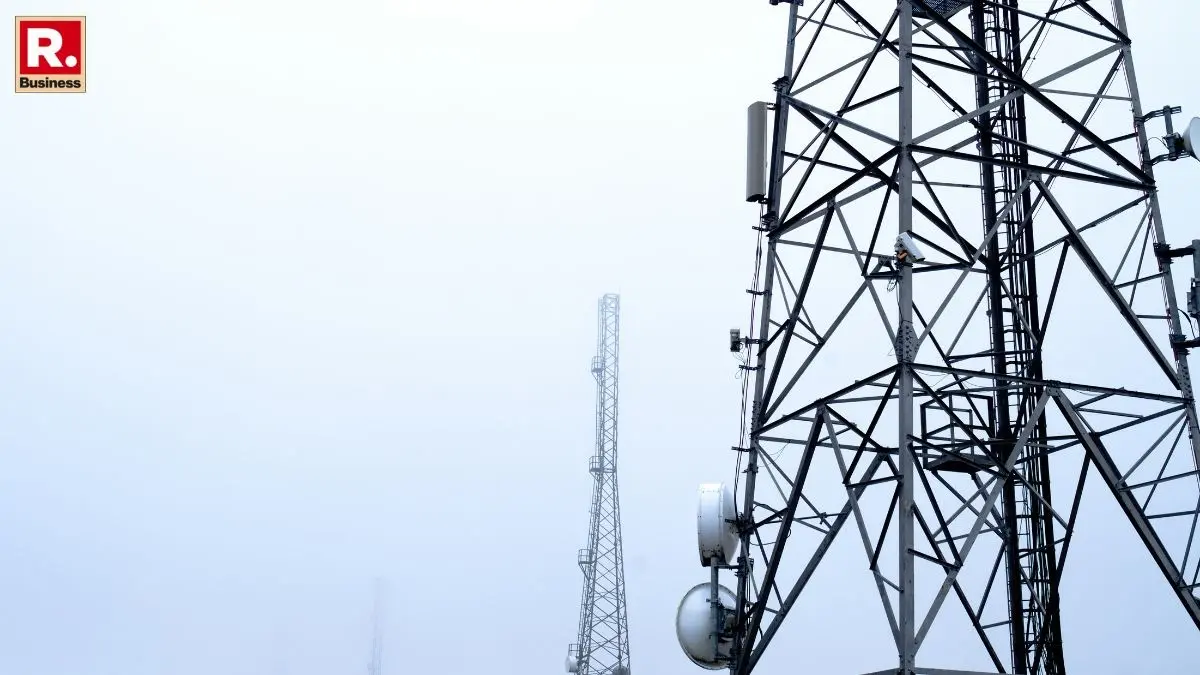
The Supreme Court on Friday delivered a judgment asserting that telecom spectrum is a public resource and cannot be treated like other corporate assets in insolvency proceedings under the Insolvency and Bankruptcy Code. The ruling prohibits telecom companies undergoing bankruptcy from using spectrum rights to restructure debt or repay creditors.
A bench of Justices P.S. Narasimha and Atul Chandurkar upheld the view that spectrum is a sovereign resource that belongs to the people of India, with the government acting in a trustee capacity. As such, its control, use, and all associated benefits must serve the “common good” and cannot be restructured or transferred simply because a company is in insolvency.
IBC Moratorium Won’t Shield Spectrum Dues Or Change Ownership
In its ruling, the apex court made clear that telecom companies cannot invoke the moratorium provisions of the IBC to defer payments of licence fees or spectrum charges owed to the Department of Telecommunications (DoT). The judgment stemmed from a batch of appeals arising from insolvency cases involving legacy operators, including Aircel and Dishnet, which had argued that their “right to use” spectrum should qualify as an IBC asset.
The court said this interpretation would undermine the legal framework governing natural resources and their use in the telecom sector. It stressed that IBC cannot override sector-specific statutes and constitutional principles governing public assets.
Advertisement
Decades-old Asset vs Public Interest Debate
The matter reached the Supreme Court after the National Company Law Appellate Tribunal in 2021 had held that spectrum could, in principle, be part of an insolvency resolution plan only after clearing all outstanding statutory dues. Lenders had sought to use spectrum rights to recover dues. They argued that intangible rights to use spectrum were commercial assets that could be monetized under a resolution strategy.
The Centre, supported by the DoT, countered that spectrum is a national asset, licensed to operators for specific use but not “owned” by them in a way that allows free transfer during bankruptcy. The apex court’s verdict aligns with this view, reinforcing the primacy of public interest over creditor recoveries in relation to spectrum.
Advertisement
Implications For Bankrupt Telcos and Lenders
The judgment has significant implications for insolvency cases involving telecom companies. Operators like Aircel and Dishnet have been in insolvency proceedings for years, with lenders seeking to include spectrum in resolution plans to enhance recovery values. Banks had argued that without spectrum, the companies could not operate as a going concern, weakening creditor positions.
By ruling that spectrum cannot be classified as a freely transferable asset under the IBC, the Supreme Court has effectively narrowed avenues for lenders to recoup dues using telecom licences and airwaves. The decision may also influence future restructuring strategies in the sector, requiring parties to clear statutory obligations before spectrum can be reassigned or used commercially.