
BluSmart bags $25 million investment from responsAbility climate fund
The investment comes as part of the global climate fund’s $500 million-climate investment strategy for reducing CO2 emissions in Asia
- Republic Business
- 2 min read

;'%3e%3cpath%20d='m8,15.99c4.41,0,7.99-3.58,7.99-7.99S12.41,0,8,0,0,3.59,0,8s3.58,7.99,7.99,7.99Z'%20style='stroke:%23fff;%20stroke-miterlimit:10;%20stroke-width:.02px;'/%3e%3cpath%20d='m3.08,3.37l3.82,5.11-3.84,4.15h.87l3.37-3.64,2.72,3.64h2.94l-4.04-5.39,3.58-3.87h-.86l-3.1,3.35-2.5-3.35h-2.94Zm1.27.64h1.35l5.97,7.99h-1.35l-5.97-7.99Z'%20style='fill:%23fff;'/%3e%3c/g%3e%3c/svg%3e)


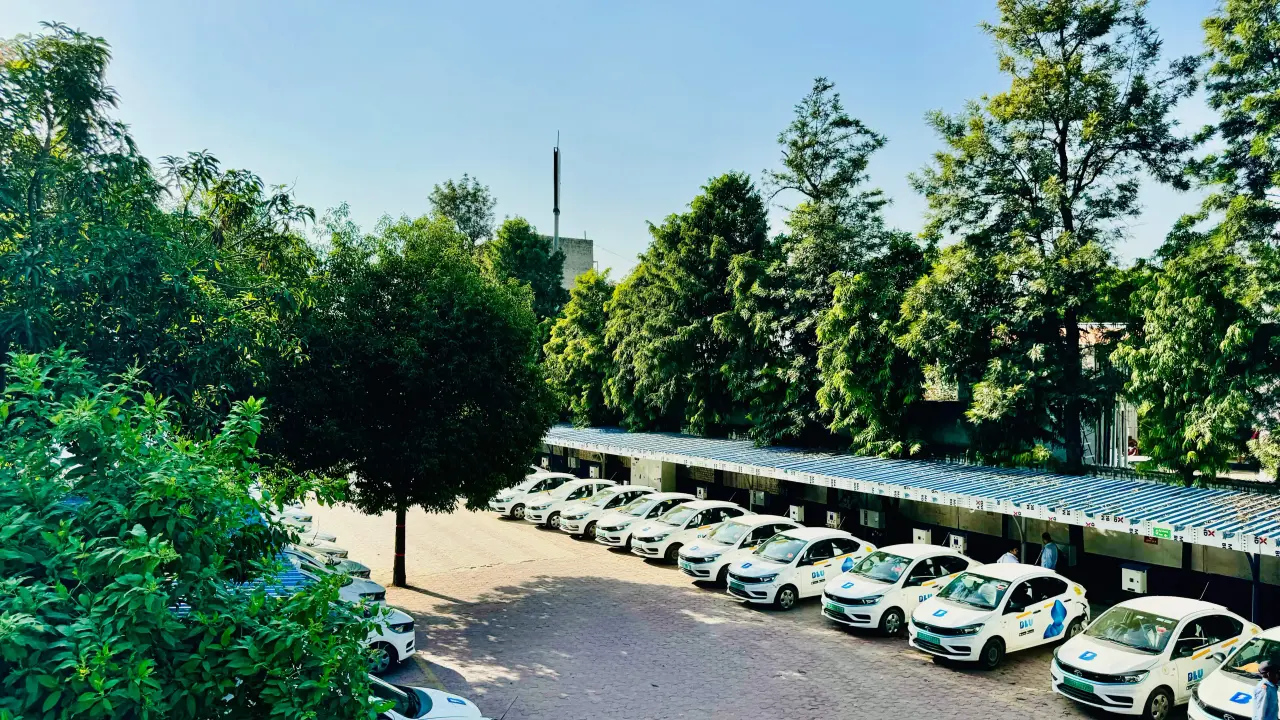
Cash for climate impact: Ride-hailing platform BluSmart is set to raise $25 million (about Rs 207 crore) from global climate fund responsAbility, the company said on Monday.
As part of the global climate fund’s $500 million-climate investment strategy for reducing CO2 emissions in Asia, this investment will enable BluSmart to expand its EV charging infrastructure across India, and further expand its electric ride-hailing service, it said in a statement.
“With responsAbility’s investment and support we will continue our mission to rapidly expand our iconic 100 per cent EV ride-hailing service and building large EV charging infrastructure for a better, cleaner and a more sustainable future, ” Anmol Singh Jaggi, Co-Founder of BluSmart said.
The Gurugram-based ride-hailing service and EV charging infrastructure network operates 6,000 BluSmart EVs and owns 4,000 EV chargers across 35 EV charging locations in Delhi NCR and Bengaluru.
The new investment injunction follows BluSmart’s $24 million equity round in December 2023. The ride-hailing platform has also secured long-term and sustainable EV asset financing of $200 million backed by leading Development Financial Institutions (DFIs).
Advertisement
ResponsAbility in November had launched a $500 million climate investment strategy with German development bank KfW and the Dutch development bank FMO, focusing on investments in low-emission technologies.
The Switzerland-based impact investor’s fund infusion also signifies their mission to mobilise capital for investing in solutions that are targeted at generating societal and environmental impact in emerging markets like India.
Advertisement
Notably, BluSmart aims to expand its fleet to 10,000 vehicles by March 2024. It has completed over 11 million all-electric trips, having covered 360 million all-electric kilometers, saving close to 26,000 metric tons of CO2 since 2019.