
Trump–Putin Alaska Meeting: What Really Happened Behind Closed Doors
The much-anticipated Alaska summit between U.S. President Donald Trump and Russian President Vladimir Putin ended without a deal to halt the Ukraine war. While both leaders hailed “progress,” no ceasefire was reached, leaving Europe anxious and Kyiv wary. Here’s a detailed breakdown of what happened, reactions, and the road ahead.
- Republic Business
- 5 min read

;'%3e%3cpath%20d='m8,15.99c4.41,0,7.99-3.58,7.99-7.99S12.41,0,8,0,0,3.59,0,8s3.58,7.99,7.99,7.99Z'%20style='stroke:%23fff;%20stroke-miterlimit:10;%20stroke-width:.02px;'/%3e%3cpath%20d='m3.08,3.37l3.82,5.11-3.84,4.15h.87l3.37-3.64,2.72,3.64h2.94l-4.04-5.39,3.58-3.87h-.86l-3.1,3.35-2.5-3.35h-2.94Zm1.27.64h1.35l5.97,7.99h-1.35l-5.97-7.99Z'%20style='fill:%23fff;'/%3e%3c/g%3e%3c/svg%3e)


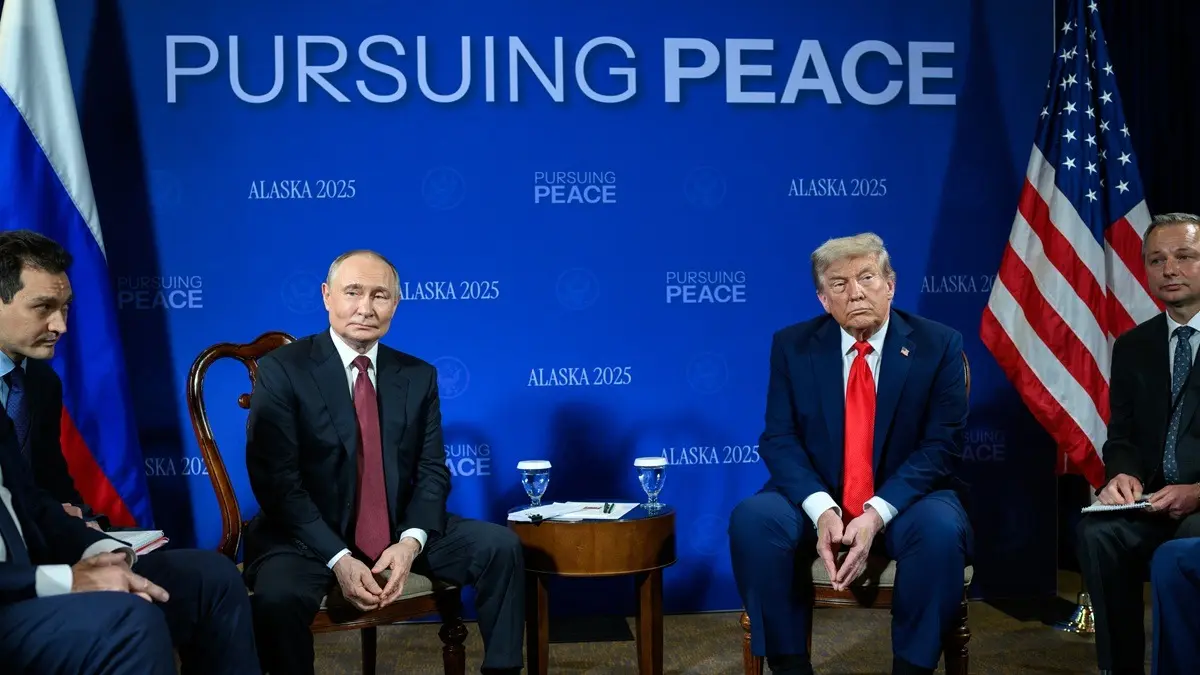
In Alaska, US President Donald Trump and Russian President Vladimir Putin concluded their high-stakes talks without a breakthrough on Ukraine.
Despite three hours of negotiations, Trump admitted, “There’s no deal until there’s a deal,” while Putin insisted the two had reached an “understanding” and warned Europe not to “torpedo progress”.
The war, the largest land conflict in Europe since 1945, continues unabated, with air raid sirens in Ukraine even as leaders talked. Trump pledged to brief President Volodymyr Zelenskiy and NATO allies before any next steps, signaling that peace remains elusive.
Backdrop: Why Alaska Mattered
The summit in Anchorage was their first meeting since 2019 and was billed as a potential turning point in the brutal, three-year-long Ukraine war.
The optics were dramatic: red-carpet welcome, closed-door talks, and Trump hinting that future meetings might even take place in Moscow.
For Putin, who faces an International Criminal Court (ICC) arrest warrant, simply being received on US soil was a diplomatic victory.
For Trump, who has long claimed he could end the war “in 24 hours,” the meeting was a test of his peace credentials.
Key Takeaways from the Alaska Summit
1. No Ceasefire, No Concrete Agreement
Trump said there were “many points” of agreement and “a couple of big ones” unresolved, but no ceasefire framework emerged. This means the war, for now, continues without pause.
2. Putin’s Broad Agenda
Putin stressed Ukraine was only one of several issues, citing trade, Arctic cooperation, and space exploration. He framed Russia as open to dialogue but reiterated that all “root causes” of the crisis must be addressed before peace is possible.
3. European Anxiety
Allies feared Trump might concede Ukrainian territory without Kyiv’s approval. While no such deal was announced, the lack of transparency fueled concerns.
Advertisement
Czech Foreign Minister Jan Lipavský warned: “If Putin were serious about negotiating, he would not have been attacking Ukraine all day today.”
4. Kyiv’s Exclusion and Anger
Ukraine’s President Volodymyr Zelenskiy was not part of the meeting. He has repeatedly rejected any land-for-peace deal, demanding firm U.S. security guarantees. Opposition lawmaker Oleksiy Honcharenko accused Putin of using the summit to “buy time” while continuing military operations.
5. Fighting Unabated During Talks
Even as the talks unfolded, Ukrainian drones struck Russian regions Rostov and Bryansk, and eastern Ukraine remained under air raid alerts, stark reminders of the war’s intensity.
6. Symbolic Optics for Putin
For the Kremlin, the summit allowed Putin to appear as a legitimate global player, despite sanctions and isolation. The red-carpet reception in Alaska gave Moscow a propaganda win.
Inside the Negotiations: Land Swaps, Prisoner Exchanges, Security Guarantees
Trump later told Fox News that discussions included land swaps, prisoner exchanges, and “security for Ukraine not based on NATO.” He said, “Those are points that we negotiated and those are points we largely agreed on. Ukraine has to agree to it. Maybe they’ll say no.”
While details remain unclear, such proposals raise concerns in Kyiv and Europe about concessions being discussed without Ukrainian participation.
Trump’s Shifting Tone on Russian Oil and Tariffs
The talks also spilled into economic diplomacy. Trump suggested he might delay retaliatory tariffs on countries buying Russian oil for “two or three weeks,” citing progress with Putin. Earlier, he imposed steep tariffs on Indian exports over its continued oil purchases from Russia.
“When you lose your second largest customer, and you’re probably going to lose your first largest customer, I think that probably has a role,” Trump told Fox News, crediting U.S. tariffs with pushing Moscow to the negotiating table.
Read More - Trump-Putin Alaska Summit: Diplomatic Wins & Market Relief — Ajay Bagga
India, however, has denied halting Russian oil imports. Indian Oil Corporation chief A.S. Sahney clarified there is “no pause” and purchases remain based on economic considerations, despite U.S. pressure.
Reactions Across Capitals
Washington’s Balancing Act
The US delegation, led by Secretary of State Marco Rubio and envoy Steve Witkoff, highlighted the strategic importance of the summit. Still, officials admitted no binding commitments emerged.
Moscow’s Spin
Russian media portrayed the talks as constructive, with Putin claiming readiness to work with Trump on Ukraine’s security. Yet he avoided details, keeping negotiations tied to Moscow’s political demands.
Kyiv’s Deep Concerns
Zelenskiy, speaking before the summit, had urged “necessary steps” to end the war, reminding Washington: “We are counting on America.” His exclusion has left Ukrainians uneasy about how their interests were represented.
European Allies Skeptical
European leaders welcomed US mediation but doubted Putin’s sincerity. With no ceasefire and continued attacks, skepticism about Russia’s willingness to compromise remains high.
Trump’s Peace Promise Tested
The Alaska talks exposed the gap between Trump’s campaign promise. that he could end the Ukraine war in a single day, and the reality of complex geopolitics. After the summit, he conceded brokering peace was “tougher than expected.”
For now, the idea of a three-way meeting with Zelenskiy, once floated by Trump, appears unlikely.
What Comes Next?
Neither leader announced a timeline for follow-up talks. Trump has said he could consider security guarantees for Ukraine outside NATO and hinted that his “next meeting” with Putin might be in Moscow.
For Kyiv, the message is clear — progress is slow, promises are vague, and the war grinds on.
A Symbolic, Not Strategic, Summit
The Trump–Putin Alaska talks were long on optics but short on substance. Both leaders emerged claiming “progress,” yet neither offered specifics on how to end Europe’s deadliest war in decades.
For now, Ukraine’s fate remains tied to a conflict where diplomacy lags behind battlefield realities and Alaska may be remembered more for symbolism than solutions.
(With Inputs From Reuters)