
Trump’s Tariff Shock Over Russian Oil: Expert Explains The 'Far-Reaching' Impact On India’s Trade Future
US President Donald Trump has doubled down on tariffs against Indian goods, citing New Delhi’s Russian oil purchases. The new levy takes total duties to 50% for many products, sparking warnings from trade experts of “unviable” exports, job losses, and long-term strain on India–US economic ties.
- Republic Business
- 3 min read

;'%3e%3cpath%20d='m8,15.99c4.41,0,7.99-3.58,7.99-7.99S12.41,0,8,0,0,3.59,0,8s3.58,7.99,7.99,7.99Z'%20style='stroke:%23fff;%20stroke-miterlimit:10;%20stroke-width:.02px;'/%3e%3cpath%20d='m3.08,3.37l3.82,5.11-3.84,4.15h.87l3.37-3.64,2.72,3.64h2.94l-4.04-5.39,3.58-3.87h-.86l-3.1,3.35-2.5-3.35h-2.94Zm1.27.64h1.35l5.97,7.99h-1.35l-5.97-7.99Z'%20style='fill:%23fff;'/%3e%3c/g%3e%3c/svg%3e)


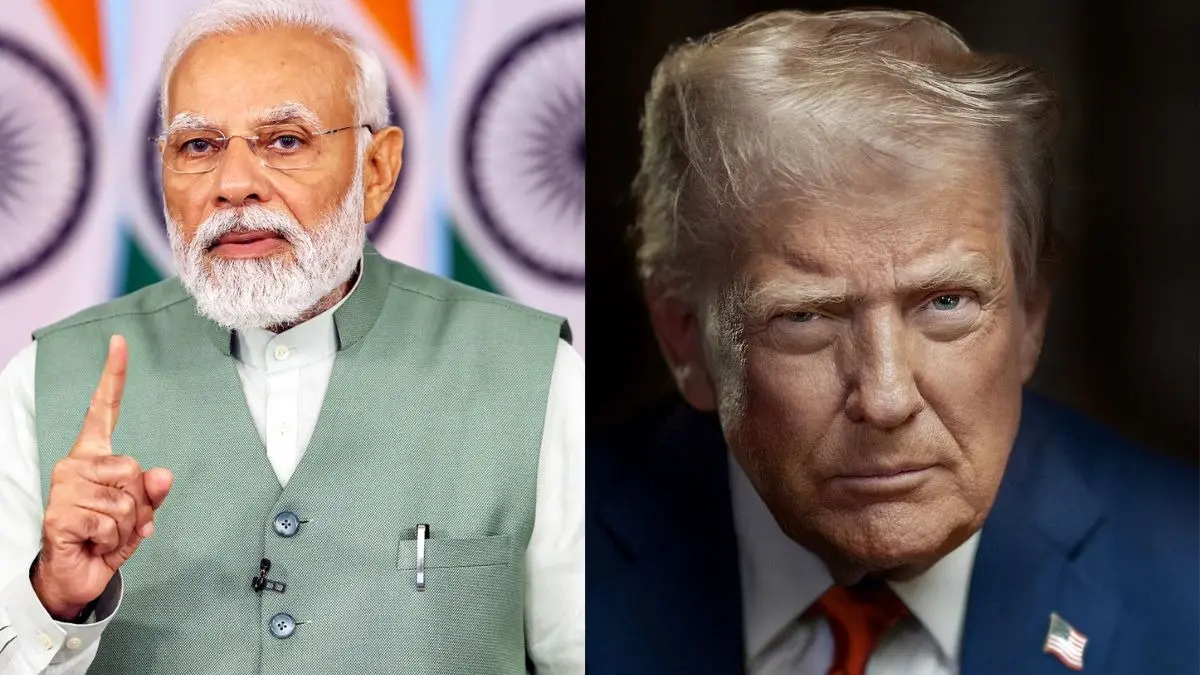
US President Donald Trump has announced an additional 25% tariff on Indian imports in response to New Delhi’s continued purchase of Russian oil, escalating tensions in global trade. The new duties, set to take effect in three weeks, will be added to a separate 25% levy from Thursday, effectively doubling tariffs to 50% for many products.
While certain goods such as steel, aluminium, pharmaceuticals, and semiconductors will enjoy exemptions or delayed inclusion, the move targets a wide swath of India’s export basket.
India swiftly condemned the decision, calling it “unfair, unjustified and unreasonable.” The Foreign Ministry reiterated that India turned to Russian oil only after traditional supplies were diverted to Europe due to the Ukraine war — a step it says Washington had “actively encouraged” to maintain “global energy market stability.”
Expert: Tariffs Make Trade “Nearly Unviable”
CA Gaurav Makhijani, Associate Partner and Head of Tax (North India & Gujarat) at Rödl & Partner India, warned that the additional penalty tariff puts India at a “significant disadvantage” in the US market.
“The recently imposed additional 25% U.S. tariff as a penalty on Indian imports puts India at a significant disadvantage, making trade across several key sectors with the US nearly unviable,” Makhijani said.
He noted that while some Asian economies benefit from lower tariffs or trade agreements, Indian sectors such as textiles, apparel, leather, footwear, and gems and jewellery, including diamonds, face “serious disruptions.” Steel and aluminium, already hit with 50% duties, will continue to suffer, threatening major employment-generating industries.
Bilateral Trade Goals in Jeopardy
India and the US have historically enjoyed a robust trade relationship, with over 1,000 American firms operating in India and significant Foreign Institutional Investment (FII) flows into Indian markets. The earlier ambition of expanding bilateral trade to USD 500 billion now appears uncertain.
“This recent tariff move raises pressing concerns about the future course of India–U.S. economic engagement… political and geopolitical considerations increasingly shape future trade negotiations,” Makhijani observed.
Call for Diversification and New Trade Deals
Makhijani emphasised that diversifying export markets is critical, urging the Indian government to accelerate Free Trade Agreement (FTA) talks, particularly with the European Union, to secure better access to developed economies.
“The need of the hour for India is clear: diversify and diversify swiftly,” he said, urging the government to fast-track Free Trade Agreement talks with the European Union to gain better access to developed markets.
He added that despite recent diplomatic strains with Canada, both countries’ shared exposure to US tariffs could revive stalled trade discussions and reduce reliance on the American market.
Read More - US Tariffs On India: How It Could Benefit Other Countries Like Vietnam, Bangladesh, And Mexico