
Union Budget and Dalal Street: A Decade of Market Reactions Explained
Over the last decade, Indian equity markets have shown no consistent pattern in reacting to Union Budget announcements. Data from 2015–2024 shows frequent volatility, limited Budget-day rallies, and reactions shaped by expectations on growth, fiscal discipline, and global cues.
- Republic Business
- 3 min read

;'%3e%3cpath%20d='m8,15.99c4.41,0,7.99-3.58,7.99-7.99S12.41,0,8,0,0,3.59,0,8s3.58,7.99,7.99,7.99Z'%20style='stroke:%23fff;%20stroke-miterlimit:10;%20stroke-width:.02px;'/%3e%3cpath%20d='m3.08,3.37l3.82,5.11-3.84,4.15h.87l3.37-3.64,2.72,3.64h2.94l-4.04-5.39,3.58-3.87h-.86l-3.1,3.35-2.5-3.35h-2.94Zm1.27.64h1.35l5.97,7.99h-1.35l-5.97-7.99Z'%20style='fill:%23fff;'/%3e%3c/g%3e%3c/svg%3e)


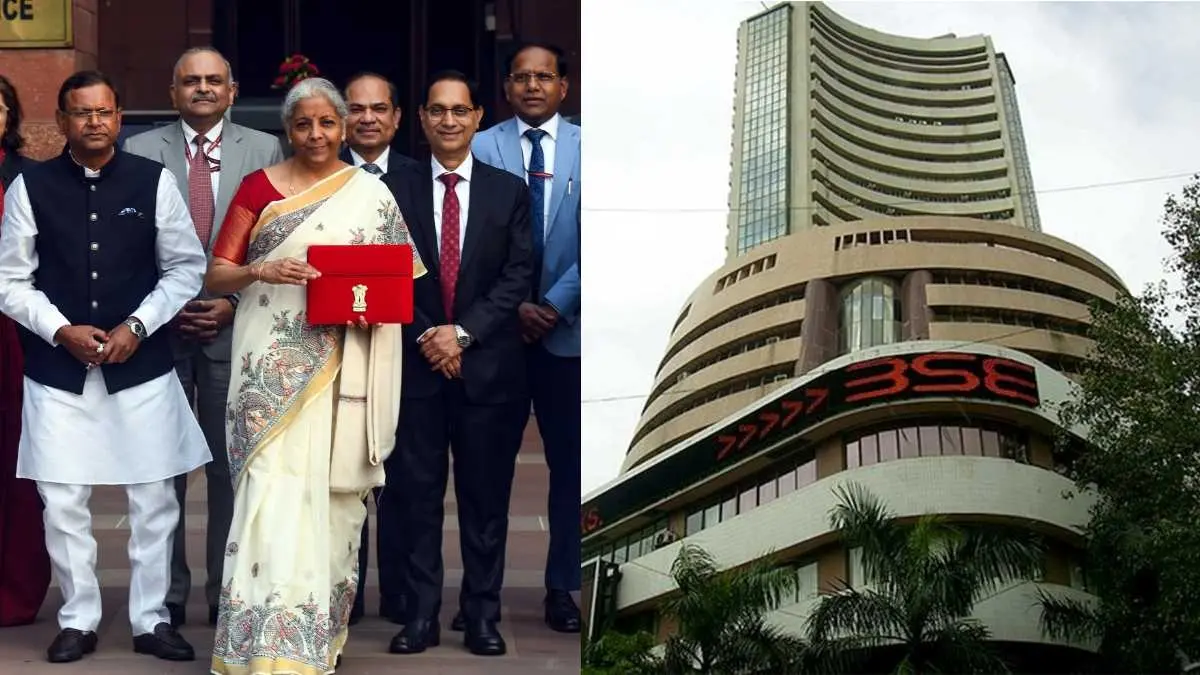
As India prepares for the Union Budget 2026, historical market data from the past decade shows that equity markets have responded to Budget announcements in sharply different ways, underscoring that the Budget is more a volatility event than a guaranteed market trigger.
An analysis of Nifty 50 movements on Budget day between 2015 and 2024 reveals that markets closed higher in only four of the last ten years, while declining or remaining flat in the rest. The data highlights how investor reaction has largely depended on the gap between expectations and actual policy signals rather than the Budget speech itself.
How The Market Moved On Budget Day?
Budget-day performance of the Nifty 50 over the last ten years shows mixed outcomes:
- 2015: +0.60%
- 2016: -0.60%
- 2017: +1.80%
- 2018: -0.10%
- 2019: -1.10%
- 2020: -2.50%
- 2021: +4.70%
- 2022: +1.40%
- 2023: -0.20%
- 2024: -0.13%
The strongest positive reaction came in 2021, while the steepest decline was recorded in 2020, reflecting the contrasting policy environments and economic conditions in those years.
Advertisement
Why Budget Reactions Have Been Insconsistent?
Market behaviour over the decade shows that reactions were rarely driven by announcements alone. In years where Budgets delivered clear policy shifts, particularly on growth or capital expenditure, markets responded positively. Conversely, Budgets perceived as incremental, election-focused, or lacking immediate growth support triggered muted or negative reactions.
Advertisement
In 2015 and 2017, markets reacted positively as investors welcomed early reform signals, fiscal discipline, and structural changes such as GST preparation and formalisation of the economy. These Budgets were seen as setting a longer-term policy direction, which helped sentiment.
However, in 2016 and 2018, investor expectations were higher than what the Budgets delivered. Concerns around rural stress, slowing private investment, and election-related fiscal pressures led to cautious market responses, despite no major policy reversals.
Election Cycles and Fiscal Concerns Weighed On Sentiments
Election-linked Budgets have historically made markets cautious. The 2019 interim Budget saw equities decline as investors focused on the fiscal implications of income support schemes and tax relief measures announced ahead of national elections. Concerns over fiscal sustainability outweighed short-term consumption support.
Similarly, in 2024, markets reacted mildly negatively as elevated valuations and global uncertainties limited upside, even though the Budget maintained its capex and fiscal consolidation stance.
The Pandemic Year Reshaped Expectations
The sharp contrast between 2020 and 2021 stands out in the decade-long data. In 2020, markets fell sharply as investors expected immediate growth stimulus amid an economic slowdown, but instead saw long-term structural measures. The disappointment was reflected in the steep Budget-day sell-off.
In contrast, 2021 delivered a historic rally, as the government clearly pivoted towards higher capital expenditure and accepted wider fiscal deficits in response to the pandemic. The clarity of intent and growth-first approach significantly altered investor expectations.
Recent Years Show Muted Reactions
In 2022, markets responded positively to continuity in the capex-led growth strategy, reinforcing confidence built a year earlier. However, by 2023 and 2024, Budget-day reactions turned muted as policy continuity was largely priced in, and global macro factors such as interest rates and geopolitical risks began playing a larger role in shaping reactions.
What A Decade Of Budget Data Indicates?
The last ten years make one trend clear: there is no assured Budget-day rally. Markets tend to react sharply only when Budgets materially change the growth or fiscal outlook. In most other cases, reactions remain short-lived, with broader market direction driven by earnings, liquidity, and global cues.
As Budget 2026 approaches, historical data suggest that investor reaction will once again hinge on whether policy announcements meaningfully alter expectations or just confirm what markets have already priced in.