
Wait and See? What Fed Chief Powell’s Latest Stance Means for the Global Economy
Federal Reserve Chair Jerome Powell, speaking at Harvard University, signaled a wait-and-see approach to the economic fallout from the ongoing West Asia war. Despite rising energy costs and a lackluster job market, Powell emphasized that the Fed will look through temporary supply shocks while monitoring long-term inflation expectations.
- Republic Business
- 3 min read

;'%3e%3cpath%20d='m8,15.99c4.41,0,7.99-3.58,7.99-7.99S12.41,0,8,0,0,3.59,0,8s3.58,7.99,7.99,7.99Z'%20style='stroke:%23fff;%20stroke-miterlimit:10;%20stroke-width:.02px;'/%3e%3cpath%20d='m3.08,3.37l3.82,5.11-3.84,4.15h.87l3.37-3.64,2.72,3.64h2.94l-4.04-5.39,3.58-3.87h-.86l-3.1,3.35-2.5-3.35h-2.94Zm1.27.64h1.35l5.97,7.99h-1.35l-5.97-7.99Z'%20style='fill:%23fff;'/%3e%3c/g%3e%3c/svg%3e)


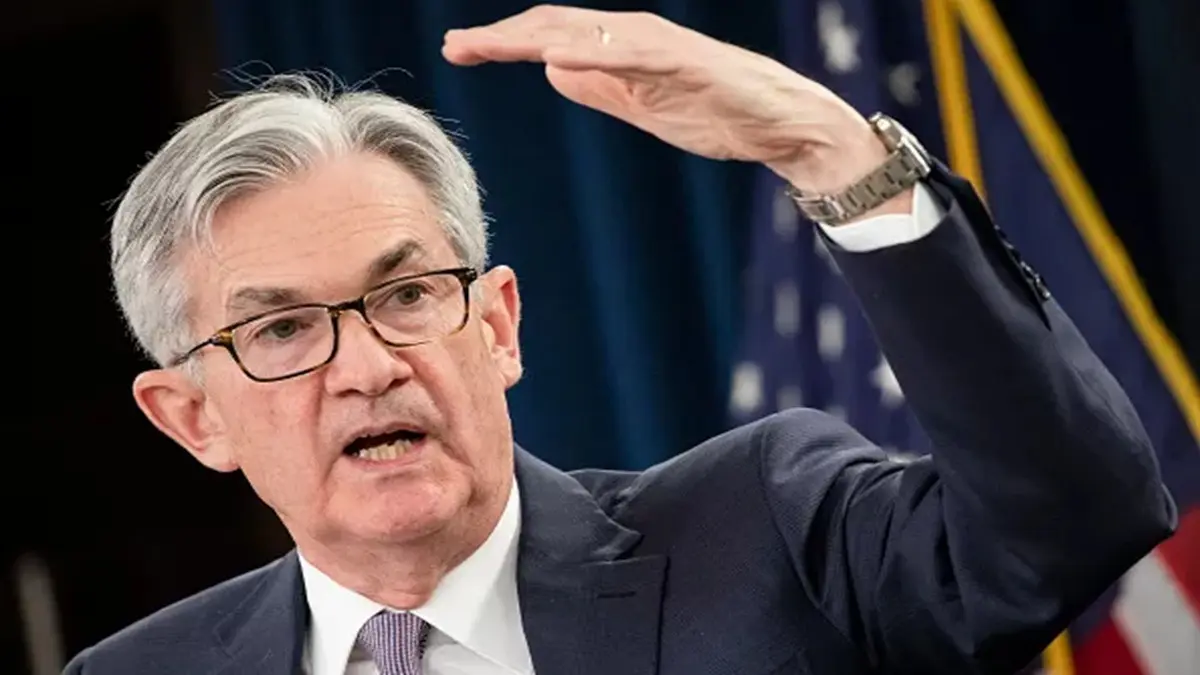
Federal Reserve Chair Jerome Powell on Monday said the U.S. central bank is in a "good place" to pause and observe how the escalating regional war and surging energy prices filter through the global economy.
Speaking during a moderated discussion at Harvard University, Powell indicated that the Fed typically avoids knee-jerk policy shifts in response to supply-side shocks, such as the recent spike in oil and industrial diesel prices caused by the blockade of the Strait of Hormuz. “We feel like our policy's in a good place for us to wait and see how that turns out,” Powell told an audience of students and faculty.
The Fed Chair acknowledged that the central bank is currently caught between its two primary mandates, maintaining stable prices and supporting full employment. With U.S. gasoline prices averaging $4 a gallon and the labor market showing signs of cooling, losing 92,000 jobs in February, the path forward is increasingly narrow. “There's sort of downside risk to the labor market, which suggests keep rates low, but there's upside risk to inflation, which suggests maybe don't keep rates low,” Powell said. “You’ve got tension between the two objectives.”
Energy Shock
While Brent crude remains volatile, Powell reiterated a classic central banking tenet: "looking through" temporary price spikes. He argued that raising interest rates to combat inflation caused specifically by oil supply disruptions could backfire, as the impact of rate hikes often hits the economy just as the initial shock is fading. “Energy shocks have tended to come and go pretty quickly. Monetary policy works with long and variable lags,” Powell explained.
Advertisement
However, he warned that this patience has its limits. If the public and businesses begin to expect higher inflation as a permanent fixture, the Fed would be forced to intervene. “Inflation expectations do appear to be well anchored beyond the short term,” he noted, while adding that regulators are watching those metrics “super carefully.”
As his term nears its conclusion in May, Powell also defended the Fed’s autonomy amidst increasing political pressure to lower borrowing costs. “We're not trying to work against any politician or any administration, but we have to be careful to stick to what we're doing,” Powell stated. He emphasized that the central bank must remain focused on its congressionally mandated goals rather than political cycles.
Advertisement
The Fed’s benchmark interest rate currently remains steady in the 3.50% to 3.75% range. Following Powell's remarks, market expectations for a rate cut in the first half of 2026 have significantly cooled, as investors brace for a longer period of high borrowing costs.
-With inputs from Reuters