
Warren Buffett Steps Away at 95; Remembering the Ideas That Defined the ‘Oracle of Omaha’
Warren Buffett’s retirement as Berkshire Hathaway CEO brings attention back to the investment philosophies that defined his career. From long-term ownership to disciplined capital allocation, Buffett’s ideas shaped Berkshire’s growth and set enduring standards for investors focused on patience, value, and business fundamentals.
- Republic Business
- 3 min read

;'%3e%3cpath%20d='m8,15.99c4.41,0,7.99-3.58,7.99-7.99S12.41,0,8,0,0,3.59,0,8s3.58,7.99,7.99,7.99Z'%20style='stroke:%23fff;%20stroke-miterlimit:10;%20stroke-width:.02px;'/%3e%3cpath%20d='m3.08,3.37l3.82,5.11-3.84,4.15h.87l3.37-3.64,2.72,3.64h2.94l-4.04-5.39,3.58-3.87h-.86l-3.1,3.35-2.5-3.35h-2.94Zm1.27.64h1.35l5.97,7.99h-1.35l-5.97-7.99Z'%20style='fill:%23fff;'/%3e%3c/g%3e%3c/svg%3e)


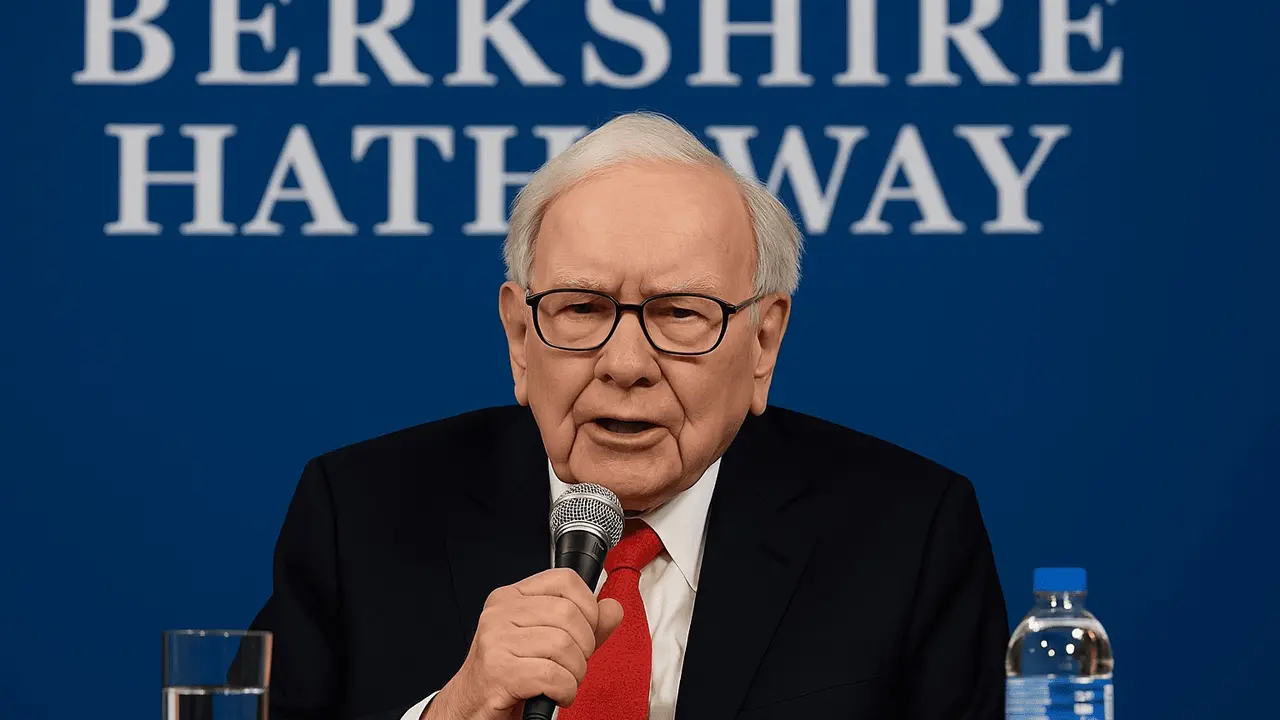
Warren Buffett, one of the most influential investors in modern financial history, has retired as Chief Executive Officer of Berkshire Hathaway at the age of 95, closing a leadership chapter that reshaped how generations think about money, markets, and long-term wealth creation.
Buffett, who took control of Berkshire Hathaway in the mid-1960s, turned a struggling textile company into a diversified conglomerate with interests spanning insurance, railroads, energy, manufacturing and global equities. While his retirement marks an operational transition, the investment principles he championed continue to influence investors worldwide.
The Core Belief: Buy Businesses, Not Stocks
At the heart of Buffett’s approach was a simple premise: investing is about owning businesses, not trading stock symbols. He consistently evaluated companies based on their underlying economics, management quality and long-term earning power, rather than short-term market movements.
This mindset drove Berkshire’s preference for companies with predictable cash flows and resilient business models.
Advertisement
Time as the Greatest Asset
Buffett frequently highlighted time as the most powerful force in investing. His strategy relied on allowing compounding to work over decades, not quarters. Many of Berkshire’s most successful investments were held for extended periods, reinforcing the belief that patient ownership often outweighs frequent trading.
Also read: ITC Shares Hit Six-Year Low After Tax Hike
Advertisement
Discipline Over Market Noise
Avoiding speculation was central to Buffett’s philosophy. He resisted chasing trends or reacting to market hype, focusing instead on disciplined decision-making. His investment letters repeatedly emphasised that market volatility should be viewed as an opportunity rather than a threat.
This restraint became a defining feature of Berkshire’s capital allocation style.
Economic Strength Over Financial Engineering
Buffett placed greater importance on economic strength than financial complexity. He favoured businesses with durable competitive advantages — often described as “economic moats” — that could sustain profitability without constant reinvention or leverage.
Cash as Strategic Flexibility
Unlike many investors who viewed idle cash as inefficient, Buffett considered liquidity a strategic asset. Maintaining cash reserves allowed Berkshire to act decisively during periods of market stress, reinforcing his belief in preparedness over constant deployment.
A Culture of Trust and Decentralisation
Beyond investments, Buffett’s leadership approach shaped Berkshire’s structure. He trusted operating managers to run businesses independently, avoiding micromanagement. This decentralised model became a cornerstone of Berkshire’s longevity.
An Enduring Influence
Buffett’s retirement as CEO signals a change in leadership but not a departure from the principles that guided Berkshire for decades. His successor inherits not just a company, but an investment philosophy built on clarity, patience and long-term thinking.
As markets evolve, the ideas Buffett stood for continue to serve as reference points for investors navigating uncertainty.