
What’s So Controversial About FCRA Amendment Bill? Why It Was Put On Hold In Budget Session 2026
FCRA Amendment Bill 2026 sparked major protests in Parliament, leading to its suspension during the Budget Session. Why is it controversial, what changes are proposed, and why opposition objected, here’s a clear breakdown of the issue.
- Republic Business
- 2 min read

;'%3e%3cpath%20d='m8,15.99c4.41,0,7.99-3.58,7.99-7.99S12.41,0,8,0,0,3.59,0,8s3.58,7.99,7.99,7.99Z'%20style='stroke:%23fff;%20stroke-miterlimit:10;%20stroke-width:.02px;'/%3e%3cpath%20d='m3.08,3.37l3.82,5.11-3.84,4.15h.87l3.37-3.64,2.72,3.64h2.94l-4.04-5.39,3.58-3.87h-.86l-3.1,3.35-2.5-3.35h-2.94Zm1.27.64h1.35l5.97,7.99h-1.35l-5.97-7.99Z'%20style='fill:%23fff;'/%3e%3c/g%3e%3c/svg%3e)


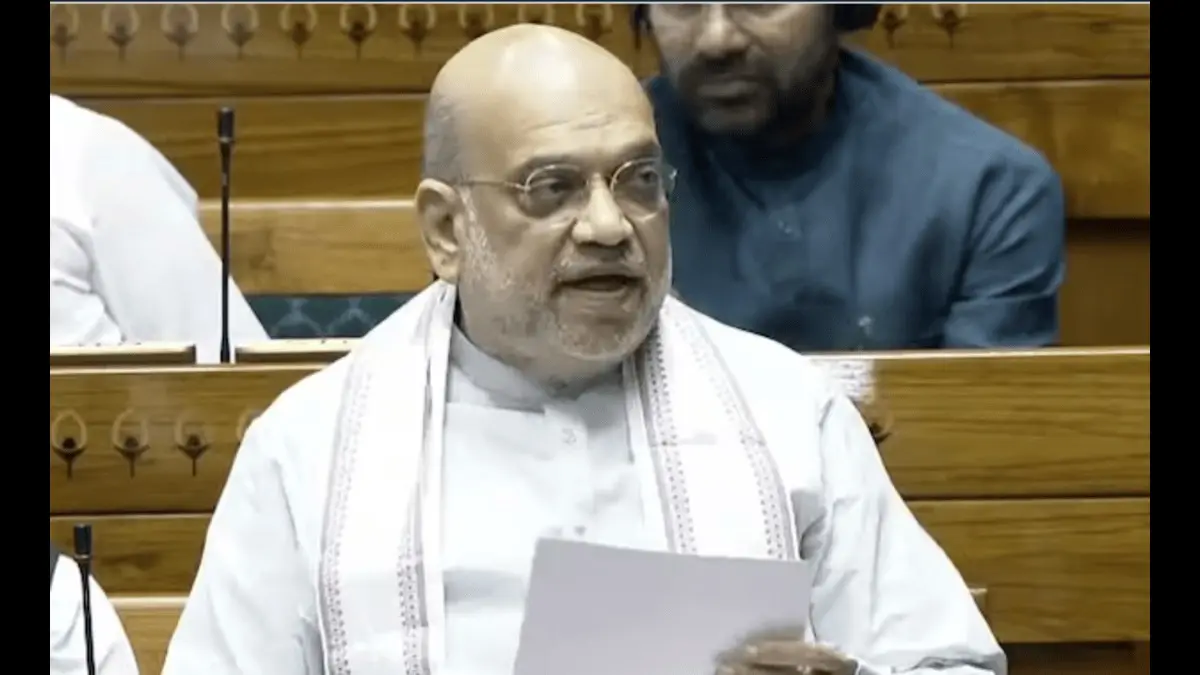
After the Foreign Contribution (Regulation) Amendment Bill, 2026, was introduced in Lok Sabha on March 25, it has now become the central point controversy in parliament.
This bill introduced by Minister of State for Home Affairs Nityanand Rai has been subjected to immense criticism from opposition, including the Congress, and the Left Democratic Party (LDF).
However, the centre has maintained a stance that this amendment bill is intended at establishing a comprehensive statutory framework for the vesting, supervision, management, and disposal of foreign contributions and assets through a ‘designated authority,’ inclusive of permanent and provisional vesting.
Further, the amendment is also expected to remove the legal gaps in management of assets created through foreign funds and to streamline the accountability of NGO functionaries.Foreign Contribution (Regulation) Act, 2010.
Advertisement
The acts regulates the utilisation, and acceptance of foreign contributions and foreign hospitality received by individuals, associations, and NGOs to ensure that it doesn't "adversely affect national interest, public order or national security”.
Under the FCRA, which has been amended earlier in 2016, 2018, and 2020, nearly 16,000 associations receive approximately Rs 22,000 crore annually.
Advertisement
What Changes Were Proposed In This New Amendment Bill
In an attempt to address legal and operational gaps identified linked to registration under FCRA when association is cancelled, surrendered or cease to exit, the centre proposed insertion of a new Chapter IIIA to provide a comprehensive statutory framework for the supervision, management, and disposal of such assets.
While Section 15 of the Act provides for the vesting of assets, it lacks clarity on the procedures for their management, leading to administrative uncertainty and potential misuse, the government claims.
The amendment also seeks to:Introduce timelines for the receipt and utilisation of foreign contributions under prior permission.
As per the alterations proposed, the amendment will give centre the power to appoint the designated authority that would control the funds and assets in case the FCRA certificate is cancelled, surrendered or ceased.
CBCI's Anti-FCRA Amendment Stance
The political storm linked to FCRA changes creeped into the spotlight after the Catholic Bishops' Conference of India (CBCI) expressed “grave concern” over the proposed amendments, describing the bill as 'dangerous and alarming' in its implications
Meanwhile, Union Minister Kiren Rijiju defended the bill, stating that it aims only to prevent the misuse of foreign funding against national security and interests, and is not intended to target any religious organisation.