
What Is Fiscal Deficit? Meaning, Formula, Example and Why It Matters
Fiscal deficit, highlighting the gap between government expenditure and revenue- excluding borrowings, gained attention during the Union Budget 2026 presentation by Finance Minister Nirmala Sitharaman.
- Republic Business
- 3 min read

;'%3e%3cpath%20d='m8,15.99c4.41,0,7.99-3.58,7.99-7.99S12.41,0,8,0,0,3.59,0,8s3.58,7.99,7.99,7.99Z'%20style='stroke:%23fff;%20stroke-miterlimit:10;%20stroke-width:.02px;'/%3e%3cpath%20d='m3.08,3.37l3.82,5.11-3.84,4.15h.87l3.37-3.64,2.72,3.64h2.94l-4.04-5.39,3.58-3.87h-.86l-3.1,3.35-2.5-3.35h-2.94Zm1.27.64h1.35l5.97,7.99h-1.35l-5.97-7.99Z'%20style='fill:%23fff;'/%3e%3c/g%3e%3c/svg%3e)


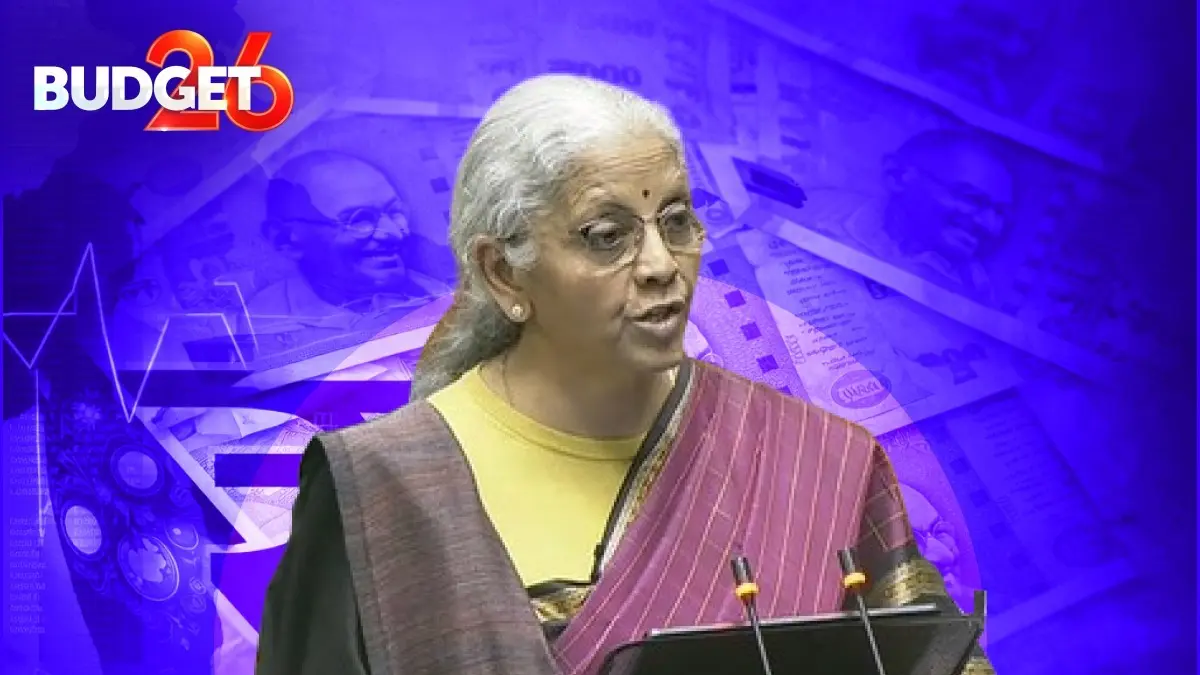
New Delhi: Fiscal deficit one of the most searched economic terms in recent weeks grabbed attention this budget season as Finance Minister Nirmala Sitharaman unveiled the Union Budget 2026 on Sunday, with renewed emphasis on fiscal prudence and long‑term economic stability.
At its simplest, a fiscal deficit is the gap between what the government spends and what it earns (excluding borrowings) in a fiscal year. It shows how much extra money a government must borrow to meet its expenditure.
Meaning & Formula
Economists define fiscal deficit as: Fiscal Deficit = Total Expenditure − Total Revenue (excluding borrowings)
This measure highlights the shortfall that the government must cover through borrowing, which has implications for inflation, debt sustainability and overall economic growth.
Advertisement
For example, if a government spends Rs 20 trillion in a year but earns only Rs 15 trillion through taxes and other revenue, the fiscal deficit is Rs 5 trillion - meaning that Rs 5 trillion must be funded through borrowings.
India’s Fiscal Deficit in the Spotlight
In the 2026-27 budget presented on February 1, India’s fiscal deficit was set at 4.3% of Gross Domestic Product (GDP) - a marginal reduction from the previous year - signaling continued emphasis on fiscal discipline even as the economy invests in growth‑boosting sectors.
Advertisement
Over the past few years, India has steadily worked to reduce its fiscal deficit: 2024–25 recorded a deficit of around 4.8% of GDP, down from higher levels in previous years.
2025-26 was projected at 4.4%, backed by resilient tax collections and targeted expenditure management. This downward trajectory reflects government efforts to balance expenditure on infrastructure, welfare and defense with sound public finance.
Why Fiscal Deficit Matters
1. Indicator of Economic Health
The fiscal deficit is a key barometer of a government’s financial health. A lower deficit suggests disciplined public spending and fiscal consolidation, while a higher gap may signal expansionary policies or stressed revenue streams.
2. Impact on Borrowing & Debt Levels
A persistent fiscal deficit requires the government to borrow more both domestically and internationally. This can influence interest rates and the debt‑to‑GDP ratio, affecting long‑term economic stability.
3. Influence on Inflation & Investment
Large deficits can create inflationary pressure and may crowd out private investment if borrowing costs rise. Managed wisely, however, a fiscal deficit can stimulate the economy during downturns or fund development projects.
India’s Fiscal Strategy - A Balancing Act
In the Union Budget 2026, the finance ministry balanced capital expenditure, infrastructure pushes and tax relief measures with a commitment to fiscal consolidation. Measures such as lowering certain taxes on travel and medical remittances aimed to ease the burden on households while maintaining macroeconomic stability.
Moreover, fiscal policy is being aligned with broader targets such as reducing debt ratios, promoting economic growth, and boosting investor confidence, even as global uncertainties persist.
The fiscal deficit, often viewed as an arcane economic term, has real implications for jobs, prices, public services and national growth. Its careful management in budget planning helps ensure that government spending fuels development without undermining economic stability.
As India continues to navigate the post‑pandemic global landscape, the fiscal deficit remains a cornerstone of policy debates and economic strategy — a topic that continues to resonate with students, professionals and citizens alike.