
Who Loses Tax Exemption on Disability Pension? Budget 2026 Sparks Debate
A clarification announced by Finance Minister Nirmala Sitharaman in the Union Budget 2026 limits tax exemption on disability pensions to armed forces personnel invalided out due to service-related disability. The move has sparked opposition from veterans and disability advocates, who argue it creates unequal treatment and could impact morale and financial security.
- Republic Business
- 3 min read

;'%3e%3cpath%20d='m8,15.99c4.41,0,7.99-3.58,7.99-7.99S12.41,0,8,0,0,3.59,0,8s3.58,7.99,7.99,7.99Z'%20style='stroke:%23fff;%20stroke-miterlimit:10;%20stroke-width:.02px;'/%3e%3cpath%20d='m3.08,3.37l3.82,5.11-3.84,4.15h.87l3.37-3.64,2.72,3.64h2.94l-4.04-5.39,3.58-3.87h-.86l-3.1,3.35-2.5-3.35h-2.94Zm1.27.64h1.35l5.97,7.99h-1.35l-5.97-7.99Z'%20style='fill:%23fff;'/%3e%3c/g%3e%3c/svg%3e)


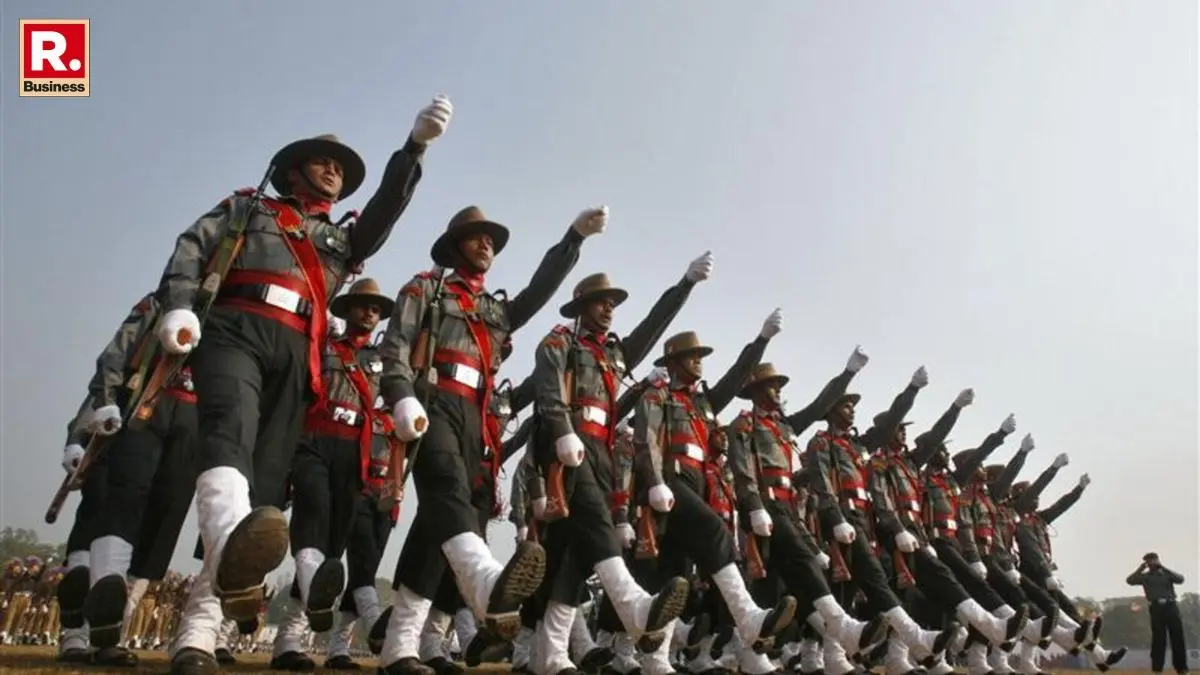
On February 1, while presenting the Union Budget 2026–27, Finance Minister Nirmala Sitharaman made a statement that quickly drew attention beyond fiscal circles. In her speech, she announced a clarification to the income-tax treatment of disability pensions, a move that has since triggered intense debate among veterans, disability rights advocates, and policymakers.
The Budget proposal states: “It is proposed to grant full income-tax exemption for disability pension received by members of the Armed Forces, including paramilitary personnel, who are invalided out of service due to bodily disability.”
The proposal seeks to redefine who qualifies for tax exemption on disability pension, narrowing it to personnel who were invalided out of service due to a disability directly attributable to or aggravated by military service. This clarification is set to take effect from April 1, 2026, as part of the Finance Bill accompanying the Budget.
What Exactly Is Changing?
Until now, disability pensions received by defence personnel were broadly treated as tax-exempt, irrespective of whether the individual retired on superannuation or was invalided out. The new Budget proposal draws a sharper distinction.
Advertisement
Under the revised framework:
- Full tax exemption will apply only to disability pensions of personnel invalided out of service due to service-related disability
- Personnel who retire normally but continue to receive disability pension may no longer qualify for a blanket exemption
- The exemption applies to both the service element and disability element only if the service-linked condition is met
The government’s stated intent is to align tax exemptions more closely with service-attributable injuries, rather than disability status alone.
Advertisement
10 Lakh Beneficiaries Receive Disability Pensions
According to government data presented alongside the Budget, over 10 lakh beneficiaries currently receive disability-linked social pensions across schemes, including defence and civilian categories. The annual pension outlay has risen to around ₹1,750 crore, reflecting a steady increase in beneficiaries over the past two years.
While the armed forces disability pensioners form a smaller subset within this figure, the impact is significant due to higher pension values and long post-retirement durations. Defence pensions remain one of the largest components of India’s pension bill, which crossed ₹1.4 lakh crore in the current fiscal year.
Why Veterans Are Pushing Back?
Veterans’ associations argue that the proposal creates unequal treatment among disabled personnel, penalising those who continued serving despite disability and retired normally.
They contend that:
- Disability is medically assessed and certified regardless of retirement route
- Continuing service despite injury should not reduce post-retirement financial protection
- The move could discourage injured personnel from remaining in service
Some retired officers have warned that the change could lead to legal challenges, citing earlier court rulings that emphasised parity among disability pensioners.
Beyond defence pensions, disability rights groups have flagged the issue of stagnant pension amounts for civilians with disabilities. While eligibility rules are being tightened in one segment, activists point out that monthly disability pensions under welfare schemes remain low, often below inflation-adjusted living costs.
They argue that the Budget missed an opportunity to comprehensively reform disability support, focusing instead on clarification rather than expansion.
What Happens Next?
The proposal will be debated during the Finance Bill passage, and amendments remain possible. Until then, tax experts advise affected pensioners to:
- Review the retirement category and disability certification
- Track clarifications issued by the Central Board of Direct Taxes (CBDT)
- Prepare for changes from Assessment Year 2027–28