
Will Tesla’s India Entry Shake Up Tata, Mahindra, And Other Local EV Makers? Here’s What Experts Say
Tesla’s India debut with the Model Y at Rs 59.89 lakh is unlikely to impact mass-market EV leaders like Tata and Mahindra in the short term, according to industry experts. While Tesla targets the premium segment, its presence could raise benchmarks, boost EV awareness, and reshape India’s EV ecosystem in the long run.
- Republic Business
- 5 min read

;'%3e%3cpath%20d='m8,15.99c4.41,0,7.99-3.58,7.99-7.99S12.41,0,8,0,0,3.59,0,8s3.58,7.99,7.99,7.99Z'%20style='stroke:%23fff;%20stroke-miterlimit:10;%20stroke-width:.02px;'/%3e%3cpath%20d='m3.08,3.37l3.82,5.11-3.84,4.15h.87l3.37-3.64,2.72,3.64h2.94l-4.04-5.39,3.58-3.87h-.86l-3.1,3.35-2.5-3.35h-2.94Zm1.27.64h1.35l5.97,7.99h-1.35l-5.97-7.99Z'%20style='fill:%23fff;'/%3e%3c/g%3e%3c/svg%3e)


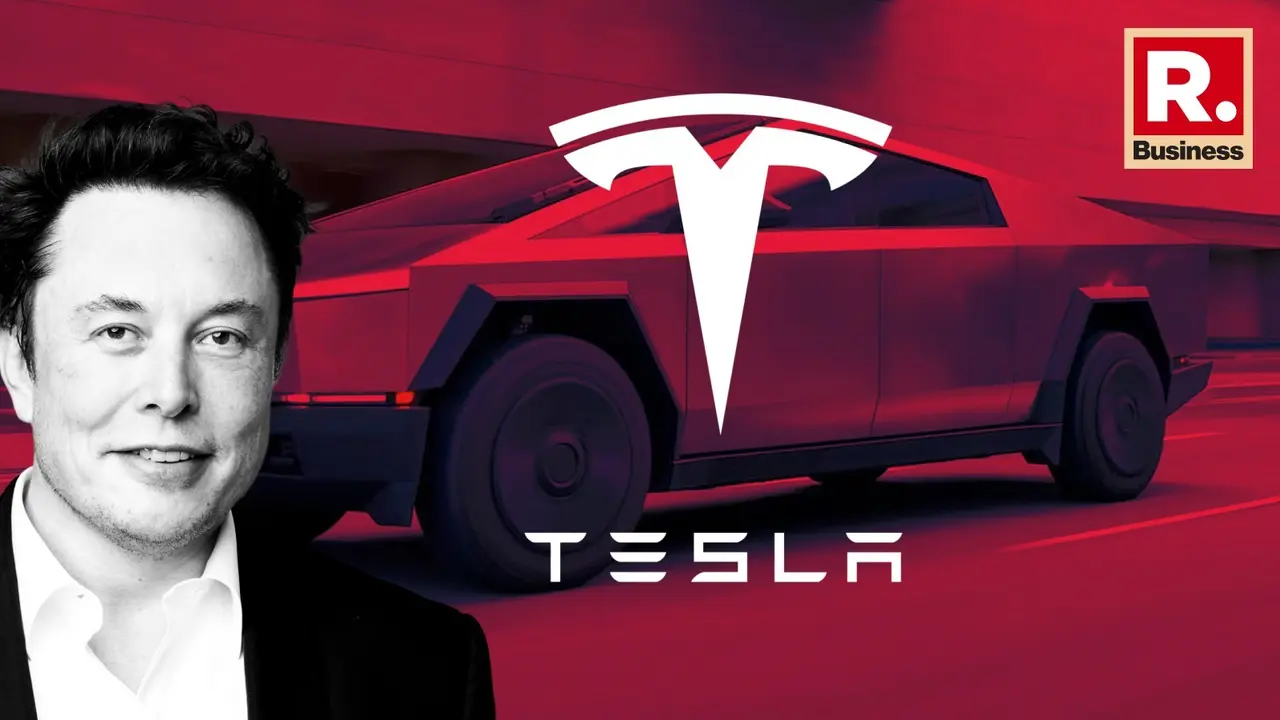
Tesla’s foray into the Indian market is unlikely to pose an immediate threat to domestic electric vehicle (EV) leaders such as Tata Motors, JSW MG Motor India, and Mahindra & Mahindra (M&M), industry analysts said, as the electric vehicle maker is expected to target a significantly higher price segment.
Ravi Bhatia, Managing Director of JATO Dynamics India, stated that Tesla’s India pricing reflects a “bold yet calculated move” by the EV giant.
“While the Model Y sells at only about 5% less than premium ICE SUVs like the BMW X3 and Audi Q5 in the US, in India, it is launching at nearly a 20% discount to those very rivals,” he noted.
According to Bhatia, this isn’t a volume-driven play yet—but it does show Tesla’s sharp understanding of Indian market dynamics, particularly when it comes to price sensitivity, aspirational branding among urban professionals, and the white space between ICE luxury and premium EV offerings.
When asked whether Tesla will disrupt domestic EV players like Tata, Mahindra, and BYD—or carve out an entirely separate segment—he said, “Several factors will shape that outcome, including Tesla’s brand pull versus Tata’s affordability, the competitive edge Tesla is building through its Supercharger infrastructure, whether Indian buyers are ready to upgrade for better tech and range, and how traditional luxury automakers like Mercedes-Benz, BMW, and Audi respond to this new EV benchmark.”
Advertisement
How Indian EV players stack up against Tesla
It is pertinent to note that the current import duty pushes the Model Y’s price well beyond the top-end variants of Tata’s Harrier.ev and Mahindra’s XUV 9e—flagship electric SUVs that retail between Rs 21.49–30.23 lakh and Rs 21.90–31.25 lakh, respectively.
Advertisement
“Tesla is likely to compete more directly with premium EV players such as Mercedes-Benz, BMW, BYD, Hyundai, and Kia in the Rs 45–60 lakh price range,” said Som Kapoor, Partner and Future of Mobility Leader at EY-Parthenon. He also affirmed that Indian OEMs that currently dominate the mass-market EV segment may not face immediate “volume threats.”
“That said, Tesla’s entry will raise the benchmark in terms of product innovation, digital experience, and brand aspiration—prompting Indian players to accelerate R&D, tech integration, and feature enhancements across segments,” added Kapoor from EY-Parthenon.
The EV pioneer inaugurated its first showroom in Mumbai on July 15, unveiling the Model Y mid-size SUV at a starting price of Rs 59.89 lakh (ex-showroom). The battery-driven model is being imported from Tesla’s Shanghai facility as a completely built unit (CBU), attracting a steep 70% basic customs duty for fully assembled vehicles priced under $40,000 CIF (cost, insurance, and freight).
As Nikhil Dhaka, Vice President at Primus Partners, puts it, “Tesla’s entry into India is unlikely to impact domestic EV players like Tata Motors and Mahindra in the short term. These companies dominate the affordable EV segment with models tailored to Indian roads and budgets, while Tesla is positioning itself at a much higher price point—above Rs 65 lakh—targeting premium buyers. So, for now, there’s little direct overlap. That said, Tesla’s arrival generates significant market buzz and signals growing global confidence in India’s EV potential.”
Dissecting the domestic EV market
India’s electric passenger vehicle segment remains in its infancy, making up just 3.5% of total car sales in April 2025, 4.1% in May, and 4.4% in June, according to data shared by the Federation of Automobile Dealers Associations (FADA). The overall share for FY25 stood at 2.6%.
Tata Motors continued to lead the space in Q1 FY26 with a market share of 35.8%, while Mahindra followed with 22.9%. For all of FY25, Tata commanded a dominant 53.5% share, compared to Mahindra’s 7.6%.
While Tesla’s presence is unlikely to result in a surge in EV sales in the short term, analysts believe it could enhance the appeal and visibility of electric cars in India.
Dhaka from Primus Partners believes Tesla’s presence could have a transformative impact over time. “In the longer term, Tesla’s presence could act as a catalyst for the broader EV ecosystem in India. It has the potential to raise consumer awareness, accelerate the rollout of charging infrastructure, and prompt domestic automakers to step up innovation and technological advancement to remain competitive.”
Dhaka also stated that if Tesla eventually establishes local manufacturing, it could significantly lower its prices, making its offerings more competitive in the mid to high-end EV segment. “While the immediate impact may be limited, the long-term implications could be far-reaching,” he noted.
About the company
Founded in 2003 and led by Elon Musk since 2008, Tesla has grown into the world’s most valuable car company by market capitalisation and a leading force in the global EV revolution. Known for its focus on innovation, over-the-air software updates, and vertical integration—from battery technology to autonomous driving—the company currently operates Gigafactories in the U.S., Germany, and China.
Globally, Tesla reported a 13.5% decline in vehicle deliveries in the April–June quarter. Tesla’s entry into India comes after years of speculation and signals a strategic step toward tapping one of the world’s fastest-growing automobile markets.