
India Growing Fast, Pakistan Hit By 'Poverty and Inequality' Says World Bank
The World Bank warns that poverty and inequality in Pakistan are deepening despite macroeconomic stability and IMF-backed reforms. Rural areas, informal workers, and children face worsening conditions, highlighting the gap between growth indicators and citizen well-being.
- Republic Business
- 2 min read

;'%3e%3cpath%20d='m8,15.99c4.41,0,7.99-3.58,7.99-7.99S12.41,0,8,0,0,3.59,0,8s3.58,7.99,7.99,7.99Z'%20style='stroke:%23fff;%20stroke-miterlimit:10;%20stroke-width:.02px;'/%3e%3cpath%20d='m3.08,3.37l3.82,5.11-3.84,4.15h.87l3.37-3.64,2.72,3.64h2.94l-4.04-5.39,3.58-3.87h-.86l-3.1,3.35-2.5-3.35h-2.94Zm1.27.64h1.35l5.97,7.99h-1.35l-5.97-7.99Z'%20style='fill:%23fff;'/%3e%3c/g%3e%3c/svg%3e)


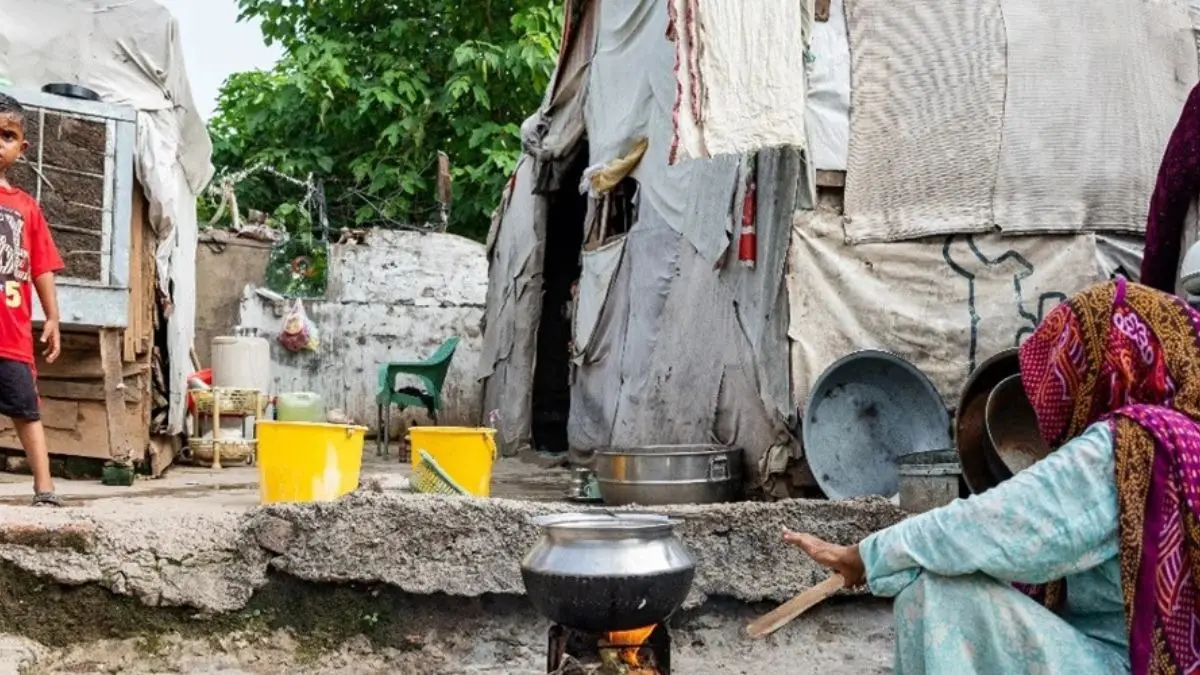
Pakistan’s economy may appear stable, with stock markets climbing and government officials highlighting IMF-backed reforms, but the World Bank’s latest assessment paints a far bleaker picture: poverty and inequality are worsening across the country, affecting millions of households.
The World Bank’s poverty and resilience report shows that, even amid macroeconomic stability, the living conditions of ordinary citizens have declined. Poverty, which had fallen from over 60% in 2001 to roughly 21% by 2018, rose again to more than 27% by 2023–24. When measured against lower-middle-income benchmarks, almost half of Pakistan’s population now lives below the poverty line.
The report points to deep regional disparities. Rural areas, particularly in Balochistan and interior Sindh, face severe deprivation compared to cities like Islamabad and Lahore. Malnutrition is widespread, with nearly 40% of children under five affected by stunting, and education outcomes remain weak, leaving many young people unprepared for productive employment.
Pakistan’s labor market also highlights structural vulnerability. Over 85% of workers are employed in the informal sector without contracts, benefits, or social protection, and women are disproportionately affected. Even minor income reductions could push millions deeper into poverty amid stagnant wages and inflation.
Advertisement
Also Read: Despite Trump Tariffs, India Remains Fastest Growing Economy: World Bank | Republic World
While IMF-supported reforms have brought macroeconomic stability, these improvements have yet to reach citizens in a meaningful way. Foreign investors remain cautious, with many scaling back operations due to weak domestic demand and inefficiencies in the system.
By contrast, the World Bank has raised India’s GDP growth forecast for the current financial year by 20 basis points to 6.5%, citing strong consumption growth and India’s status as the fastest-growing major economy—highlighting the divergent economic paths of the two neighboring countries.
Advertisement
The World Bank recommends that Pakistan focus on policies promoting inclusion and resilience, including expanding social safety nets, improving healthcare and education, and implementing fairer fiscal reforms. The report emphasizes that true progress should be measured not by stock market indices or IMF approval, but by tangible improvements in the lives of ordinary citizens.