
10 Indian Warships in Arabian Sea with Focus on Somali Coast to Counter Piracy & Drone Threats
India independently conducts maritime security ops to demonstrate presence and deter piracy and drone threats
- Defence News
- 4 min read

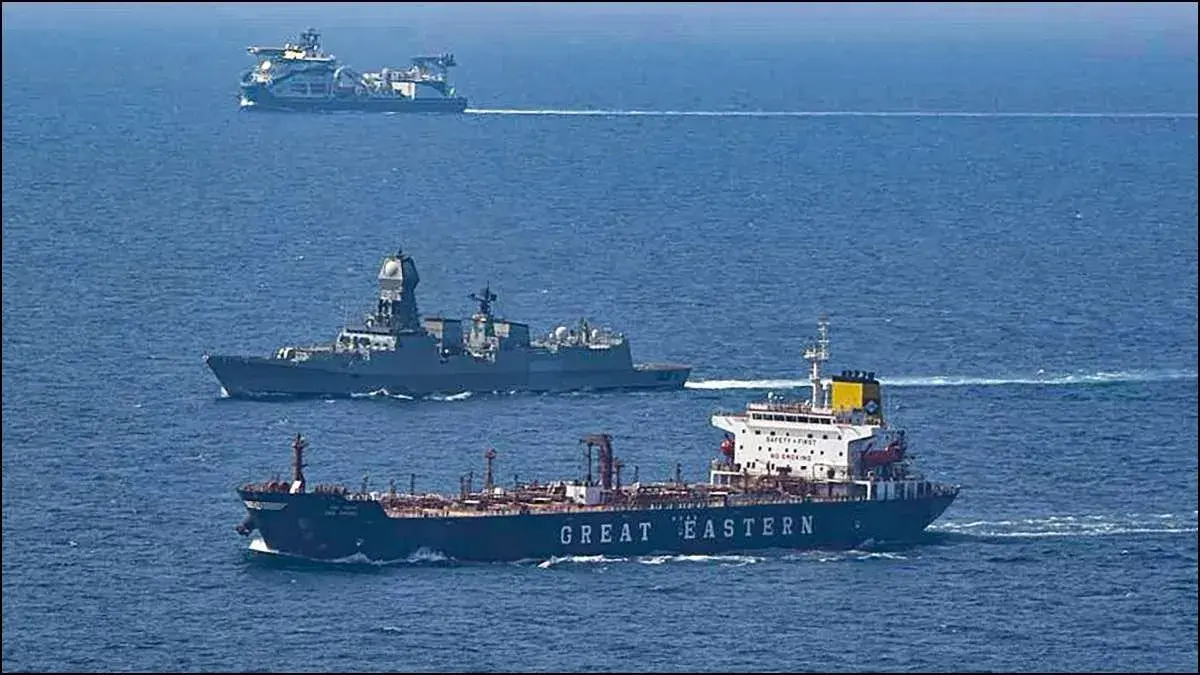
Mumbai: India has increased its naval presence in the Arabian Sea and Gulf of Aden, deploying around 6-10 major warships, including destroyers, frigates, and offshore patrol vessels, as per reports. The primary focus is on preventing piracy and countering potential drone attacks on merchant vessels near the coast of Somalia. The strategic deployment extends from the north and central Arabian Sea to the Gulf of Aden.
These enhanced maritime security operations, conducted independently by India, aim to demonstrate a strong presence and deter illicit activities at sea. Notably, the Indian Navy has refrained from joining the US-led multinational 'Operation Prosperity Guardian,' initiated in the Red Sea to address security concerns following attacks by Houthi rebels of Yemen.
How the Navy, Through Its Deployment, Is Keeping Pirates at Bay
The deployment includes guided-missile destroyers such as INS Kolkata, INS Kochi, INS Chennai, and INS Mormugao, along with multi-role frigates like INS Talwar and INS Tarkash. To further strengthen surveillance and deterrence, the Indian Navy is also utilising marine commandos and conducting regular intelligence, surveillance, and reconnaissance (ISR) missions.
One of the recent successes involved the 7,500-tonne INS Chennai, which, alongside marine commandos and P-8I aircraft, thwarted an attempted hijack of the Liberia-flagged merchant vessel MV Lila Norfolk in the north Arabian Sea on January 5. The Navy underlined its commitment to stabilising the situation in the Arabian Sea and promoting overall maritime security. The Chief of Naval Staff, Admiral R Hari Kumar, said on Wednesday that the Indian Navy was proactively deploying its fleet to keep pirates at bay. "We are now very proactively deploying our units there to ensure that the pirates are kept at bay. If you look at the last 40-42 days, about 35 such attacks have taken place, largely on Israeli-owned shipping assets. No India-flagged vessel has been attacked so far," the Chief of Naval Staff said.
Advertisement
Further, as per reports, in response to escalating piracy and drone attacks on commercial vessels, causing a surge in freight rates, the Indian Navy is maintaining a persistent presence in the region. The naval forces are closely coordinating with the Indian Coast Guard to enhance surveillance of the country's Exclusive Economic Zone.
Navy Chief Addresses Concerns Over the Recent Attack
Speaking on the recent attacks, the CNS added that the “Anti-piracy operations were conducted in the wake of only two such incidents. In both cases, the vessels were not India-flagged. However, in the second incident, there were Indian crew members on board the ship because of which we had to respond. We got the necessary consent from the owners of the vessel and rescued the distressed crew.”
Advertisement
The Navy's arsenal includes the P-8I long-range maritime patrol aircraft and unarmed MQ-9B Sea Guardian drones, both equipped with advanced sensors capable of providing live feeds of high-resolution imagery. Regular patrols and boarding operations by marine commandos contribute to the proactive approach in addressing maritime threats.
Naval Assets Capable of Deterring Any Threats: CNS
Addressing concerns about drone attacks, the Navy dismissed the misconception that its warships lack adequate defence mechanisms. The vessels, as per the CNS, are equipped with modern weapons, including guns (Navy artillery or super rapid gun mount included), short and medium-range air defence missiles, and jammers, ready to be employed if the situation warrants.

While not formally participating in 'Operation Prosperity Guardian,' the Indian Navy maintains continuous information sharing and coordination with friendly foreign navies, including the US, UK, and France, as per the available information. The Navy's Information Management and Analysis Centre (IMAC) and the Information Fusion Centre – Indian Ocean Region (IFC-IOR) also play crucial roles in assessing threats and strengthening maritime security through international collaboration.
India has a history of deploying warships on anti-piracy patrols in the Gulf of Aden since October 2008, and the recent moves showcase the commitment to ensuring secure sea lanes and contributing to global maritime stability.