
Updated 8 October 2023 at 16:12 IST
Chinese submarine incident's ominous fallout as threat of nuclear catastrophe persists
A UK intelligence report suggests a Chinese submarine incident in the South China Sea may have environmental and safety repercussions.
- Defence News
- 3 min read

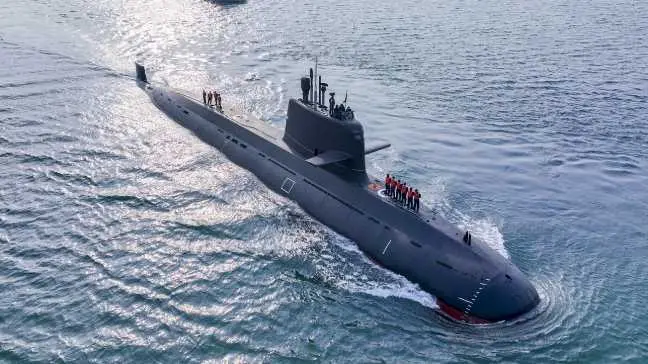
A UK intelligence report reveals that a Chinese submarine may have struck an underwater trap in the South China Sea. Speculation arises about the fate of the crew due to an alleged oxygen system failure. Submarine accidents, especially nuclear ones, pose significant risks. In a disturbing history, nuclear submarine accidents have led to radiation leaks, marine life contamination, and crew fatalities.
Experts warn that a sunken nuclear submarine could cause a major environmental catastrophe, and the global community should pay attention. Despite inherent dangers, nations continue to invest in these complex military assets.
Up to fifty-five soldiers from the Chinese People’s Liberation Army are feared dead after a nuclear-powered submarine reportedly sank after being caught in a trap intended for American and British vessels, a report by the Daily Mail stated citing a leaked British intelligence document.
The ill-fated Chinese submarine was reportedly operating in the Yellow Sea when it encountered seabed defences set up by Chinese forces, apparently intended to trap American and British submarines.
Advertisement
In a tragic twist of fate, the submarine became ensnared in these defences, causing what British intelligence officials describe as a ‘system fault’. The incident resulted in a critical loss of oxygen on board, leading to the crew's poisoning due to hypoxia, or lack of oxygen. The crew faced a desperate situation, with systems failures taking six long hours to repair before the vessel could surface.
The intelligence report hints at crew suffocation following an oxygen system failure. The silence surrounding this incident is baffling, considering the potential risks. A sunken nuclear submarine could result in a radioactive leak, contaminating the waters and threatening marine life. Salvaging such a vessel also presents grave challenges. Experts call for international attention to this alarming situation.
Advertisement
The perils of nuclear submarine accidents
Nuclear submarine accidents pose severe threats to both human life and the environment. Core meltdowns, gamma radiation exposure, and radioactive material release into seawater are among the potential consequences. Complex technical platforms operating in challenging conditions increase the risk. Historical accidents, like the Soviet K-19 submarine disaster, USS Thresher, and USS Scorpion sinkings, serve as grim reminders of the dangers. Russia's recent nuclear-powered mini-submarine incident and India's INS Arihant accident highlight ongoing concerns.
Most nuclear-powered submarine accidents have involved Soviet/Russian vessels. Out of 27 accidents, 14 occurred with Soviet/Russian submarines. These incidents include loss of coolant accidents, uncontrolled start-ups due to operator errors, and damaged reactor cores. The international community must remain vigilant about the safety of these submarines, given their potential for catastrophic consequences.
Published By : Vinay Pande
Published On: 8 October 2023 at 16:12 IST