
65 Years After the Tibet Uprising, China’s Crackdown on Free Speech and Culture Grows More Severe
On March 10, Tibetans worldwide commemorate Tibet Uprising Day, marking 65 years since the 1959 Tibetan revolt against Chinese occupation.
- Defence News
- 5 min read

;'%3e%3cpath%20d='m8,15.99c4.41,0,7.99-3.58,7.99-7.99S12.41,0,8,0,0,3.59,0,8s3.58,7.99,7.99,7.99Z'%20style='stroke:%23fff;%20stroke-miterlimit:10;%20stroke-width:.02px;'/%3e%3cpath%20d='m3.08,3.37l3.82,5.11-3.84,4.15h.87l3.37-3.64,2.72,3.64h2.94l-4.04-5.39,3.58-3.87h-.86l-3.1,3.35-2.5-3.35h-2.94Zm1.27.64h1.35l5.97,7.99h-1.35l-5.97-7.99Z'%20style='fill:%23fff;'/%3e%3c/g%3e%3c/svg%3e)


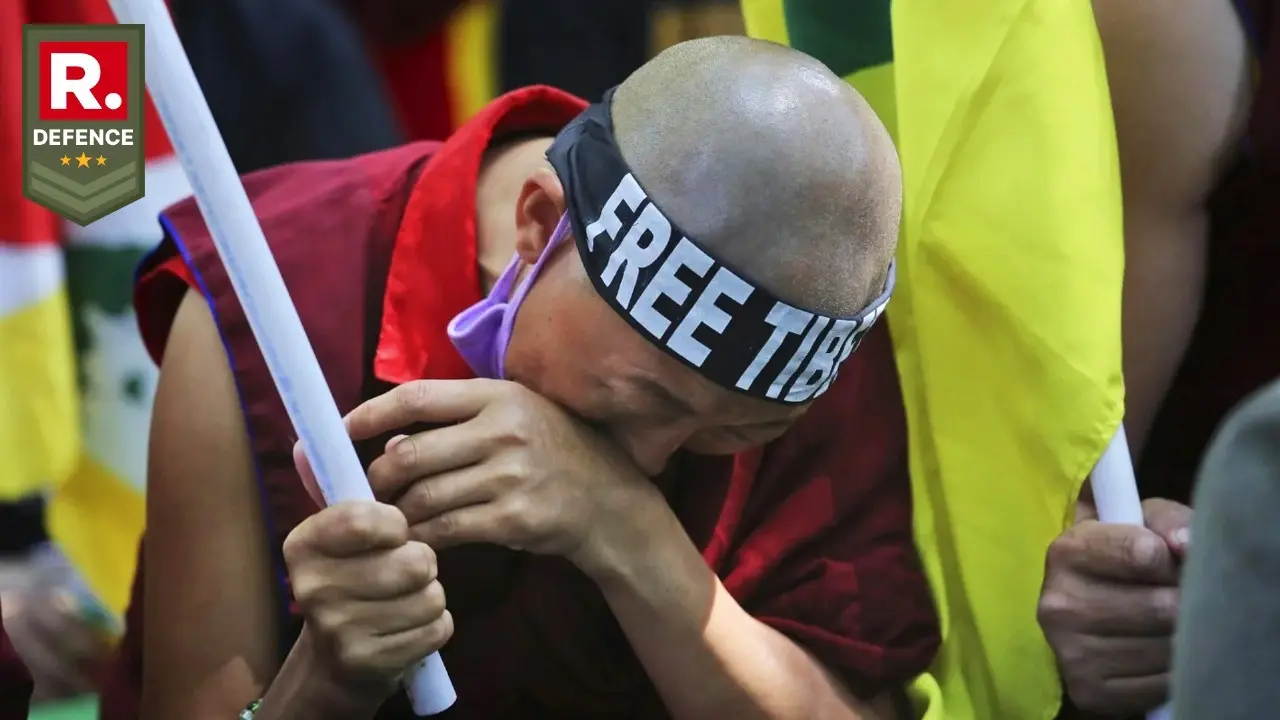
New Delhi, India - Every year on March 10, Tibetans around the world commemorate Tibet Uprising Day, a solemn reminder of their ongoing struggle against Chinese occupation. The day marks the 1959 Tibetan revolt, when thousands rose against Beijing’s control—an uprising that was brutally crushed, forcing the Dalai Lama and thousands of Tibetans into exile. Decades later, China's repressive policies in Tibet remain one of the harshest crackdowns on freedom of speech, religion, and cultural identity.
This year, Tibetans in exile and activists worldwide staged protests and demonstrations, calling out Beijing’s efforts to erase Tibetan identity. Reports from rights organizations, such as the Tibetan Centre for Human Rights and Democracy (TCHRD), paint a grim picture of mass surveillance, cultural censorship, and forced political indoctrination aimed at eliminating dissent and enforcing Communist Party loyalty.
The 17-Point Agreement and the Betrayal of Tibet
The roots of Tibet’s oppression can be traced back to 1951 when China coerced Tibetan leaders into signing the 17-Point Agreement, a document that Beijing falsely portrays as Tibet’s "peaceful liberation." According to Radio Free Asia (RFA), the agreement was imposed under the threat of full-scale military invasion, leaving Tibet with no real autonomy.

China quickly violated its promises, imposing draconian policies that stripped Tibetans of their religious freedom, linguistic rights, and cultural heritage. By 1959, Tibetans had had enough. Thousands took to the streets in Lhasa, but Beijing responded with overwhelming force, killing thousands and tightening its grip on the region. Today, Tibet remains one of the most restricted places in the world, where even the mildest criticism of the government can result in arrest, imprisonment, or forced disappearances.
Advertisement
Tibet Under the Eye of the Communist Party
Under Xi Jinping’s leadership, China has transformed Tibet into a tech-driven police state, where mass surveillance, censorship, and forced indoctrination control every aspect of daily life. According to TCHRD, some of the most repressive measures include:
- Mandatory spyware: Tibetans are forced to install state-approved apps that track online activity and monitor dissent.
- Big Data Policing: AI-driven systems flag "suspicious" behaviour, leading to pre-emptive arrests of those suspected of opposing the regime.
- Facial recognition and biometric data collection: Chinese authorities use advanced technology to track and profile Tibetans, making anonymity virtually impossible.
- Grid Management System: Tibet is divided into tiny surveillance zones, with Communist Party cadres embedded in every community to report on political or religious activity.
The village-based surveillance program, initially introduced in 2011 as a temporary measure, has now been permanently extended. Thousands of Communist Party officials have been deployed to Tibetan villages to monitor religious activities, enforce political indoctrination, and pressure Tibetans to denounce the Dalai Lama.
Advertisement
China's Systematic Erasure of Tibetan Identity
Tibetans face some of the harshest restrictions on cultural expression in the world. Writers, monks, and content creators are banned from publishing religious or educational material without state approval. Even social media platforms like Douyin (China’s version of TikTok) systematically block Tibetan language content, eroding linguistic and cultural heritage.
Mandarin is aggressively promoted in schools, replacing Tibetan as the primary language of instruction—a clear violation of international human rights norms. This policy is designed to assimilate Tibetans into Chinese society, at the cost of erasing their unique identity.
Religious freedom is equally under siege. Monasteries, once the heart of Tibetan culture, are under constant surveillance, with monks forced to undergo "reeducation" programs promoting Communist ideology. Online content about Tibetan Buddhism, particularly any references to the Dalai Lama, is heavily censored or outright banned.
Global Implications and the Fight Against China’s Repression
The international community has long condemned China’s repression in Tibet, but Beijing continues to expand its censorship model beyond its borders. The TCHRD report highlights how China pressures global tech companies, Hollywood, and international platforms to avoid Tibet-related content. Even Western social media apps like TikTok are suspected of silencing pro-Tibetan voices, raising concerns about Beijing’s growing influence over global free speech.
International rights groups have demanded investigations into China’s coercive surveillance measures, urging governments and corporations to ensure that they do not support Beijing’s mass surveillance programs. Despite diplomatic pushback, China remains unapologetic, using economic pressure and diplomatic clout to silence criticism.
As Tibetans mark another Tibet Uprising Day, the world is reminded of China’s brutal and systematic campaign to erase Tibetan identity and silence dissent. From mass surveillance and cultural censorship to crackdowns on free speech, Beijing has turned Tibet into one of the most repressive places on earth.
Yet, despite decades of oppression, the Tibetan resistance endures. Exiled Tibetans continue to raise their voices, activists push for global intervention, and the struggle for a free Tibet lives on. The international community faces a crucial choice—either to hold China accountable or remain silent as an ancient culture is slowly erased.